

More than half a million tonnes of sewage sludge spread on Scotland's fields
Huge volumes of sewage sludge have been used to fertilise Scottish farmland. Studies show it contains microplastics, forever chemicals and cancer-linked pollutants.
Huge volumes of sewage sludge have been used to fertilise Scottish farmland. Studies show it contains microplastics, forever chemicals and cancer-linked pollutants.
With a decision on the Rosebank oil field imminent – and lobbying around the windfall tax at fever pitch – some are questioning whether the Scottish Government's current stance on oil and gas is in step with their ambition to be a world leader in climate action.
Far right actors have used gaming to recruit youngsters for some time but experts say they are increasingly using codes and imagery to avoid moderation.
There have been hundreds of applications for battery energy storage schemes (BESS) across Scotland. They are part of the Scottish Government’s drive to meet net zero targets but some communities oppose them including villagers in Kintyre.

A company owned by an Australian investment firm dubbed the "vampire kangaroo" has plans for a lithium battery facility in Kintyre, prompting fears the “unique environment” of Scotland's west coast risks “being industrialised by developers” and of fire risk at the site.
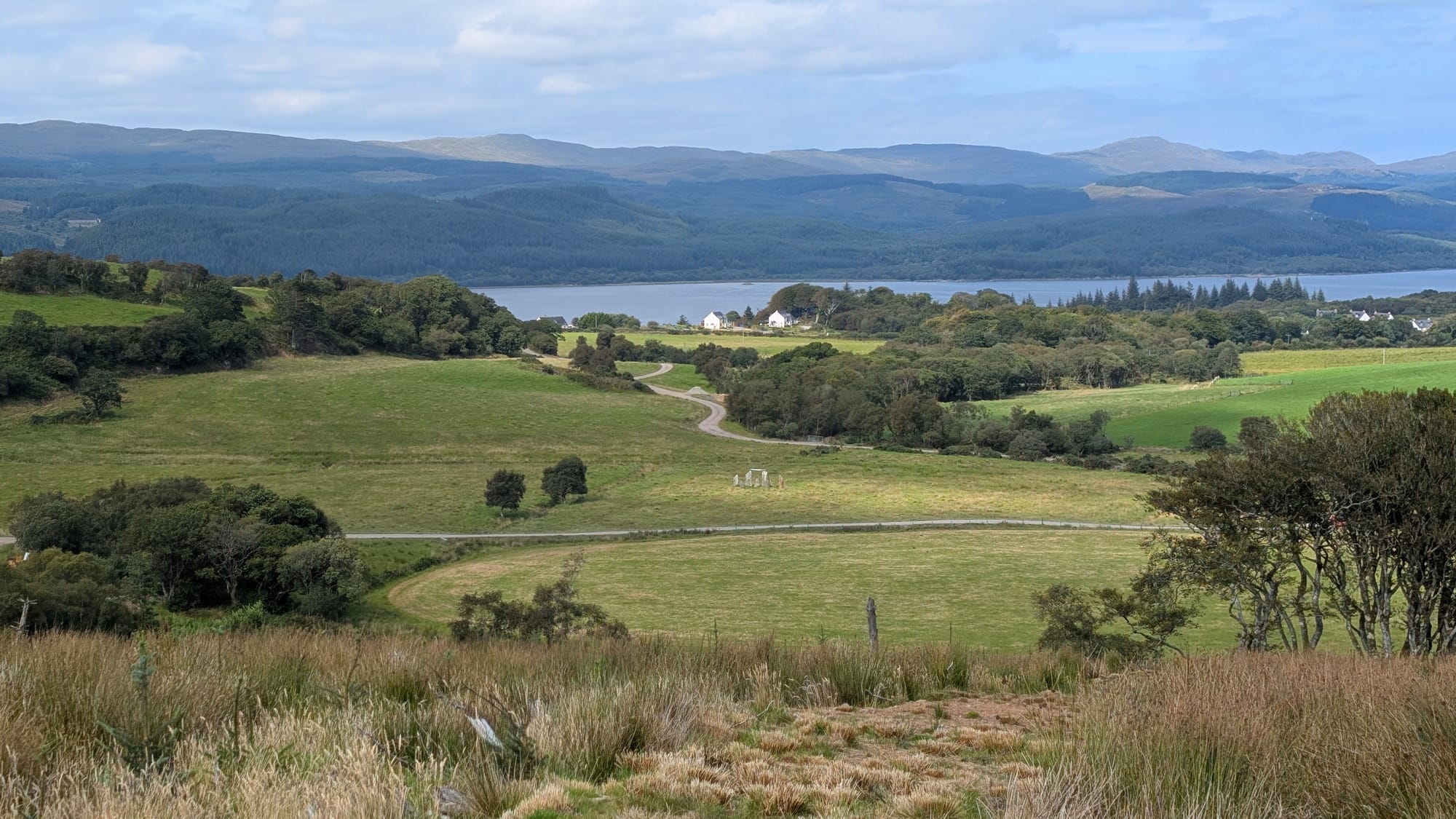
Island Green Power has plans for a battery energy storage scheme (BESS) on the edge of a hamlet called Whitehouse, north-west Kintyre, which would include 200 containers with lithium batteries.
The company – which is wholly owned by Australian multinational, Macquarie Asset Management and registered in Bermuda – said its scheme would “play an important role in the UK’s journey to net zero” and that “safety is a primary consideration”.
But locals claim there would be a risk of “fire, explosion and the release of toxic gases” at the site. There is also the “ethical dimension” of battery storage and its supply chain to consider, said experts, who pointed out that lithium extraction has damaged the environment in places like Argentina and Chile and impacted indigenous communities.
This story exists thanks to you.
The Ferret doesn't answer to advertisers, owners, or paywalls. We answer to you, our readers and over 2,000 members who support journalism that holds power to account.
Keep stories like this coming.
The Scottish Government, which will decide if the plan goes ahead following a public consultation, said any potential impact on local communities will be taken into account.
Lithium is a soft, silvery-white metal that is an essential component of the batteries that power electric cars, laptops and solar energy storage.
Battery storage schemes are part of the Scottish Government’s drive to meet net zero targets and transition minerals such as lithium are required for this move away from fossil fuels. Storage sites stockpile energy from renewable sources – which might otherwise be wasted – and release it when needed.
When it’s sunny and windy, turbines and solar panels can generate more energy than required on a particular day. Excess electricity is then stored as chemical energy, usually inside Lithium-ion batteries – and when weather conditions are calm or overcast it can be sent back to the power grid.
Scotland generated a record amount of energy from renewables last year. A total of 38.4 terawatt hours (TWh) of electricity was produced in 2024 – an increase of 13.2 per cent on the previous year and 8.4 per cent higher than the previous peak of 35.5 TWh, which was recorded in 2022.
There has been a steady rise in planning applications for battery storage sites across Scotland. The Scottish Government recently announced an £800 million deal which will create the two largest battery storage sites in Europe, in South Lanarkshire. Copenhagen Infrastructure Partners will build two more storage sites in addition to one under construction in the village of Coalburn.
But some residents oppose battery storage sites. Concerns raised by locals include fears of fires, the potential damage to wildlife habitats, noise pollution, and the transformation of rural land into industrial sites.
Four schemes have been approved near Leitholm, in the Borders, since 2022. Residents of the village - between Coldstream and Greenlaw - warned last year that the heart of their community was being "ripped out" by these sites. Scottish Borders Council opposed a fifth plan which triggered a public inquiry.
Campaigners are now demanding a moratorium on new battery storage developments, after a new report found projects already proposed could provide four times more electricity storage than required by the end of this decade.
Action to Protect Rural Scotland said that planning permission had been granted for battery storage sites “metres from 5,000-year-old prehistoric sites, in woodlands, and on prime agricultural land”. The project analysed 421 Scottish battery storage applications.
The highest density, the report said, is in Caithness, along the Moray coast, down the east coast, across the central belt, and in Ayrshire and Dumfries and Galloway. Highland shows the highest number by local authority area followed by Aberdeenshire.
There has been one recorded fire at a BESS in the UK, which took place in Liverpool in September 2020.
Aside from safety fears over BESS, there are concerns over the extraction of lithium globally. High-grade deposits of lithium can currently be found in four countries around the world – Argentina, Australia, Chile and China.
In Chile, the world's largest reserves of lithium lie beneath the salt flats of the Atacama Desert. Mining companies predominantly extract lithium by pumping brine from beneath Chile's salt flats to evaporation pools on the surface. The process extracts vast amounts of water in this already drought-prone region.
A report this year on the impact of lithium mining found that methods used by companies in the rush to extract the mineral has led to an “irreversible” and “unrecoverable” loss of water.
Damage to flora has been recorded and the reproduction of flamingos has decreased because lithium mining impacts microorganisms that birds feed on in these waters – so the whole food chain is affected.
The Atacama desert is a salt flat in Chile’s Antofagasta region, located within the traditional territory of the Lickanantay (Atacameño) Indigenous peoples.
The village of Whitehouse is just south of the Islay Ferry terminal at Kennacraig, on West Loch Tarbert. The area's ecology is already fragile with pockets of old plantation and ancient woodland, say locals opposed to the Whitehouse scheme.
They include Jan Nimmo, who is a member of the Kintyre Against BESS Group. She told The Ferret that villagers were “blind-sided” by Island Green Power’s plans, which would also involve two substations and almost 2.5km of underground cabling. If it goes ahead, Nimmo claimed, the BESS scheme will “present a huge risk of fire, explosion and the release of toxic gases to the air and water table”.
“We are concerned not only for the people of Whitehouse but also fear that the scheme would set a precedent along the length of Kintyre and beyond,” she said, arguing that BESS schemes are not the solution to climate change. “They are part of the problem along the whole length of the supply chain, from mineral extraction and processing to manufacturing, installation and eventual disposal".
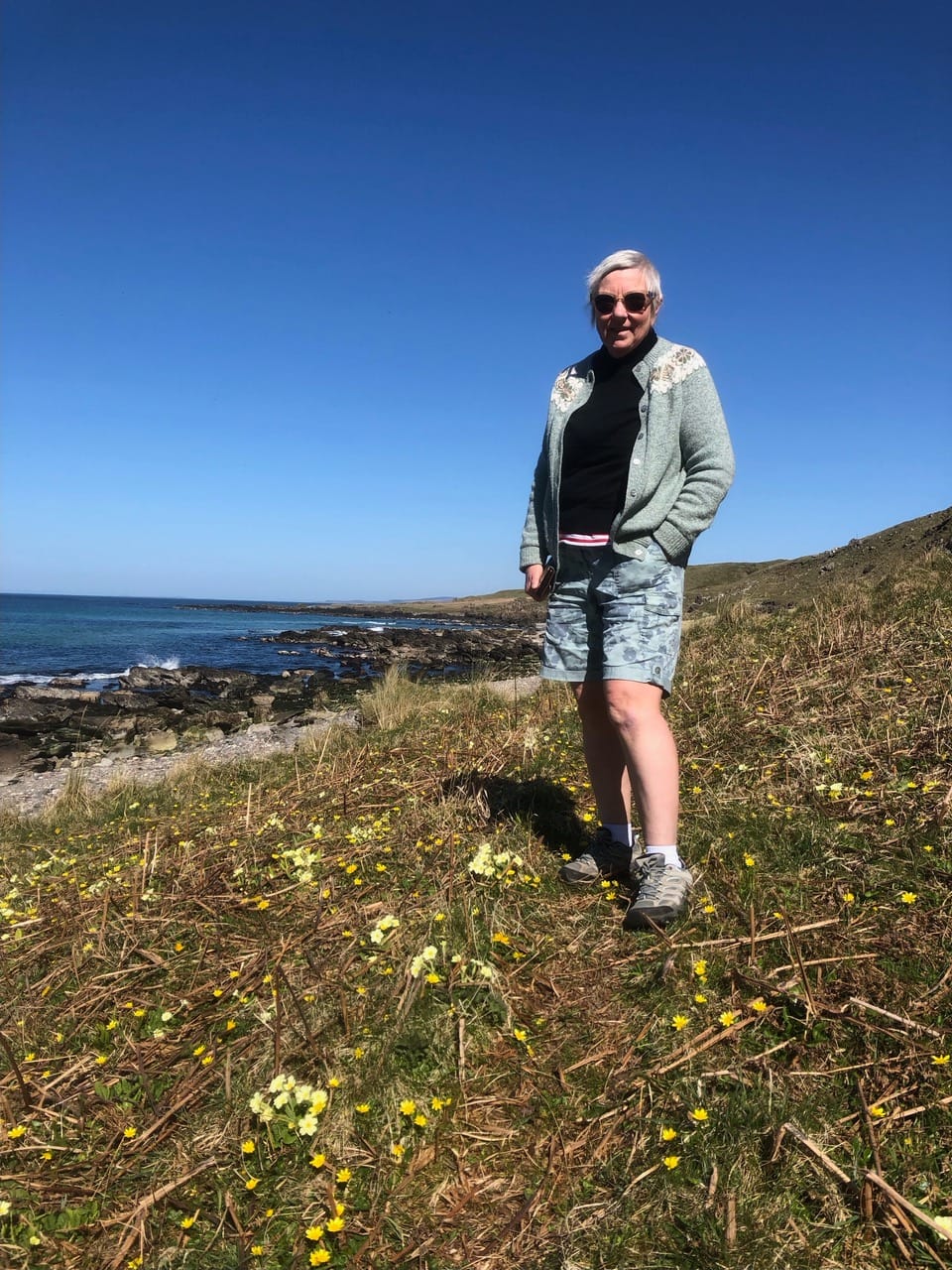
Argyle and Bute councillor Anne Horn also voiced safety concerns over the site and said that while she is in favour of renewable energy, “the safety, security and wellbeing of our people must be the priority”. She claimed that any major emergency might require fire fighters with BESS expertise to travel from Glasgow to Whitehouse which would involve a two and a half hour journey. The effect on water source, homes, residents, and habitat could “well be compromised in such a situation”, Horn said, adding that the proposal “would not contribute to the economy of the people of Whitehouse and nearby communities”.
In reply, Island Green Power said its proposal would “support the increased use of renewable power” and by storing excess electricity during low-demand periods and releasing it when demand is higher, the project would make a “meaningful contribution to energy security and grid stability”.
A company spokesperson claimed its system will use “proven technology that is already operating safely” across the UK and internationally. “The site will include safety measures such as advanced monitoring, early fire detection and suppression systems, and will follow National Fire Chiefs Council guidance,” they said. “A comprehensive battery safety management plan will also be made publicly available as part of the planning application. We will continue to engage closely with the emergency services as the design progresses.”
The firm – which held its first public consultation on 29 May and is reviewing feedback – said it is committed to involving local residents in “shaping the final project” ahead of submitting a planning application. “We are currently refining several key elements of the design, including updates made directly in response to community feedback,” the spokesperson continued. “Local residents can register at www.whitehousebess.co.uk to receive updates on the proposals and our next consultation event, which we will publicise in due course.”
Commenting on the ethics of battery storage schemes , Dr Evelyn Uribe Navarrete, an academic at Glasgow University who researches lithium extraction in Chile, said Scotland needs to “examine the entire supply chain” behind lithium battery production. She added: “This is not merely an environmental issue; Turning the Atacama into a sacrifice zone creates ripple effects far beyond Chile, ultimately reaching rural communities in Scotland.”
There should be a serious plan for how much of these crucial transition minerals are needed, where they should be deployed and how they can be recycled at the end of their current use.
Kim Pratt, Friends of the Earth Scotland’s spokesperson for the senior circular economy, claimed there is “significant evidence of social and environmental impacts, including human rights abuses” connected with lithium mining and production supplying the Scottish economy.
She added: "The current global recycling rate for lithium is just one per cent meaning that Scotland cannot just assume there will be limitless growth in its use. There should be a serious plan for how much of these crucial transition minerals are needed, where they should be deployed and how they can be recycled at the end of their current use."
A Scottish Government spokesperson said that a formal application has not yet been submitted for Island Green Power’s proposal. “Any potential impacts on communities, nature and cultural heritage, including the cumulative effects of developments, are important considerations in the decision-making process,” a spokesperson added.
Macquarie Asset Management declined to comment. The firm, based in Sydney, has been dubbed the ‘Vampire Kangaroo’ for its tough pursuit of profit – a moniker it rejects.
It has a swathe of UK assets and claims to have plowed more than £50bn into UK infrastructure projects in recent years. Its projects include the M6 toll road, Southern Water and National Grid’s transmission system.
The Ferret is Scotland's member-owned investigative journalism outlet. For ten years, we've been digging deeper into the stories that matter, holding power to account without fear or favour.
We don't have billionaire backers or corporate interests. We have you.
Every investigation you read is funded by readers who believe Scotland deserves better journalism. Join them.


Huge volumes of sewage sludge have been used to fertilise Scottish farmland. Studies show it contains microplastics, forever chemicals and cancer-linked pollutants.

Far right actors have used gaming to recruit youngsters for some time but experts say they are increasingly using codes and imagery to avoid moderation.

Investigations into allegations of poor fish welfare at salmon farms by the UK Animal and Plant Health Agency have risen by more than ten times in six years, while site inspections have decreased.

New allegations at Stirling Castle dating back eight years have emerged following a string of complaints about its custodians, Historic Environment Scotland, in recent months.


