

Revealed: Deer management cost public purse at least £135m in a decade
Deer overpopulation in many parts of Scotland is harming the environment. Attempts to tackle the longstanding issue are costing taxpayers tens of millions of pounds.
Deer overpopulation in many parts of Scotland is harming the environment. Attempts to tackle the longstanding issue are costing taxpayers tens of millions of pounds.
A freedom of information response revealed there have been 193 charges in Scotland under the Terrorism Act 2000. The alleged offences link to banned groups like the Ulster Volunteer Force, Ulster Freedom Fighters, the IRA, and neo-Nazi group, National Action.
The number of Scottish terrorism charges in relation to Palestine Action in the last seven months is more than all the other charges put together since the 2000 Terrorism Act came into force, new figures reveal
Scottish authorities had to intervene to keep deer numbers down at a Sutherland estate after the overpopulated animals damaged protected areas. Meanwhile, the landowner has received vast sums of public money.

A Highland estate which Scotland’s wildlife agency says failed to stop rampant deer from harming protected areas has received nearly £1.5m in public subsidies… including £139,000 for deer fencing.
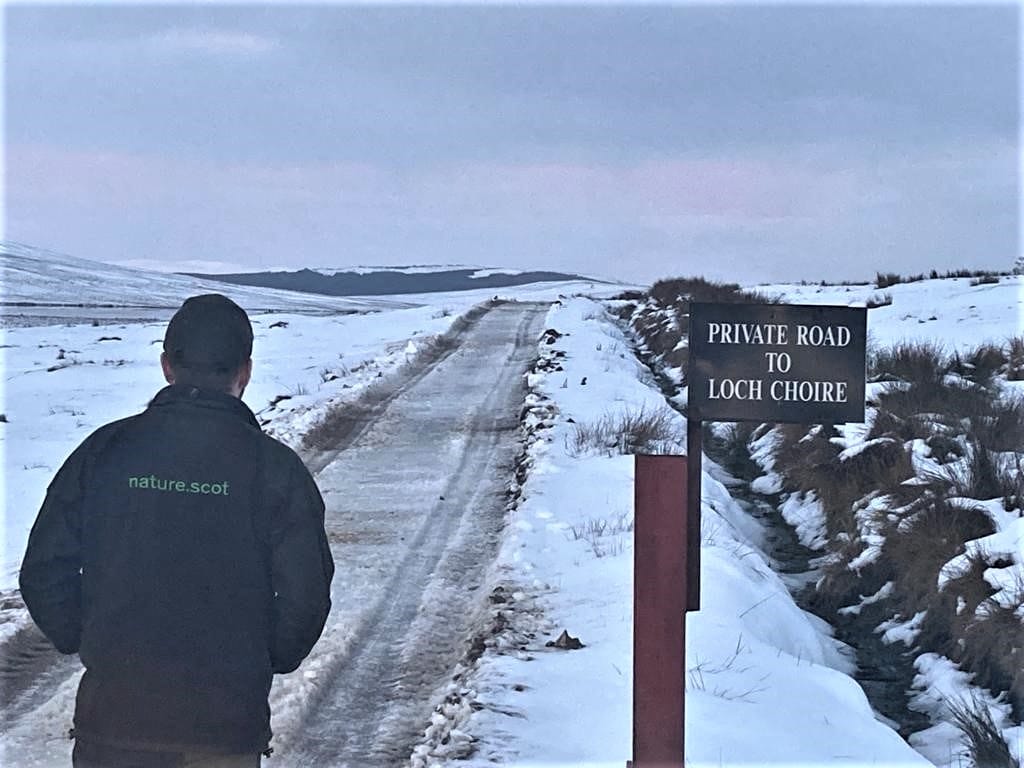
Loch Choire Estate in Sutherland allowed its deer population to reach such levels that in 2023, NatureScot stepped in to cull dozens of the animals in order to prevent further impacts to rare peatlands, woodlands and other habitats, with taxpayers footing the bill.
But the issue persisted and, in April this year, the Scottish Government approved an unprecedented compulsory deer control scheme which legally requires the estate to thin its herd.
In high numbers, deer damage sites by trampling over and eating too much vegetation. At Loch Choire, the animals threaten four protected sites of special scientific interest (SSSIs). In November, we revealed that nearly 300 protected areas are being harmed or put under pressure by the overpopulation of deer.
Now, we can disclose that the West Midlands firm which owns Loch Choire estate, More Works Holdings, controlled by Shropshire businessman Jonathan Greenall, has received vast sums of public money.
An MSP said the subsidies were “unacceptable” in light of the dispute, and argued that state handouts must come with “clear conditions” to safeguard the natural environment.
Data we obtained via freedom of information shows that More Works claimed £1,483,000 in rural subsidies administered by the Scottish Government between 2017 and 2025 – £467,000 of which was awarded after NatureScot warned the firm about the threat deer posed to the SSSIs.
This story exists thanks to you.
The Ferret doesn't answer to advertisers, owners, or paywalls. We answer to you, our readers and over 2,000 members who support journalism that holds power to account.
Keep stories like this coming.
The vast majority – nearly £1.3m – was part of funding set up to support the “development and viability” of its forests.
A further £85,000 came from ‘basic payments’ which provide “a safety net for farmers and crofters”, and around £42,000 consisted of ‘greening’ payments, which aim to incentivise more environmentally friendly farming.
Separate data, from Scottish Forestry, shows that £139,000 of the government subsidies awarded in 2021 was earmarked to put up fences designed to contain deer at Loch Choire.
“Scottish Forestry has one approved contract concerning deer fencing with More Works Holdings for Loch Choire woodland creation,” said a spokesperson. “The fencing was needed to protect native woodland regeneration and planting. On the last inspection in 2023, the fencing infrastructure had all been carried out in accordance to the grant conditions.”
NatureScot said it first warned More Works about the threats deer posed to protected areas in 2022.
The following year, the Shropshire firm benefitted from 100 per cent business rates relief on its deer forest from Highland Council in 2023, saving it £11,200. In the same year, NatureScot spent £17,000 culling some of the estate’s deer herd in order to protect the SSSIs.
 Jamie Mann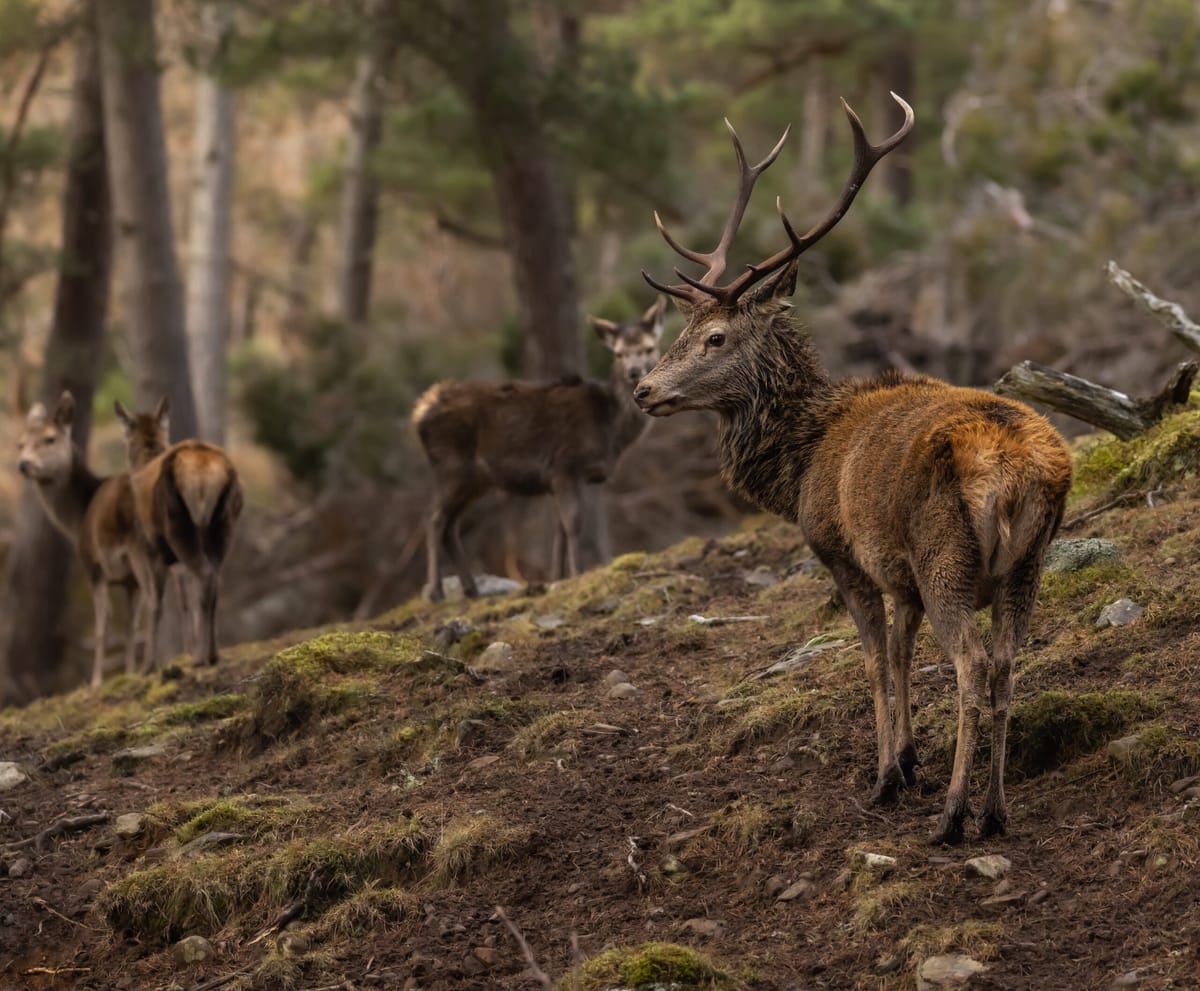
Then importance of peatlands
Loch Choire estate is home to globally rare blanket bog peatlands. Some 13 per cent of the world's blanket bog is in the UK, and most of it can be found in Scotland.
These wetland ecosystems hold vast amounts of carbon when healthy, and also form more peat, thereby adding to the carbon they store. In Scotland, peatlands hold most of our stored carbon – 1.6 billion tonnes, or an estimated equivalent of 140 years’ worth of the country’s total annual greenhouse gas emissions – according to NatureScot.
But if harmed, peatlands can release their stored carbon, contributing to the climate crisis. NatureScot says an estimated 80 per cent of Scottish peatlands are damaged.
Healthy peatlands also absorb pollutants such as sulphur dioxide, nitrogen and heavy metal, and have many other environmental and ecological benefits. Much of Scotland’s drinking water filters through from peatland areas, which improve its quality.
They also provide habitats for other wildlife, maintain steady water flows in salmon rivers and reduce flood risks downstream, NatureScot says.
Given the importance of peatlands, overgrazing from livestock and deer, and practices that require the drainage of these habitats “must be avoided”, it warns.
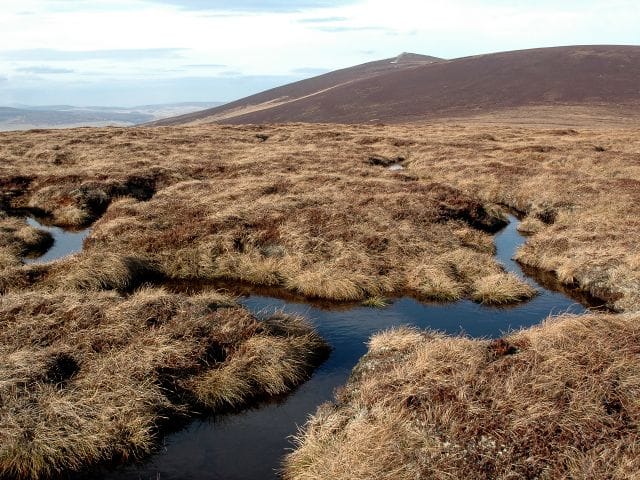
The four Loch Choire SSSIs include Ben Klibreck, which has the special designation due to its peatland, geology, alpine heath, lochs and woodland.
The Mallart SSSI is made up of blanket bog home to otters and birds including wood sandpiper, golden eagle, hen harrier, merlin and red-throated diver.
Truderscaig is a key site for greenshank to breed, while the Skinsdale Peatlands also play host to breeding populations of the bird, as well as dunlin and golden plover.
Deer and Loch Choire
NatureScot last year told More Works that Ben Klibreck, Mallart and Truderscaig were “in unfavourable declining condition and exhibiting damage by deer”.
In November, The Ferret revealed that nearly 300 protected areas were being damaged or put under pressure by Scotland’s rampant deer population, including Ben Nevis, Glen Coe, both national parks, and the critically rare Caledonian forest.
Deer control is voluntary, rather than compulsory, but NatureScot has the power to cull deer on behalf of non-compliant landowners “when necessary to protect our natural heritage”.
It did so in 2023, killing 160 deer at Loch Choire. This cost taxpayer-funded NatureScot £25,000, minus £8,000 it recouped in venison sales. NatureScot’s intervention was backed both by deer management groups and environmentalists.
A census at the estate carried out in the winter of 2022 found there to be 13.9 deer per square kilometre (sq km).
The Scottish Government accepted a recommendation from the independent Deer Working Group that there should be no more than 10 red deer per sq km in large open areas in the Highlands. But it added that appropriate densities can vary depending on the area.
The John Muir Trust says that, “broadly speaking”, more than five deer per sq km prevent natural woodland regeneration, while exceeding eight per sq km risks damage to peatlands.
NatureScot wants the Loch Choire deer population to be thinned to 7.5 per sq km by 2028.
In the shooting season that followed NatureScot’s intervention, the estate upped its culling activity. In a letter sent in March 2024 to the estate’s owner, NatureScot welcomed the killing of nearly 200 deer, but said the efforts would not be enough to curtail damage.
The wildlife agency told More Works it had “sought an agreement to deliver sustainable culls”, but claimed the firm had “consistently not responded”.
In April, agriculture minister Jim Fairlie MSP approved a compulsory deer control scheme at the estate – the first time one has ever been used – in order to protect the SSSIs. NatureScot said it would use the powers as “a last resort”.
Subsidies 'unacceptable’
Scottish Environment LINK is a coalition of over 50 green groups. Its deer group backs new powers for NatureScot to intervene and reduce deer numbers, as set out in the natural environment bill passing through the Scottish Parliament.
“At present NatureScot only has powers to prevent deer damage, and then has only used their compulsory powers to reduce deer numbers once – at Loch Choire – since they came into force in 1996,” claimed a spokesperson.
This had been an “abject failure, and has cost the public large amounts of money,” they alleged. “NatureScot urgently needs new workable powers to reduce deer numbers to protect our best wildlife sites and must then use them where needed”.
The Highlands and Islands Green MSP, Ariane Burgess, said: “It’s unacceptable that an estate receiving over £1m in public subsidies has failed to manage deer responsibly, causing serious damage to protected habitats.
"Public money must come with clear conditions to safeguard Scotland’s peatlands, woodlands and biodiversity for future generations.”
A NatureScot spokesperson said: “It is essential that appropriate deer management and control take place on Loch Choire Estate. We are aware that public money has been provided to support the landowners in their efforts to achieve environmental benefits on their land.
“This public interest must be protected by managing the impacts of deer on protected areas and woodland.”
More Works’ owner, Jonathan Greenall, did not respond to a request to comment.
The Ferret is Scotland's member-owned investigative journalism outlet. For ten years, we've been digging deeper into the stories that matter, holding power to account without fear or favour.
We don't have billionaire backers or corporate interests. We have you.
Every investigation you read is funded by readers who believe Scotland deserves better journalism. Join them.


Deer overpopulation in many parts of Scotland is harming the environment. Attempts to tackle the longstanding issue are costing taxpayers tens of millions of pounds.

A freedom of information response revealed there have been 193 charges in Scotland under the Terrorism Act 2000. The alleged offences link to banned groups like the Ulster Volunteer Force, Ulster Freedom Fighters, the IRA, and neo-Nazi group, National Action.

The number of Scottish terrorism charges in relation to Palestine Action in the last seven months is more than all the other charges put together since the 2000 Terrorism Act came into force, new figures reveal

The Ferret visited a Scottish golf course that's won plaudits for its eco-friendly management to learn about the relationship the industry can have with nature and the environment.


