Prospective MSPs are legally required to evidence their election spending and confirm the records are correct. Following an investigation by The Ferret, Police Scotland is examining whether nine Reform UK candidates failed to do so.
School absence rates are reaching crisis point. How can we help young people facing ‘extreme’ social isolation?
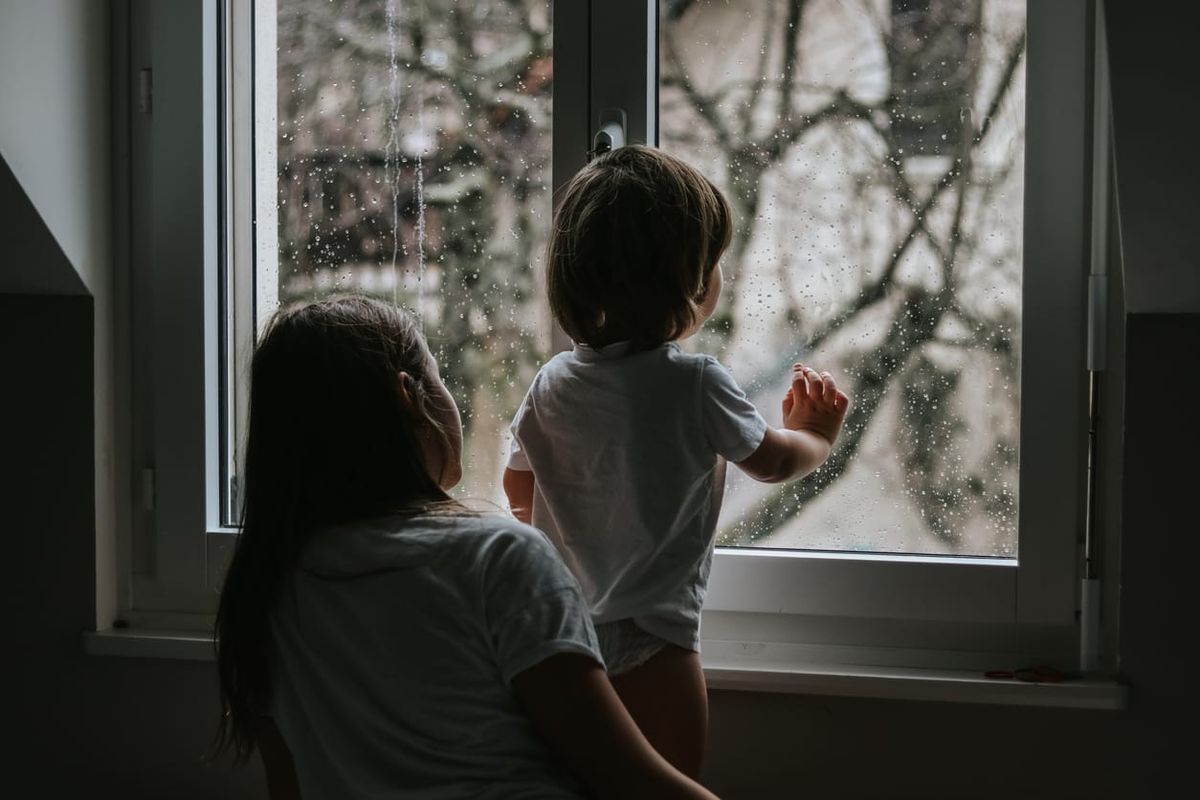
Academics are raising concerns that an increasing percentage of young people, unable to cope with school, are withdrawing into their bedrooms, while families claim support is “woefully inadequate”.
Bianca was in primary six when she stopped going to school. She was absent for three and a half years, during which time she rarely left home and lost contact with friends. She had faced difficulties with her mental health throughout her childhood and was experiencing anxiety. She was also self-harming and had attempted suicide.
Sitting in a café in Glasgow, Bianca, whose real name we’re agreed not to use to protect her privacy, is now 17. “It was really hard, I didn't feel very good, and I couldn't cope with going to school or going out,” she says. She describes days that blurred into each other without beginning or end. “For a long time, I was just sitting in my room, not doing much. Every day was kind of the same.” Bianca’s mum sought help through her GP, the Child and Adolescent Mental Health Service (CAMHS) and Bianca’s school and did everything in her power to get her to return, but it didn’t work.
Jack, whose name we have also changed, has been diagnosed with autism and has caring responsibilities at home. He was completely absent from school for more than six months after being bullied and getting into a fight which was shared over social media. He had been threatened with violence and didn’t feel safe going out in his local community. Looking back on their initial meetings, his link worker Elizabeth explains: “He had a lot of suppressed anger and though he had a very supportive family, he didn’t have the tool kit he needed to get out of the situation he was in.” Nodding in agreement, now 15-year-old Jack said: “It felt overwhelming, and I didn’t know what to do.”
Owned by readers. Built for accountability.
The Ferret is member-owned journalism. That means we can follow leads that matter even when they’re uncomfortable for the powerful.
Bianca and Jack are far from alone. School absence rates have reached what some argue is a crisis point in Scotland. More than a third of secondary school pupils (37 per cent) are “persistently absent”, an official term defined as missing ten per cent or more of school sessions, up from 27 per cent in 2014/15.
In some councils it’s far higher. It’s over 40 per cent in a quarter of council areas, including those with the most deprivation such as Glasgow, Dundee and East Ayrshire. In North Ayrshire it reached 46 per cent last year. Tellingly, East Renfrewshire and Aberdeenshire, which are amongst the most affluent areas, have the lowest absence rates. But it’s the proportion of pupils missing 50 per cent or more of their schooling (equivalent to 95 days or more over the school year) that researchers are more concerned about. More than two per cent of pupils missed half or more days in the classroom across all Scottish schools in 2025. That’s a total of more than 16,000 Scottish young people.
In some local authorities including Dundee City and Dumfries and Galloway, the proportion of pupils missing half or more of their schooling is nearly four per cent. Across the county the number has been growing rapidly, with the number of pupils missing more than half of the school year now almost double the figure from five years ago.
For a long time, I was just sitting in my room, not doing much. Every day was kind of the same.
Some experts warn that these figures underplay the scale of the problem. The Scottish Government does not routinely publish figures for the percentage of young people, like Bianca and Jack, who are entirely absent from the classroom over a prolonged period – there is no official record of how many young people might, like them, have dropped out of view and no national assessment of the impact it’s having.
Academics believe it’s a situation we have to take more seriously, warning that chronic school absence is a precursor to extreme social withdrawal, and are highlighting the urgent need for action.
Hamish McLeod, professor of clinical psychology at the University of Glasgow, has conducted research into an extreme form of withdrawal and isolation known by the Japanese term “hikikomori,” meaning ‘to pull back and seclude oneself’. It was once thought to be a specifically Japanese phenomenon, closely linked to the country’s economic recession in the 1990s which saw a steady supply of jobs-for-life replaced with insecure, part-time work which disproportionately affected young people and was accompanied by stigma and shame. But Hikikomori is now recognised by clinicians as a condition which exists all over the world, including in Scotland.
McLeod said: “Hikikomori is a state of extreme social withdrawal where a person retreats to their bedroom for six months or more, has minimal social contact, may come out to do small errands and tasks but is socially isolated. For some people their only contact with the outside world is through the internet.”
Much more needs to be done to support these young people, he argued, before the behaviour becomes entrenched and they become “invisible to normal society.” McLeod added: “Not responding to the needs of this extremely socially isolated group of young people will be hugely costly, financially and in terms of health outcomes.”
Families told The Ferret that support is “woefully inadequate” and complained they faced a postcode lottery when seeking help. One parent, whose son has been absent from school for more than a year, described the dread she feels every morning waiting for the text alert to arrive from school telling her that her son, who refuses to come out of his bedroom, is absent. She has repeatedly begged his school and their family doctor for help but so far, he has not received any.
She said: “I’m going out of my mind. It’s soul destroying and incredibly stressful. Every day he doesn’t go in feels like another failure. We asked for an individual plan to get him back to school but were told the school couldn’t do this, they couldn’t make changes for one pupil. Where does that leave us? Are we meant to wave a magic wand? Nothing has been done to address the anxiety and bullying which caused him to stop going in the first place.”
Research shows that children who miss school often are less likely to do well academically and are more likely to experience poor physical and mental health, struggle financially in adulthood and be involved in crime (as either a victim or perpetrator).
The reasons for chronic absence arecomplex and multi-layered and can involve mental health challenges, poverty, unmet additional support needs, sensory difficulties, transport problems, bullying and trauma.
Absence rates are disproportionately high among those with additional support needs (ASN), at six percentage points higher than those with no ASN among secondary school pupils.
The children and young people’s commissioner, Nicola Killean, said: “The Scottish Government must ensure that schools are provided with sufficient resources and that teachers and support staff are enabled to meet the diverse needs of all children.”
This view was echoed by a spokesperson for the Educational Institute of Scotland, the country’s largest teaching trade union, who said: “Where previously schools could request support from attendance officers and from other agencies such as home link and outreach to help reengage a young person and their family, for many this is no longer possible. Those services have been cut back, leaving schools with fewer options to support a young person back into school.”
Stubbornly high rates of chronic school absence come at a time when the issue of so-called NEETS (16 to 24-year-olds who are Not in Education, Employment or Training) is under greater scrutiny than ever. Their number has reached nearly one million in the UK and without action is projectedto reach 1.25 million, or one in six young people, by 2031. In May, a report conducted by the former Labour cabinet minister Alan Milburn noted that the UK has the second worst youth NEET rate in Europe, trailing only Romania.
Families are calling on the Scottish Government to take action to ensure a consistent response and sufficient funding to enable schools and local authorities to provide adequate support for all pupils. But so far it is not forthcoming.
The turning point for Bianca and Jack came when they were referred to Reach (Respond Engage Ask Connect Hope), a pioneering programme run in Glasgow by third sector organisation Quarriers, in partnership with Glasgow City Council to support those experiencing Emotionally Based School Non-Attendance (EBSNA).
When the Reach service was launched in 2022, the team was deluged with referrals for young people who had been absent from school and isolated within the home for years, and who were in danger of slipping through the net. Specially trained link workers went out into the community, visiting young people in their homes to befriend and support them.
After meeting his link worker regularly over a period of months, Jack began to open up. Together they devised a plan to address his additional support needs, allowing him to return to school to get the qualifications he needed. Two years on, he hopes to be taken on as an apprentice mechanic. “Meeting Elizabeth helped a lot,” he said.
Are we meant to wave a magic wand? Nothing has been done to address the anxiety and bullying which caused him to stop going in the first place.
Bianca and her link worker Caroline met weekly. Over card games they struck up a rapport that allowed them to work on confidence building strategies and, when Bianca felt ready, they began venturing outside her home together.
Gradually they began making plans to give Bianca the support and practical framework she needed to return to the classroom. This started with a reduced timetable, having a named staff member to turn to and a quiet safe space to retreat to if needed. Bianca has now completed more than a full year of school with near perfect attendance and achieved three A Grades in her Higher exams.
So far, nearly 300 young people in Glasgow have accessed the Reach service, with around two-thirds able to leave home to reengage with the community and reporting improved well-being and emotional health. A further 100 young people are currently on the waiting list.
But funding for the service – which costs £383,063 per year to run - is due to expire in October. Without it, claims the charity, dozens of young people and their families will have a lifeline taken away. Quarriers has been approached by several other local authorities interested in delivering similar programmes. But so far none has been able to secure funding.
A spokesperson for the Scottish Government said the government invests £16m each year in counselling through schools along with a further £28m this year to support the ASN workforce. They added that while “absence from school is primarily a responsibility of parents and carers” the government is “determined to support parents and young people in their attendance.”
Meanwhile Bianca hopes to start university in September. Without the support she received through Reach, she believes she would still be at home, afraid to go outside. “I definitely wouldn’t be where I am today,” she said. She is now able to leave home to meet friends and relatives without becoming anxious and feels more confident, resilient and positive about the future. As the availability of support for other young people hangs in the balance, Bianca is one of the lucky ones.
Independent journalism isn’t free, but it is essential.
We investigate power, money, and decisions made in public view. Reader support protects our independence and gives us time to do work that others won’t.
The Scottish Funding Council has determined that the university has too much cash to receive a taxpayer bailout. Unions say it shows the level of cuts at Dundee is unnecessary.
Local people filmed a large balloon meant to provide last-ditch communications in a nuclear war deflating and crashing. But the Ministry of Defence won’t say anything about it.