

Ministry of Defence under pressure on Trident balloon accident
Local people filmed a large balloon meant to provide last-ditch communications in a nuclear war deflating and crashing. But the Ministry of Defence won’t say anything about it.
Local people filmed a large balloon meant to provide last-ditch communications in a nuclear war deflating and crashing. But the Ministry of Defence won’t say anything about it.

Derelict buildings across Scotland are creating a plethora of problems. Local communities are bearing the brunt.


A total of 36 boats have been fined £140,000 in the last 10 months for entering Scotland's marine protected areas. But campaigners claim the fines are too small and may not be a sufficient deterrent.

Local people filmed a large balloon meant to provide last-ditch communications in a nuclear war deflating and crashing. But the Ministry of Defence won’t say anything about it.

The Ministry of Defence is being urged to “come clean” about an accident that reportedly destroyed the UK’s emergency nuclear war communications balloon, after The Ferret discovered that key information has been taken offline.
Byline Times reported that the helium balloon, codenamed Sunflower and kept in Scotland, crashed to the ground after deflating during a test over Yorkshire on 4 September.
The balloon is designed to lift a 1,500-metre radio antenna enabling the UK government to order Trident submarines to launch a nuclear strike after Britain has been attacked.
Both the Ministry of Defence (MoD) and the army have refused to make any comment at all, encouraging speculation that the balloon could have been downed by a Russian drone.
At the same time, one of the main pieces of evidence about the balloon’s history and purpose appears to have been removed from a military website after it was highlighted in Byline Times.
We’re committed to journalism with impact
Good reporting does more than fill the feed. Your support helps us make journalism that exposes wrongdoing and brings change.
Campaigners are now calling on the MoD to end its “completely unacceptable” silence, which they say has worsened the ministry's “embarrassment”.
A former nuclear submarine commander warned that saying nothing about the accident “leaves conspiracy theorists a clear field”. He likened the balloon to the TV sitcom, Dad’s Army.
Sunflower was brought into service in 2003 to ensure the UK retained emergency back-up communications with nuclear-armed Trident submarines on patrol under the seas. The aim was to ensure that, if other communications systems had been disabled in attacks, UK ministers would still have a way of talking to submarine commanders.
 Rob Edwards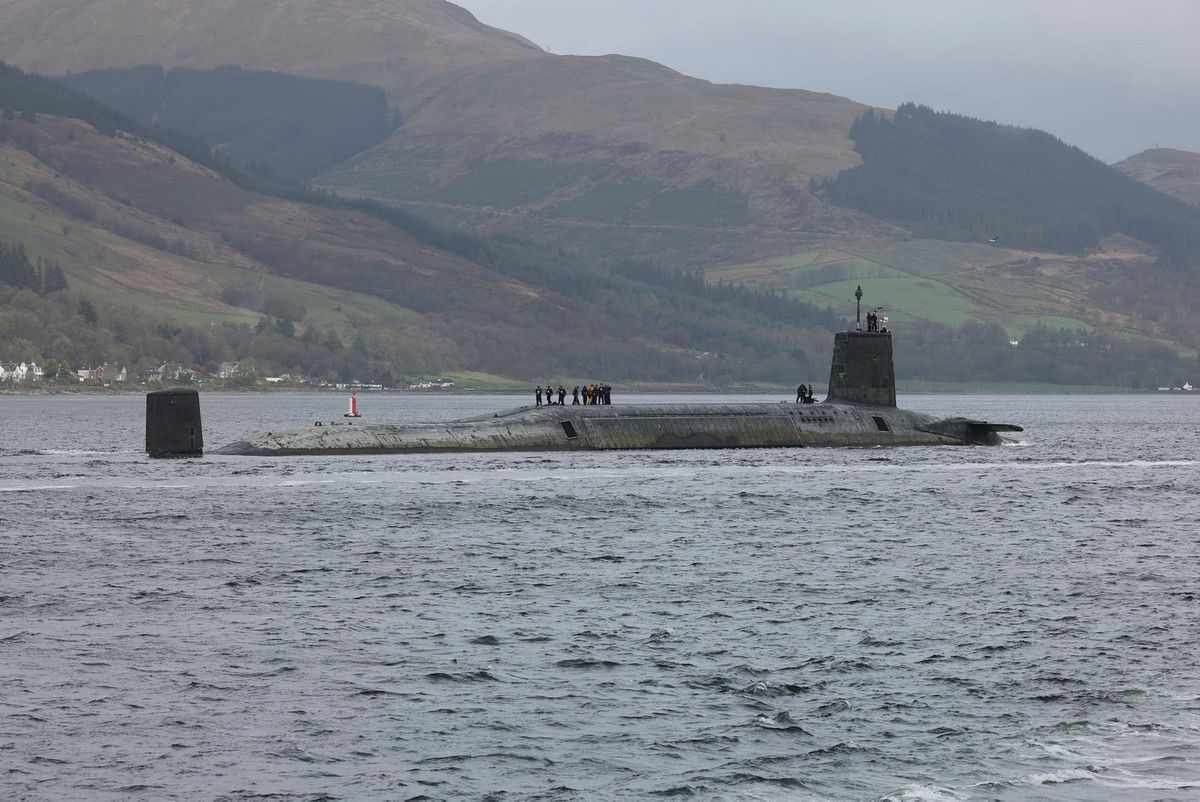
Known as the low frequency fall back (LFFB), the balloon has been kept in an army warehouse on a Dundee industrial estate, next to the city’s Eastern Cemetery. Vehicles to transport it are believed to be housed in a hardened aircraft shelter at the army and airforce base at Leuchars in Fife.
Every autumn, it has travelled with a police convoy to and from a former airfield at Topcliffe, near Thirsk in Yorkshire, to be tested. It was videoed by a Facebook group called Fife Jammer Locations going through Cupar in Fife on 29 August and 12 September.
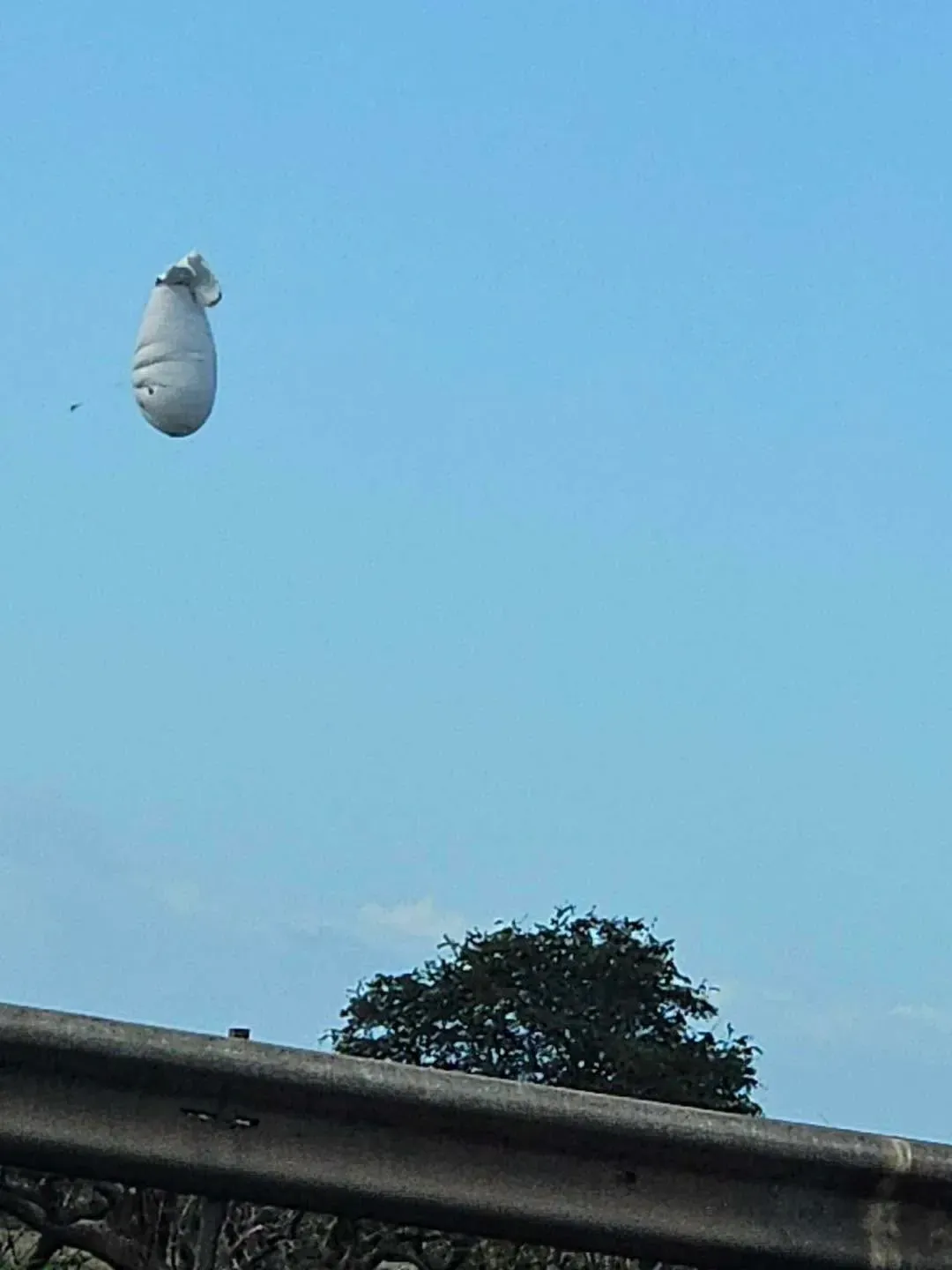
Unfortunately, as Byline Times reported, during its latest test on 4 September the balloon was filmed by another Facebook group, North Yorkshire Weather Updates, partially deflated and spinning on its tether. Footage shows it rapidly ascended, was blown 12 miles east and finally fell into a farmer’s field near Ampleforth.
The history of the balloon can be traced through back issues of magazines published by the army’s Royal Signals Institution. But one of the key sources quoted and linked to in the Byline Times story has since become unavailable on the institution’s website.
That source is the March 2014 edition of the institution’s Journal, with a photo of the actor, Colin Firth, on its cover. The Ferret has obtained a copy and put it back online.
An article on page 23 reported that Dundee staff sergeant, George Cowan, was awarded a silver medal for his “selfless contribution” over a decade to maintaining and improving the LFFB communications system. It was “designed to operate through the atmospherically harsh conditions of a post-nuclear strike against the UK,” the article said.
Cowan was praised for his “message must get through” attitude, and described as being “the solitary flight control officer capable of flying the system for over eight years”. He was credited for "assuring its credibility within the nuclear firing chain”.

The Bylines Times story on 8 September was written by the veteran investigative journalist, Duncan Campbell. Along with researcher, Mike Kenner, he is writing a book on UK nuclear war planning with the provisional title ‘The Decoy Game’, updating his revelatory 1983 book, War Plan UK.
Dave Cullen, a UK nuclear weapons expert from the BASIC nuclear think tank in London, stressed the “vital importance” of communication with Trident submarines in a crisis.
He said: “If this backup communications system relies on a single balloon, the public deserves to know what happened in this incident. Given the details that have already been published, the ongoing silence from the MoD seems to serve little purpose, other than saving them further embarrassment.”
Rob Forsyth, a Royal Navy nuclear submarine commander in the 1970s who now campaigns against Trident, described the balloon as an absurd “Heath Robinson” contraption. It was “so Dad’s Army as to be unbelievable”, he said, referring to the comedy which made fun of the home guard in the Second World War.
“The MoD is understandably reluctant to reveal why this happened but, by saying absolutely nothing, it leaves conspiracy theorists a clear field,” he told The Ferret. “Some explanation as to what happened and reassurance that the vulnerability of a strategically vital communication link is being addressed is needed.”
“It is completely unacceptable that they are refusing to answer questions" – Gillian Mackay MSP, Scottish Greens co-leader
The Scottish Greens called on the MoD to “come clean” and explain what happened. “These are very concerning allegations that have been uncovered, and the MoD should be more transparent,” said the party’s co-leader, Gillian Mackay MSP.
“It is completely unacceptable that they are refusing to answer questions and refusing to give any details on what was behind this when there is video footage that will rightly be concerning people across the country.”
The SNP defence spokesperson, Dave Doogan MP, described the UK nuclear weapons programme as a “costly charade” which was fooling nobody. “Even advocates for nuclear weapon systems should be dismayed to see such vanity and extravagance undone by a balloon on the end of a string,” he said.
A Ministry of Defence spokesperson told The Ferret: “We’re not commenting on this.” A spokesperson for the army added: “We will not be commenting.”
Go beyond the headlines with us
Deeper investigations, clear explainers, and reporting with real impact all depend on your support.

Derelict buildings across Scotland are creating a plethora of problems. Local communities are bearing the brunt.

A total of 36 boats have been fined £140,000 in the last 10 months for entering Scotland's marine protected areas. But campaigners claim the fines are too small and may not be a sufficient deterrent.

The university has continued to argue staff cuts are needed to make ends meet. But a growing cash balance has raised questions about the need for more redundancies, and whether it qualifies for millions in public support.


Gypsy Travellers have been persecuted for centuries. But despite a Scottish Government apology last June for the Tinker Experiment – which tried to assimilate them into settled culture – some claim their cultural rights are still being denied.
