We asked about the environmental records of Scotland’s 25 best golf courses. The US president’s resort in the north east was the only one to breach its licence in recent years.
Climate change is causing rising sea levels and coastal erosion and 109 Scottish golf courses are at risk. We examined the issue as part of Green drive: Golf and the environmental crisis – a special Ferret series on golf and the environment.
Oceans… they produce more than half the world’s oxygen, hold most of the planet’s biodiversity and account for nearly half the global population’s livelihoods, providing crucial food, jobs and energy.
The marine environment is under threat, however, from overfishing, dredging, fish farming, coastal urbanisation, energy infrastructure, mining activities, invasive species, pollution and climate change.
This is the subject of a new, year-long investigation by The Ferret, that takes in not only Scottish seas but those elsewhere in Europe.
For the rest of 2024, The Ferret will be digging deep to expose myriad problems while also looking at innovative solutions to pressing issues facing our seas.
Marine protection in Europe is an ongoing debate. To slow and attempt to reverse marine degradation, governments must make difficult decisions to protect our waters. But due to powerful vested interests, and coastal communities’ concerns about marine restrictions hitting their livelihoods, striking the right balance is a tough path for Europe’s lawmakers to navigate.
It’s a debate we witnessed in Scotland recently over controversial government plans to give seas special protections to allow their marine ecosystems to grow.
The plans were shelved after some coastal communities, and fishing and island organisations, argued that highly protected marine areas (HPMAs) would decimate their livelihoods, and fuel depopulation. But there is support in coastal and island communities for marine areas to be protected and enhanced, suggesting a balance can be struck.
This is just one issue we’ll examine. We’ll also look at key marine species in decline, areas harmed by pollution, the influence of companies and special interest groups, and what role lesser-known threats to marine environments, such as sewage pollution, are playing.
The series will include news reports, longform features, insightful data visualisations, explainers and fact checks.
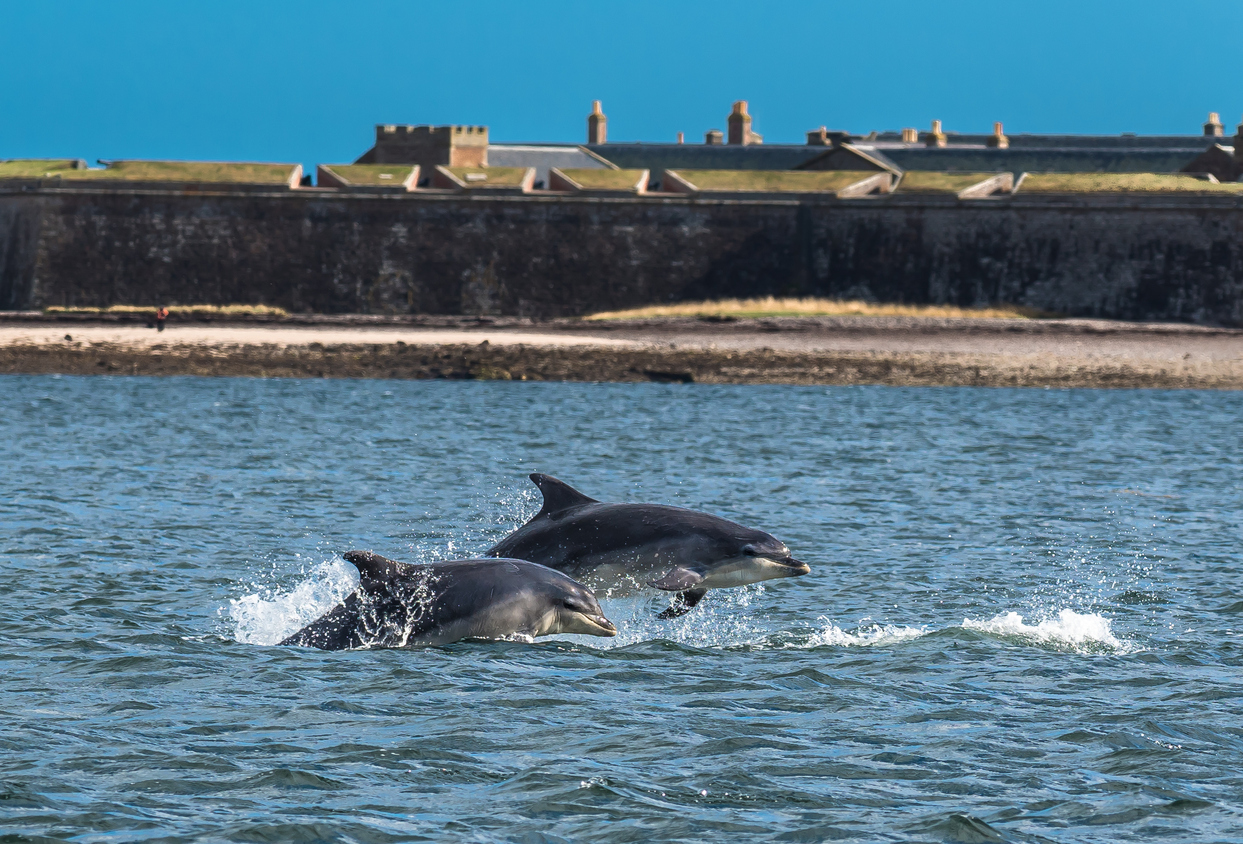
A team of bottlenose dolphins jumping in the Moray Firth in front of Fort George near Inverness in Scotland. Image: grafxart8888/iStock
IRPI, which is conducting fieldwork in Sardinia, Sicily and Apulia and their minor islands, will publish its work later this year.
Our series starts on Sunday with an exclusive report, followed by another five exclusive reports next week — and over the course of 2024 we’ll produce another two tranches of special reports, providing unparalleled coverage of issues affecting the marine environment.
Scotland’s Seas in Danger is a project funded by Journalismfund Europe – an independent, non-profit organisation based in Belgium that supports cross-border investigative journalism.
The Ferret hopes you’ll support our journey into the depths over the next 12 months and we look forward to hearing your views on our reporting.
Scotland’s Seas in Danger is a year-long investigative series by The Ferret that delves into Scotland’s marine environment. Our investigations were carried out with the support of Journalismfund Europe.
If you like our independent journalism and want to help us do more, support us by becoming a member. You can also donate or subscribe to our free newsletter.
Billy is a founder and co-editor of The Ferret. He's reported internationally and from Scotland, and focuses on far right extremism, human rights, animal welfare, and the arms trade. Likes longform storytelling and photography.
We asked about the environmental records of Scotland’s 25 best golf courses. The US president’s resort in the north east was the only one to breach its licence in recent years.
Climate change is causing rising sea levels and coastal erosion and 109 Scottish golf courses are at risk. We examined the issue as part of Green drive: Golf and the environmental crisis – a special Ferret series on golf and the environment.
Huge volumes of sewage sludge have been used to fertilise Scottish farmland. Studies show it contains microplastics, forever chemicals and cancer-linked pollutants.