

Edinburgh Uni staff are losing their jobs. Their boss has two
Sir Peter Mathieson appears to have confirmed he is being paid for a board role at a university spin-off at the same time as many staff face uncertainty about their futures.
Sir Peter Mathieson appears to have confirmed he is being paid for a board role at a university spin-off at the same time as many staff face uncertainty about their futures.
Scottish ministers have been privately urged to back plans for a golf course on a coastal wildlife site. This has been condemned as “backdoor lobbying that tries to bypass the rules”.
More than 20 wind farms are failing to pay an agreed amount to locals. That could cost Scottish communities over £50m.
Sir Peter Mathieson appears to have confirmed he is being paid for a board role at a university spin-off at the same time as many staff face uncertainty about their futures.

The principal of the University of Edinburgh has confirmed he is working a paid second job while overseeing cuts that have seen hundreds of staff leave the institution.
The Ferret reported last year that Sir Peter Mathieson had taken on a role as a non-executive director at Roslin Cell Therapies (CT) – a private company that grew out of the university’s Roslin Institute, where Dolly the Sheep was cloned.
Mathieson took the position in mid-2024, months before announcing the university was seeking £140m of savings which unions believe could put up to 1,800 jobs at risk.
Mathieson and the university did not previously say whether the role was paid, despite questions from The Ferret. In September we revealed that the seven board members at Roslin CT had shared over half a million pounds in pay-outs in 2024.
At the time we reported that story, Mathieson’s register of interest form with the Scottish Funding Council – where he is also a board member – described the role as a “non-financial interest”.
But that document has since been updated to note that it is a remunerated position. Earnings Mathieson makes from the role will supplement one of the biggest pay packets in Scottish higher education, worth more than £400,000 each year.
Fund journalism that serves the public.
The Ferret investigates what’s going on in Scotland, and who benefits. Reader support keeps our journalism independent.
Responding to fresh questions from The Ferret, the university reiterated that the role is undertaken in Mathieson’s own time. It has previously said that his role helps support Roslin CT’s “life-saving” work.
But the university declined to comment further or confirm when Mathieson’s position at the firm became paid or how much he is receiving for it. Roslin CT did not respond to our request for clarity.
The staff union at Edinburgh said it had “enormous questions” about why it was only now being declared as a paid position despite the university being asked about it “many months ago”.
“It’s clear from accounts that have been released [by Roslin CT] that its non-executive directors are paid,” the president of the Edinburgh branch of the University and College Union, Sophia Woodman, claimed.
Woodman said it was “quite outrageous” that Mathieson had taken on a second role while many at the university face uncertainty about their futures. Staff have previously accused Mathieson of “greed” for accepting the position.
In the university court’s own register of interests, the role appears as an “other relevant interest”.
The Scottish Greens MSP for the Edinburgh region, Lorna Slater, said staff needed “full transparency” from those at the top of the university.
“Public institutions depend on trust. That trust is undermined when there is a lack of openness, particularly when people’s livelihoods are at stake,” Slater said.
“If the principal has taken on a remunerated second role while warning of a financial crisis, that raises serious questions about priorities and accountability.”
 Paul Dobson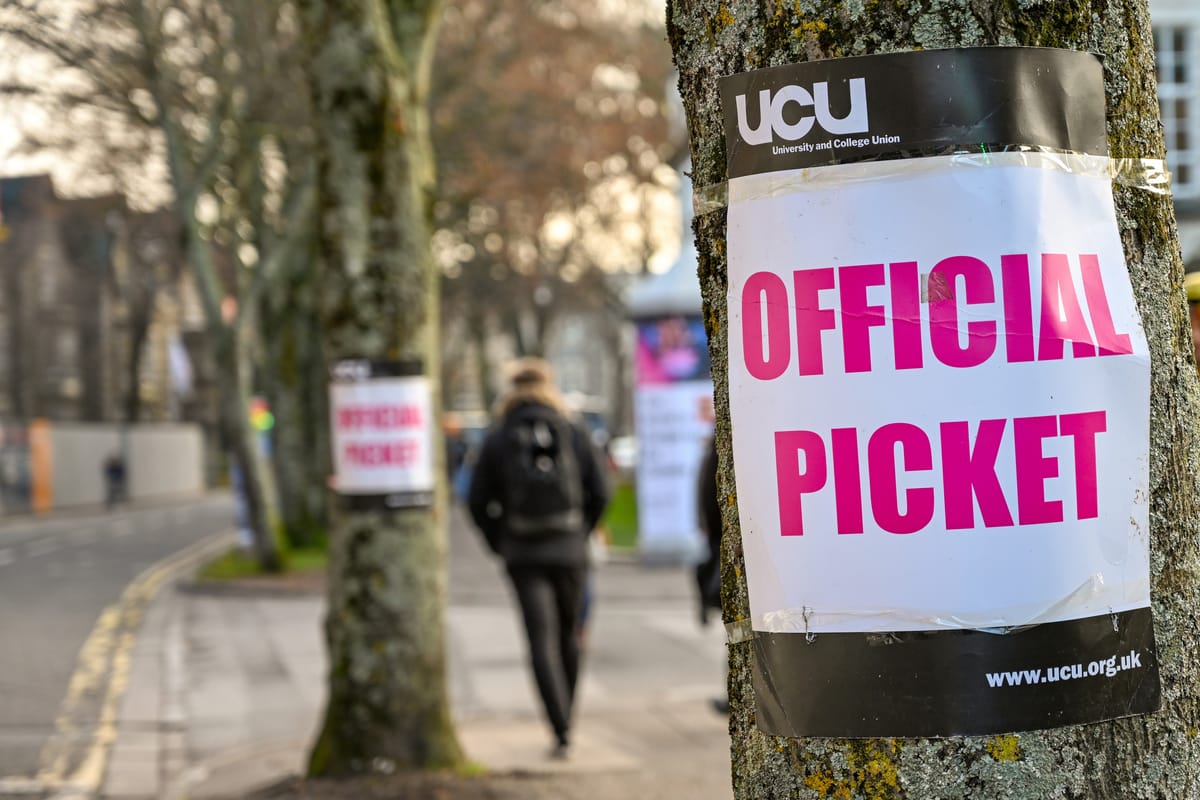
The university says cuts are needed to deal with mounting financial pressure. In its most recent annual report, published last month, the institution argued that spending was growing faster than income and that this posed a threat to the university’s long-term financial sustainability.
The staff union disputes that there is any crisis. It points out that Edinburgh is still recording surpluses and – unlike other Scottish universities that have faced serious financial problems – has assets worth over £3bn.
It was reported last week that 800 staff left Edinburgh over the last financial year. This included some who had taken voluntary redundancy and others on fixed terms contracts which were not renewed.
Anger among staff has been amplified by a perceived lack of transparency from management about decision-making around the cuts.
The university senate, which oversees academic issues at the institution, issued a vote of no confidence in management over the cuts last year, in part because they said key evidence showing the rationale behind them had not been shared. But this has not led to a change of course.
In December, The Ferret revealed that the institution had also paid £750,000 to external consultants to advise on issues including “academic efficiency opportunities”. Staff said they had repeatedly asked about the firm, Nous Group, but that management had been “economical with the truth” about the university’s relationship with them.
Independent journalism isn’t free, but it is essential.
We investigate power, money, and decisions made in public view. Reader support protects our independence and gives us time to do work that others won’t.

More than 20 wind farms are failing to pay an agreed amount to locals. That could cost Scottish communities over £50m.

John Carroll says his nighttime rounds are protecting the community. Critics say his “abhorrent” views on Hitler, the Holocaust and race are incompatible with his adopted role.

The Scottish charity regulator has announced it will investigate Glasgow's Centre for Contemporary Arts, which folded last month, due to concerns raised about its "historic financial management".

Dozens of complaints about reading material in school libraries have been received, with campaigners warning that "book bans" could increase.


