

Scotland’s abandoned buildings leave communities to bear the burden
Derelict buildings across Scotland are creating a plethora of problems. Local communities are bearing the brunt.
Derelict buildings across Scotland are creating a plethora of problems. Local communities are bearing the brunt.


A total of 36 boats have been fined £140,000 in the last 10 months for entering Scotland's marine protected areas. But campaigners claim the fines are too small and may not be a sufficient deterrent.

The university has continued to argue staff cuts are needed to make ends meet. But a growing cash balance has raised questions about the need for more redundancies, and whether it qualifies for millions in public support.

The Scottish Government gave local authorities £20m to tackle a "nature emergency". But we found that around £4m of that sum was spent on fixing cars and office equipment, among other non-environmental spending


Millions of pounds from a flagship Scottish Government environmental fund has been mispent by councils, The Ferret can reveal.
The Nature Restoration Fund (NRF) – part of a strategy to tackle Scotland’s “nature emergency” – was established in 2021 to “restore nature, safeguard wildlife and tackle the causes of biodiversity loss and climate change”.
In its first four years the fund awarded £20m directly to Scotland’s local authorities. But we found that almost a fifth of that total was redirected to routine spending, including vehicle maintenance and office equipment.
Because the fund is not ringfenced this spending was legal and did not break the terms of the NRF. But environmental charities described our findings as “deeply disappointing” and “frustrating”.
They pointed out the Scottish Government has claimed the NRF is an important part of its response to the nature crisis, but has simultaneously cut the budgets of most other environmental agencies.
Owned by readers. Built for accountability.
The Ferret is member-owned journalism. That means we can follow leads that matter even when they’re uncomfortable for the powerful.
Owned by readers. Built for accountability.
The Ferret is member-owned journalism. That means we can follow leads that matter even when they’re uncomfortable for the powerful.
Individual councils gave a variety of reasons for reallocating their portions of the NRF to general spending, including not having enough time to pick relevant projects to support.
Others acknowledged they had spent their allocation on unrelated work, but committed to internally making it up by drawing from their general capital budgets in future years.
The Institute for Fiscal Studies said that even if mispending was technically legal, it could undermine Scottish Government claims about the scale of their environmental commitments— which were repeated in social media advertisements during the run up to this year’s election.
A Scottish Government spokesperson said it allows local authorities the “financial freedom to operate independently” and “manage their own budgets”, adding that its NRF allocations have “enhanced local authority engagement in nature restoration” and supported at least 575 projects.
The Ferret’s investigation involved analysing councils’ accounts obtained using freedom of information law.
We asked each local authority to list how it had spent its share of the NRF since it was established in 2021. We excluded the most recent year, because of changes to how allocations were categorised and because some councils said they were still accounting for exact expenditures.
Some councils spent more than their entire NRF on projects restoring nature, and could account for itemised spending on each. For example, Highland Council spent £1.26m on projects ranging from tree planting to river and pond restoration, and used the NRF to set up its own community grant program for nature recovery through which it allocated £200,000.
Others slightly underspent their allocations. Edinburgh City Council spent £32,000 (4.6 per cent) short of its total allocation for the first four years of the fund but said it had delivered “significant nature and biodiversity projects” with the rest. Angus Council underspent by £62,000 (6.9 per cent), Scottish Borders £45,000 (7.4 per cent), Falkirk council £68,865 (9.7 per cent) and Stirling Council £68,256 (15 per cent).
“Restoring nature and tackling climate change are the defining challenges of our era.” — Dan Paris, Scottish Environment LINK
Some claimed to have spent most or all of their allocation on nature but were unable to account for exactly how, neither in response to requests for information nor when approached for comment. They include West Dunbartonshire, East Dunbartonshire, Fife, and Argyll and Bute.
Others misspent much larger portions of their total allocation.
Glasgow City Council could not account for almost a quarter of its NRF budget and did not comment. East Renfrewshire Council put more than a third of its allocation into general spending, but committed to spending “all funds…in the coming years to maximise biodiversity outcomes”.
North Ayrshire Council confirmed it has spent less than half of its £715,000 NRF share on relevant projects to date. “However, there is no mechanism for underspend to be returned and the final decisions on spending sit with the local authorities,” a spokesperson said, adding it had appointed a “biodiversity officer” to deliver future projects and “is committed to spending its full NRF allocation on nature restoration”.
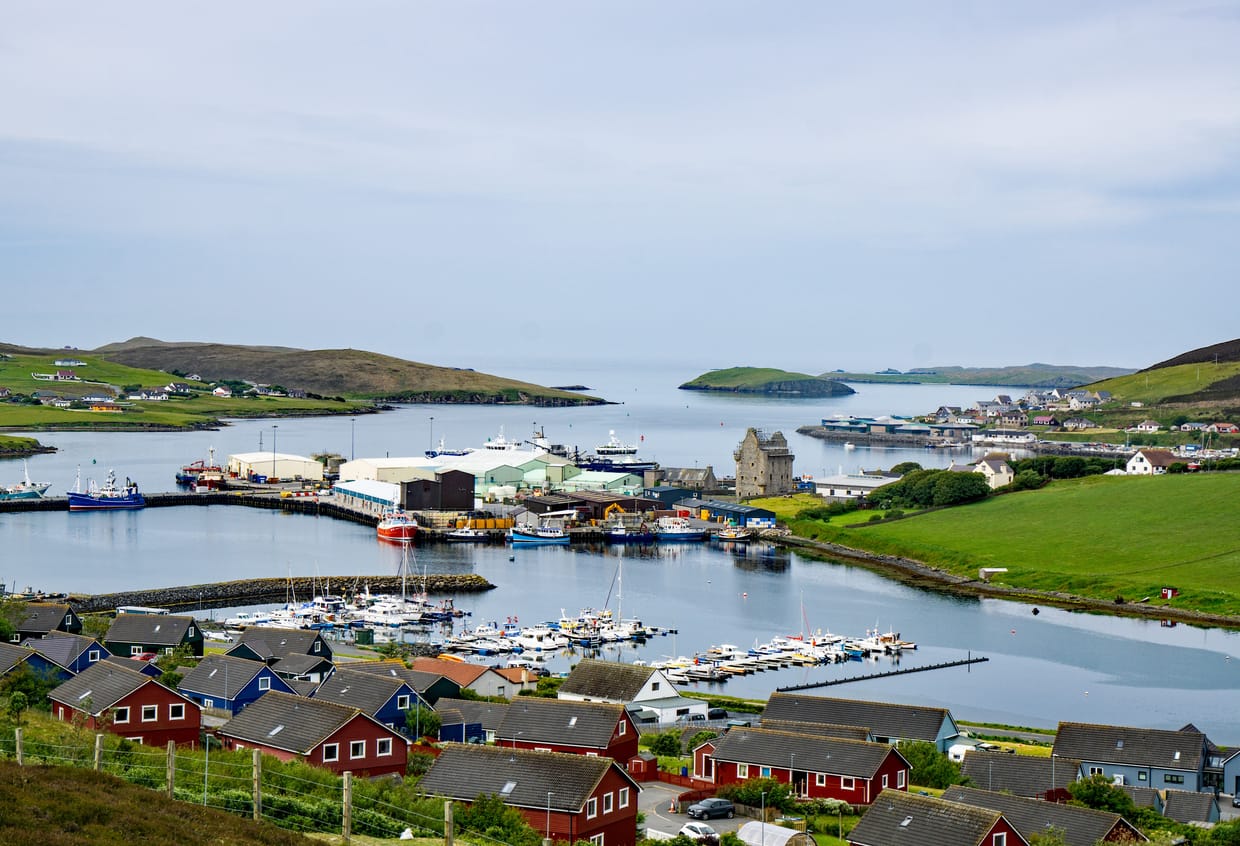
Despite featuring on Scottish Government graphics promoting the NRF, Shetland Islands Council (SIC) did not identify or approve a single nature recovery project in the first four years of the fund, and spent its entire £256,000 allocation in that time on general expenses.
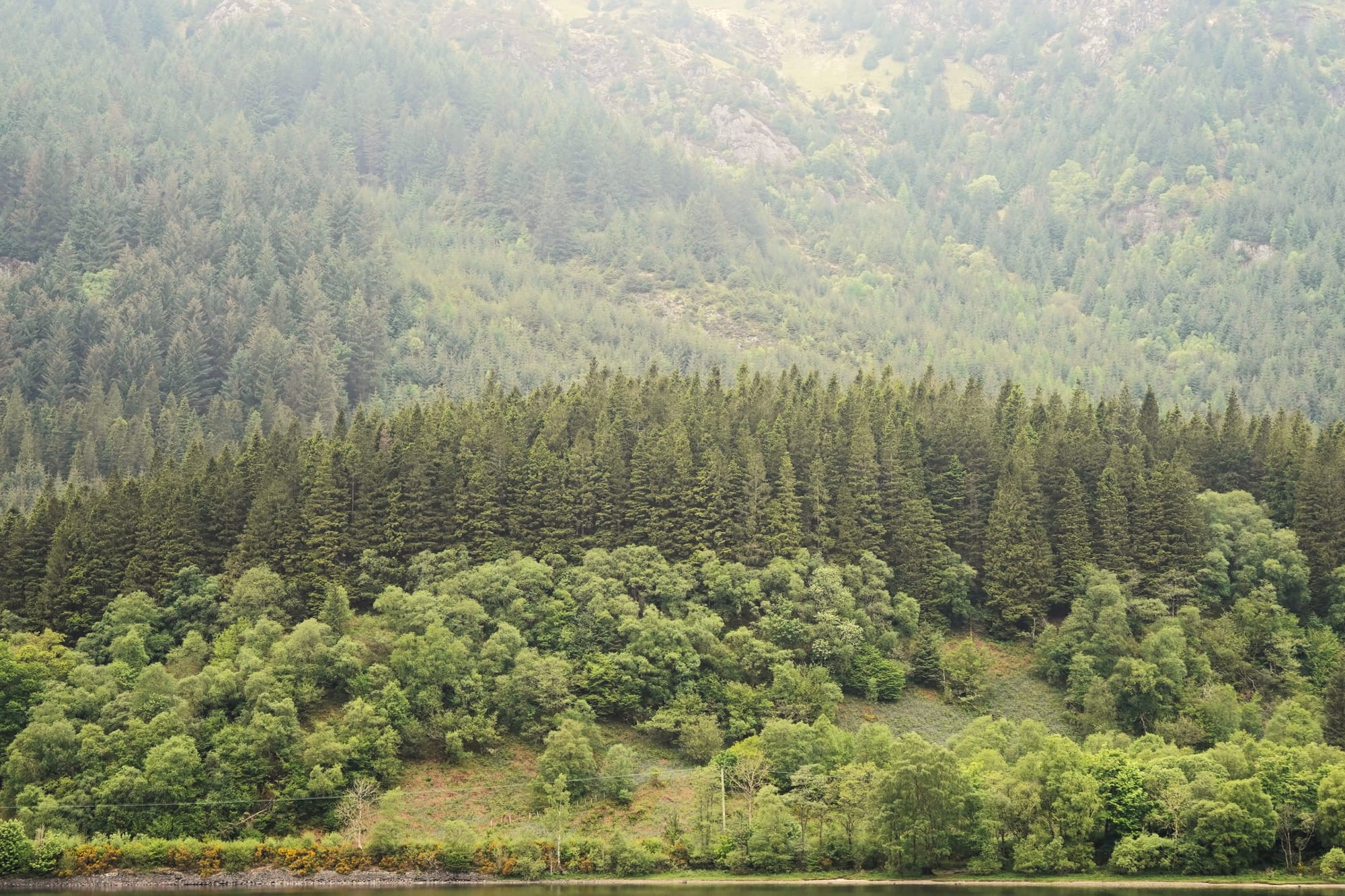
Most councils who did not spend the money on nature restoration did not specify exactly what it went towards, other than general capital budgets. In response to a freedom of information appeal an SIC officer gave “vehicles, ICT, certain maintenance” as examples.
The SIC did not respond to a request for comment, but did share an internal briefing document about the NRF circulated to councillors earlier this month, which explained that no projects were picked because of “project development timescales and staff capacity constraints”. The briefing said: “Unspent funds from prior years can also be made available” for nature projects but added “there is no requirement for the council to do so”.
Dan Paris, director of policy and engagement at Scottish Environment LINK, a coalition of 50 environmental charities, said the diverted funding was “deeply disappointing” and would hurt local communities most.
“Restoring nature and tackling climate change are the defining challenges of our era, and the Nature Restoration Fund is the Scottish Government’s flagship policy to put money directly into tackling the nature crisis,” he said.
“Councils should be required to ring-fence the money allocated to them for nature, and they should use it to protect and restore the environment for the benefit of everyone.”
“This isn’t just an environmental issue. Healthy natural systems are part of how the country builds and secures its resilience.” — Ruchir Shah, Scottish Wildlife Trust
Ruchir Shah is director of external affairs for the Scottish Wildlife Trust. He said it was “deeply frustrating” to see councils’ NRF spending not reach nature restoration projects, but added that the responsibility was shared between local authorities and central government.
“Leaving money unspent — or allowing it to be diverted away from its purpose — risks undermining progress at exactly the moment we need to accelerate it,” he told The Ferret. “It also raises questions about how government is presenting its investment in nature, and where responsibility sits when that funding is not translating into delivery on the ground.”
“This isn’t just an environmental issue. Healthy natural systems are part of how the country builds and secures its resilience - they reduce flood risk, support people’s health, and ease pressure on public services.”
In a 2025 “interim evaluation” of the NRF, consultants SAC described the fund as “unprecedented”, “instrumental” and “successful”. It acknowledged, however, that “reporting was incomplete” for seven local authorities and excluded them from its conclusions. Those were Shetland, Argyll and Bute, North Ayrshire, East Ayrshire, South Lanarkshire, Eilean Siar and Scottish Borders.
Following that review the government shifted how the NRF was awarded to councils last year — allocating a fifth as a revenue (not capital) grant.
East Renfrewshire told The Ferret that this was a “positive change”, and Shetland Islands Council said that this year it was able to support its first nature restoration projects since the NRF began. It has now spent £13,353 on appropriate projects (3.2 per cent of it's total five-year allocation).
While most councils who responded to The Ferret chose not to comment on how the fund was distributed, some asked for changes to make their allocations more predictable. Stirling asked for lump sum awards at the start of every financial year, not monthly allocations. East Ayrshire said advance warning of award amounts and multi-year allocation would be better suited to long-term environmental projects.
David Phillips, the Institute for Fiscal Responsibility’s head of devolved and local government finance, said named but non-ringfenced grants like the NRF can be useful. When central government wants to achieve a specific outcome but is unsure how much it will cost, he added, they give local authorities freedom to “spend more or less” depending on their need.
Phillips continued: “I’m not sure what mandate or outcomes the nature recovery fund comes with in Scotland. I think if there is a problem here, it’ll be if the government claims it has given councils X million for nature restoration, or it has “spent £X million on nature restoration” via the fund.”
The government did just that in a May 2025 press release, touting the NRF’s total “invested in nature projects” as proof that “there can be no denying how serious we are about protecting and restoring our planet for future generations.” The same year all NRF funding was diverted to resolve council pay disputes.
Claims about the importance of the NRF come as other environmental funding in Scotland is increasingly squeezed. Three major environmental agencies lost nearly £20m in this year’s budget and late last year a £100m “nature investment partnership” fell through.
Independent journalism isn’t free, but it is essential.
We investigate power, money, and decisions made in public view. Reader support protects our independence and gives us time to do work that others won’t.

Derelict buildings across Scotland are creating a plethora of problems. Local communities are bearing the brunt.

A total of 36 boats have been fined £140,000 in the last 10 months for entering Scotland's marine protected areas. But campaigners claim the fines are too small and may not be a sufficient deterrent.

The university has continued to argue staff cuts are needed to make ends meet. But a growing cash balance has raised questions about the need for more redundancies, and whether it qualifies for millions in public support.

Gypsy Travellers have been persecuted for centuries. But despite a Scottish Government apology last June for the Tinker Experiment – which tried to assimilate them into settled culture – some claim their cultural rights are still being denied.
