

Was a business near you behind a ‘major’ breach of pollution rules? Scotland’s environment agency won’t tell us
Sepa is withholding details of who caused around 950 breaches of environmental rules, including over 300 it classed as ‘major’.
Sepa is withholding details of who caused around 950 breaches of environmental rules, including over 300 it classed as ‘major’.

The far right stands accused of weaponising Christianity for its culture war. But churches are starting to call out those "cynically using the Christian label” for political ends.


Are farmed salmon in Scotland going to be fed processed chicken? Salmon companies, and the UK government, won’t say.

Sepa is withholding details of who caused around 950 breaches of environmental rules, including over 300 it classed as ‘major’.

Scotland’s green watchdog is refusing to name and shame businesses caught breaking environmental rules, prompting accusations it is “shielding” polluters from reputational damage.
The Scottish Environment Protection Agency (Sepa) recorded 302 ‘major’ breaches of environmental licences across the country between January 2025 and April 2026, it confirmed to The Ferret when asked for figures under freedom of information (FoI) law.
But the regulator is withholding details of who caused these ‘major’ incidents – and around 650 lower level breaches – as well as where they happened, and what kind of pollution was caused.
Critics say the decision represents “several steps backward” on transparency around the state of Scotland’s environment. Until 2019, Sepa published annual compliance reports rating environmental performance at about 5,000 sites around the country on a scale from “very poor” to “excellent”, based on inspections and sampling done by the regulator.
This allowed communities to see if local sites were flouting the rules and helped The Ferret expose rule-breaking at a range of high-profile locations. Among them have been Donald Trump’s golf courses, the private school attended by the King, and facilities owned by the oil giants ExxonMobil and BP.
However, these reports have not been published in the years since the Covid-19 pandemic and a 2020 criminal cyber attack on Sepa which caused information to be lost.
In 2024, The Ferret was able to obtain details of breaches across Scotland for most of that year and 2023.
But in response to an FoI request asking for the same information this year – which took almost eight months to arrive – the regulator claimed it could not release information about all of the breaches in 2025 and early 2026 because it would take staff too long to remove personal data which is “heavily interwoven” into spreadsheets that hold it.
In response to this story, the agency admitted that “our performance has dropped below our own expectations” in handling the FoI request, but pointed to the “volume of data” involved. It said personal information could not be “identified or removed through automated means” using its current systems.
Opposition politicians called for the information to be released anyway, arguing that the public “deserves to know what damage is being done and who is doing it”. One former chief executive of Sepa pointed out licence breaches could have “real personal impacts if you live close by”.

Hi, Karin Goodwin here, one of The Ferret's editors.
If a business breaks pollution rules on your doorstep, we think you deserve to know. That's why we're committed to challenging Sepa’s decision not to release these records. If we have to, we’ll take our case to the Scottish Information Commissioner.
But working on an appeal like this takes time and money.
For just £1 a week, you can become a Ferret member and help fund this challenge and more investigations that hold polluters to account.
In 2017, compliance reports published by Sepa showed sewage problems at Trump’s golf resort in Aberdeenshire. His other course at Turnberry was rated “poor” for exceeding limits for taking water from the local environment for irrigation on 26 days in 2018.
Gordonstoun, the exclusive private school attended by King Charles, was rated as poor in 2018 because its sewage treatment plant repeatedly exceeded limits for ammonia pollution.
BP was damned as “very poor” in 2017 because of “poor control” of noise from gas flaring at the Kinneil terminal near Grangemouth, which it sold to Ineos that year. ExxonMobil’s ethylene plant at Mossmorran – which stopped production after 40 years in early 2026 – was also rapped in 2019 for causing disruption to local communities because of flaring.
 Paul Dobson
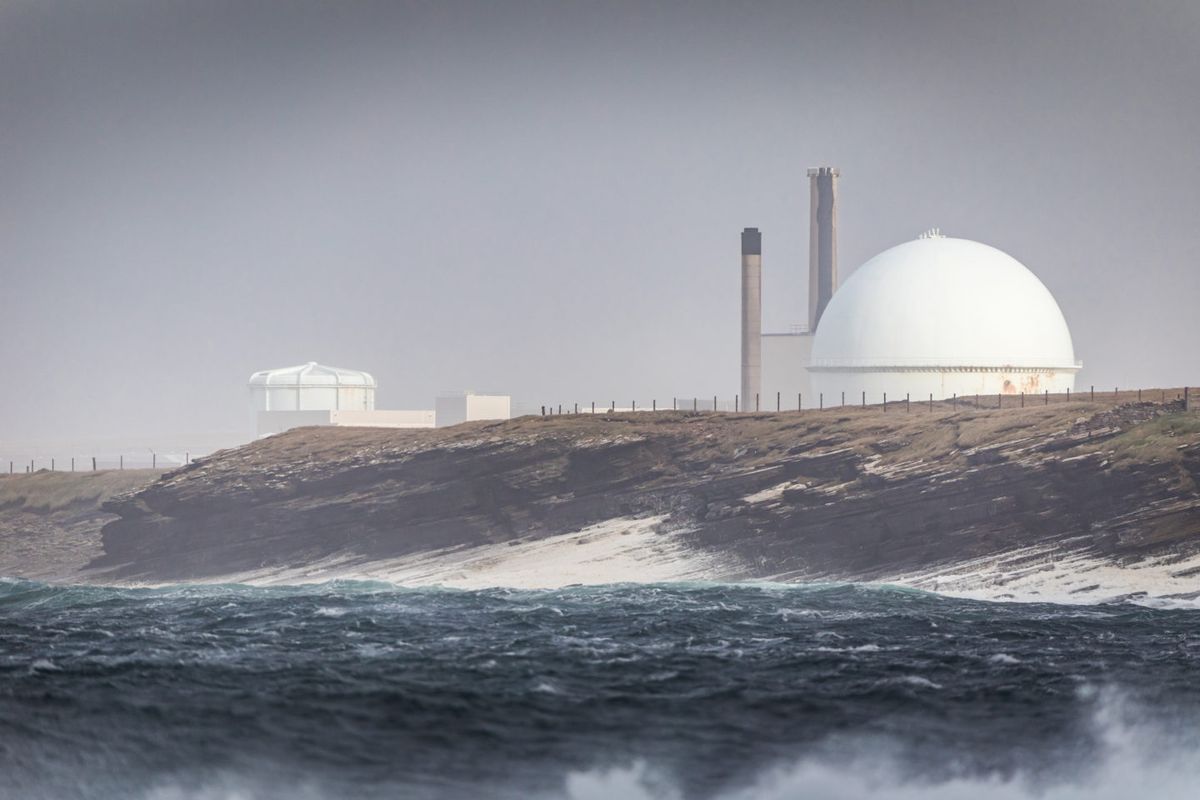
One of the most prolific sites for breaches revealed by our FoI for 2023 and 2024 was the nuclear clean up site at Dounreay in Caithness, where there were 11 instances of non-compliance.
The Faslane naval base also breached its licence in that period – although this did not involve radioactive materials – as well as whisky distilleries, fish farms, and the visitor centre at the Culloden battlefield site.
Professor James Curran, who previously served as chief executive of Sepa, said it was “really important that the public is fully informed about breaches of environmental licences”.
He added: “There is plenty of evidence that so-called ‘name and shame’ is an effective regulatory tool, bringing shareholder, customer and reputational pressure to bear on non-complying companies.
“Sepa is a public service. It collects and holds pollution data. In my view, an essential part of that public service is to keep the public informed about companies that fail to comply with environmental law.”
The Scottish Liberal Democrats environment spokesperson, Sanne Dijkstra-Downie, said she would “like to see more proactive publishing around environmental non-compliance”.
“It seems like Sepa have taken several steps backwards when it comes to making data available on Scotland’s worst environmental offenders,” Dijkstra Downie argued
The Scottish Greens MSP Mark Ruskell said the fact Sepa “released this information in the past shows they can do it again”. He added: “Sepa should not be shielding companies from reputational risk. All this will do is weaken environmental protections”.
A Sepa spokesperson said the body agreed that “making environmental performance information as accessible as possible is important” and that it was “working hard to achieve this”. It had started implementing parts of a new Environmental Performance Assessment Scheme (EPAS) in 2026, they added.
“Importantly, a core element of EPAS is our priority sites list which has been designed to ensure that regulated businesses who choose not to comply and fail to take appropriate steps to address compliance issues will be publicly called out,” the spokesperson continued. “We will start to do this once the full scheme goes live and expect to be able to update on timescales during 2027.”
In the meantime any non-compliance with environmental licences was being “tackled in line with our enforcement policy”, Sepa added. The agency said a "chief regulator's report" would be published in 2027 which would "include data with respect to compliance activities" in 2026.
Keep The Ferret independent
The Ferret does things differently: sharp fact checking, and public-interest investigative journalism backed by our readers.

The far right stands accused of weaponising Christianity for its culture war. But churches are starting to call out those "cynically using the Christian label” for political ends.

Macaques are monkeys known for their intelligence. Large numbers have been shipped more than 6,000 miles to Scotland for experiments.

A new report claims Asos, part owned by Scotland’s richest man, is still harming the environment and not adequately supporting its workers. Asos says it is committed to addressing concerns about the fashion industry.


Observations by campaigners suggest that three of the UK’s nuclear-armed submarines are currently at sea. This is the first time this has happened since 2022, and it’s caused concerns.