

Scotland’s abandoned buildings leave communities to bear the burden
Derelict buildings across Scotland are creating a plethora of problems. Local communities are bearing the brunt.
Derelict buildings across Scotland are creating a plethora of problems. Local communities are bearing the brunt.


A total of 36 boats have been fined £140,000 in the last 10 months for entering Scotland's marine protected areas. But campaigners claim the fines are too small and may not be a sufficient deterrent.

The university has continued to argue staff cuts are needed to make ends meet. But a growing cash balance has raised questions about the need for more redundancies, and whether it qualifies for millions in public support.

The Ferret did a deep dive to explain why a bird cull on Lewis dating back centuries is causing outrage amid claims it's a "blood sport"


Each summer, men from the village of Ness on the Isle of Lewis embark on a journey unlike any other in Britain.
Their destination is Sula Sgeir, an isolated rocky outcrop in the North Atlantic, around 40 miles north of Lewis, where they harvest young northern gannets – known locally as guga – in a tradition that stretches back hundreds of years.
The hunt usually takes place in late summer, when the young gannets are large enough to be harvested but have not yet fledged. The birds are brought back to Lewis, where they are shared among families and the local community.
The meat is considered a delicacy by many islanders and the hunt is valued by supporters as much for its cultural importance as for the food it provides.
For opponents, however, it is a “blood sport” and outdated practice that raises serious questions about animal welfare and wildlife conservation. They say gannet chicks are “snatched from their nests and bludgeoned to death for nothing more than a tradition.”
The debate has intensified in 2026 following renewed calls from animal welfare organisations for the hunt to be phased out – with one critic even standing as a candidate in a Scottish consistency dressed as a giant gannet to draw attention to the issue.
But why is the huntgarnering more coverage than usual this year?
As part of its Denoiser series, The Ferret has been digging deeper into the guga hunt.
Owned by readers. Built for accountability.
The Ferret is member-owned journalism. That means we can follow leads that matter even when they’re uncomfortable for the powerful.
The guga hunt is one of Scotland's oldest surviving food-gathering traditions. Historical references date back at least to the sixteenth century.
For generations, communities in the far north-west of Scotland relied on the sea for survival.
Fishing, seabird hunting and the collection of eggs were once common across many coastal communities. As living standards changed and wildlife protection laws developed during the twentieth century, most of these practices disappeared.
One of the most common questions asked is why the hunt remains lawful when gannets are protected wild birds.
Under the Wildlife and Countryside Act 1981, most wild birds receive legal protection. However, the legislation allows licences to be issued for the traditional taking of guga from Sula Sgeir for human consumption, provided strict conditions are met.
NatureScot, Scotland's nature agency, is responsible for deciding whether a licence should be granted each year. According to the agency, its annual decision is based on scientific evidence about the health of the gannet population rather than on whether the tradition itself is ethically acceptable.
NatureScot says its role is to administer the law and to assess licence applications against conservation requirements and the available evidence. NatureScot's explanation of the licensing process is available here.
The licence specifies the maximum number of birds that may be taken and includes conditions intended to ensure that the birds are killed humanely.
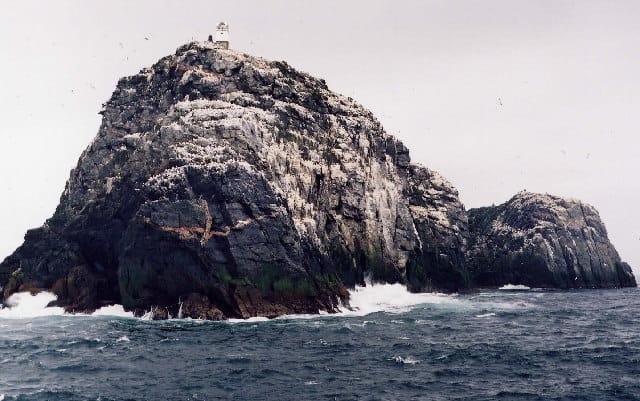
For many years, the annual licence permitted up to 2,000 birds to be harvested but the hunters did not apply for a license between 2022-24 due to avian flu concerns, and NatureScot reviewed the available scientific evidence on the Sula Sgeir gannet population.
As a precaution, it reduced the permitted harvest to a maximum of 500 birds while further monitoring was undertaken. NatureScot said the decision reflected uncertainty about the long-term effects of avian influenza and the need to ensure that any harvest remained sustainable.
The reduced quota marked one of the most significant changes to the licensing regime in recent decades and helped bring renewed public attention to the hunt.
NatureScot says that the hunt will remain sustainable but does not take into account future HPAIV outbreaks, offshore wind development, or climate change in its modelling. The Scottish Government’s Seabird Action Plan lists these as among the main threats to seabirds in future.
The annual expedition is organised by the Men of Ness and hunt supporters emphasise that participation requires considerable skill, experience and respect for the environment.
They cull young gannets from cliffs using a pole and loop. The birds are taken from their nests and despatched with a sharp blow to the head. The hunters then pluck, draw, salt, and preserve them in brine on the spot.
The hunters reject suggestions that the hunt is carried without regard for animal welfare, claiming that the birds are killed quickly and that the expedition adheres to the terms of NatureScot's licence.
Nevertheless, the sight of young gannets being killed has become increasingly controversial, particularly as images and video have spread more widely through television, online media and social platforms.
Growing public concern about animal welfare, increased awareness of declining seabird populations and the rise of social media, have transformed what was once regarded as a local tradition into a national debate.
For some people, the practice appears difficult to reconcile with modern attitudes towards wildlife.
Others argue that judging a centuries-old island tradition through a contemporary urban lens overlooks its cultural and historical significance.
The Men of Ness argue that the hunt is an integral part of the identity of their community and one of the last surviving examples of traditional food gathering in Scotland.
They reject suggestions that the birds suffer unnecessarily, claiming they are dispatched quickly in accordance with licence conditions.
Many islanders also express concern that criticism of the hunt sometimes fails to recognise the importance of preserving traditions in island communities that have already seen significant social and economic change.
Torcuil Crichton, the Labour MP for Na h-Eileanan an Iar (formerly known as the Western Isles), said the guga harvest is an "essential part of the history, culture and identity of Ness". He added: "The human population of these islands have lived in harmony with the environment for centuries. We don’t need campaigners with a saviour-complex to tell us what is good for us."
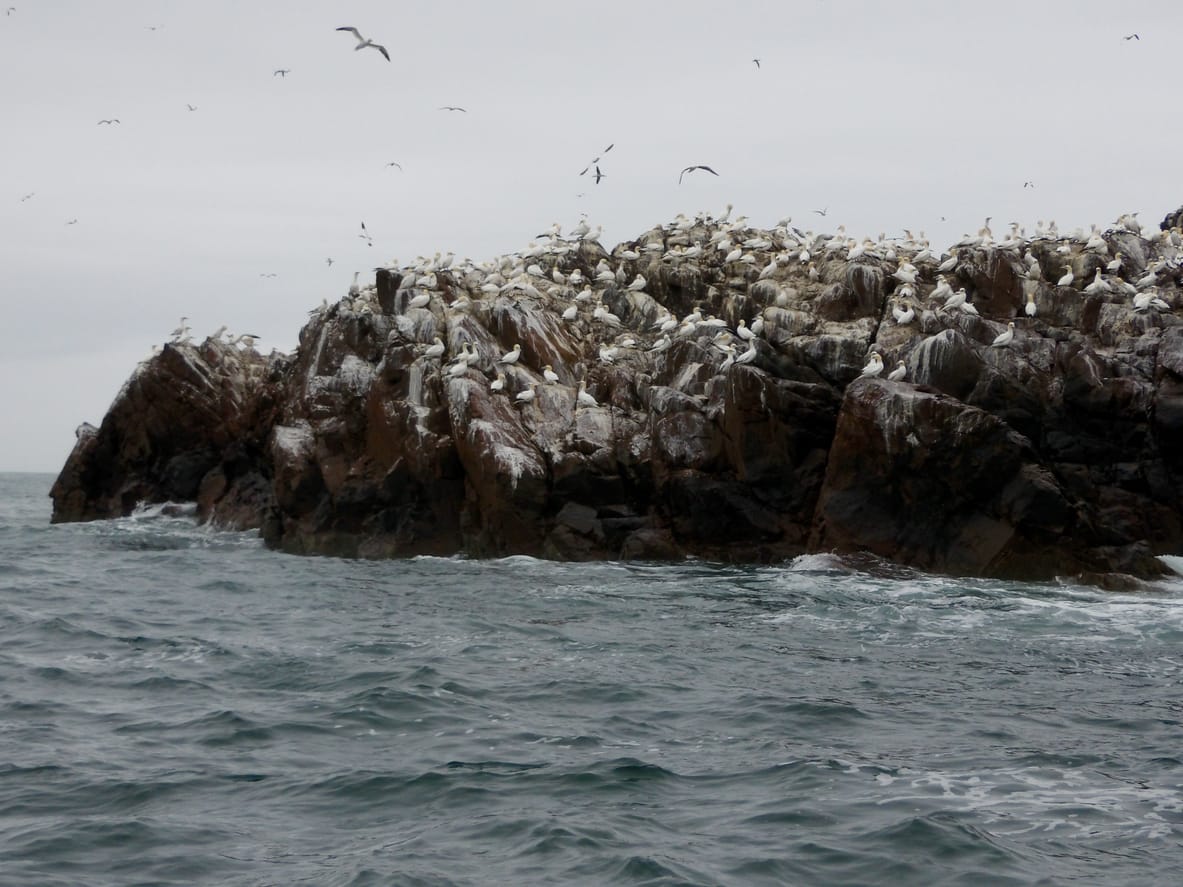
Opposition to the hunt comes from both animal welfare organisations and conservation groups.
Animal welfare campaigners object to the deliberate killing of young wild birds, arguing that the practice is no longer necessary in a modern society where alternative food sources are readily available.
Conservation organisations focus more heavily on the long-term health of seabird populations.
The Scottish Seabird Centre notes that northern gannets, like many seabirds, have faced significant challenges in recent years, including outbreaks of highly pathogenic avian influenza and wider environmental pressures affecting marine ecosystems.
Although Sula Sgeir currently remains an internationally important breeding colony, campaigners argue that precaution should guide future licensing decisions until population trends become clearer.
Some campaigners have questioned whether there is sufficient independent monitoring of the hunt and whether the legal exemption created decades ago remains appropriate in light of changing attitudes towards wildlife.
Campaign group Protect the Wild commissioned the Succession actor Brian Cox to narrate a graphic animated film; Cox said the practice was “needless cruelty”.
One of the more striking developments in 2026 is that organisations seeking change are no longer speaking with one voice.
Groups including OneKind and the League Against Cruel Sports Scotland have called for the hunt to be phased out through discussion with the Ness community rather than ended immediately. They argue that respectful engagement is more likely to achieve lasting change than confrontation.
Other campaign groups favour a more direct approach, organising protests and public campaigns calling for an immediate end to the hunt.
This difference in strategy has become part of the story itself. While campaigners broadly agree that the hunt should eventually end, they disagree over how best to achieve that goal and how to balance animal welfare concerns with respect for local culture and heritage.
Robbie Marsland, director of League of Cruel Sports Scotland and Ireland, told The Ferret: “The biggest concern is the impossibility of standardised process in the conditions that the Men of Ness are in. If there were an abattoir where men ran around rough ground, in some of the world’s most awful weather, and went rushing up to birds, grabbing them by the neck, passing them to somebody else who hit them with a pole, who then passed them to somebody else who decapitated them – then that abattoir would be closed the next day.
“The conditions on Sula Sgeir just do not allow for the conditions we would expect in the provision of killing animals for human consumption.”
“We recognise that the hunt has cultural significance for some members of the Ness community. However, our position is that cultural tradition should not override animal welfare concerns.” – Scottish SPCA
The Scottish SPCA said: “If the hunt were no longer to take place, we would welcome discussions on how the considerable local knowledge and expertise of those involved could continue to contribute positively to the future management and conservation of Sula Sgeir.”
“We recognise that the hunt has cultural significance for some members of the Ness community. However, our position is that cultural tradition should not override animal welfare concerns. Any future management of the island should seek to protect both individual animal welfare and the long-term health of this internationally important seabird site.”
Rachel Bigsby, award-winning wildlife photographer who first created the Stop the Guga hunt petition, said: “It always seemed obvious to me that any decision to end the Guga Hunt should also seek to provide the Men of Ness with an opportunity to continue celebrating and practising their culture in a meaningful way, but without lethal methods.”
She added: “Personally, I've never been entirely convinced by suggestions that the hunters could simply be redirected into conservation work. While undoubtedly well-intentioned, I think that idea risks feeling somewhat patronising, particularly as the men themselves generally view the hunt as ethical, sustainable and morally justified.”
Animal Law Foundation’s Edie Bowles argues that the controversy exposes broader weaknesses in Scotland’s animal welfare legislation. She told The Ferret: “Over the past two decades, the Animal Health and Welfare Act has improved the lives of many animals, but significant weaknesses are apparent.”
“The publicity surrounding the hunt highlights some of the main issues with the Animal Health and Welfare Act, in particular the overly permissive interpretation of what constitutes ‘unnecessary suffering’ and the inconsistent application of animal welfare law.”
The future of the guga hunt remains uncertain.
The annual expedition continues to depend on NatureScot issuing a licence and permission has been sought for a hunt later this summer.
NatureScot will issue its decision in due course.
Meanwhile, more than 104,000 people have signed a petition calling for the Scottish Government to prohibit the hunt.
The Scottish Animal Welfare Commission, the Scottish Government's advisor on animal welfare issues, said in a letter to Gillian Martin MSP, the cabinet secretary for climate action and rural affairs, on 3 July 20026, that it is "unaware of a humane way to dispatch guga that is feasible under the conditions that prevail on the island". The commission urged "consideration of the wider animal welfare implications of the disturbance for all the birds nesting in or near the vicinity of the hunt".
Whatever the outcome of the current licensing process, the debate surrounding the guga hunt is unlikely to end soon. Instead, it has become part of a wider conversation about Scotland's relationship with its natural heritage, its cultural traditions and the changing values of the society that seeks to protect both.
This story was updated at 09.47 on 6 July 2026 to add a comment from the Scottish Animal Welfare Commission.
This story was updated at 13.24 on 7 July 2026 to add a comment from Torcuil Crichton MP.

The Scottish Government’s green watchdog sent seven letters over three years alleging multiple breaches at a fish farm – and then issued a final warning letter.


Two salmon farming companies have been accused of allowing fish to die in pain at three farms in Scotland, after the release of covert video footage.

Don Staniford is a prominent campaigner who targets Scotland's farmed salmon industry. But companies like Mowi claim his activism risks the safety of staff and legal action has been taken to stop him entering fish farms.

The Ferret did a deep dive into the Electoral Commission’s donation records to find out who was funding Scotland's political parties.