

This pro-nuclear group claims to be 'grassroots'. So why are its directors industry lobbyists?
Britain Remade has appointed two directors from a lobbying firm which represents EDF, the owner of Scotland’s last nuclear power station.
Britain Remade has appointed two directors from a lobbying firm which represents EDF, the owner of Scotland’s last nuclear power station.
Online claims questioned Scottish Labour's house building in government between 1999 and 2007.
A Ferret investigation has found there was no registration to sell vapes at the Union Street premises in Glasgow where a major fire started - and we can reveal the name of the company behind the shop.

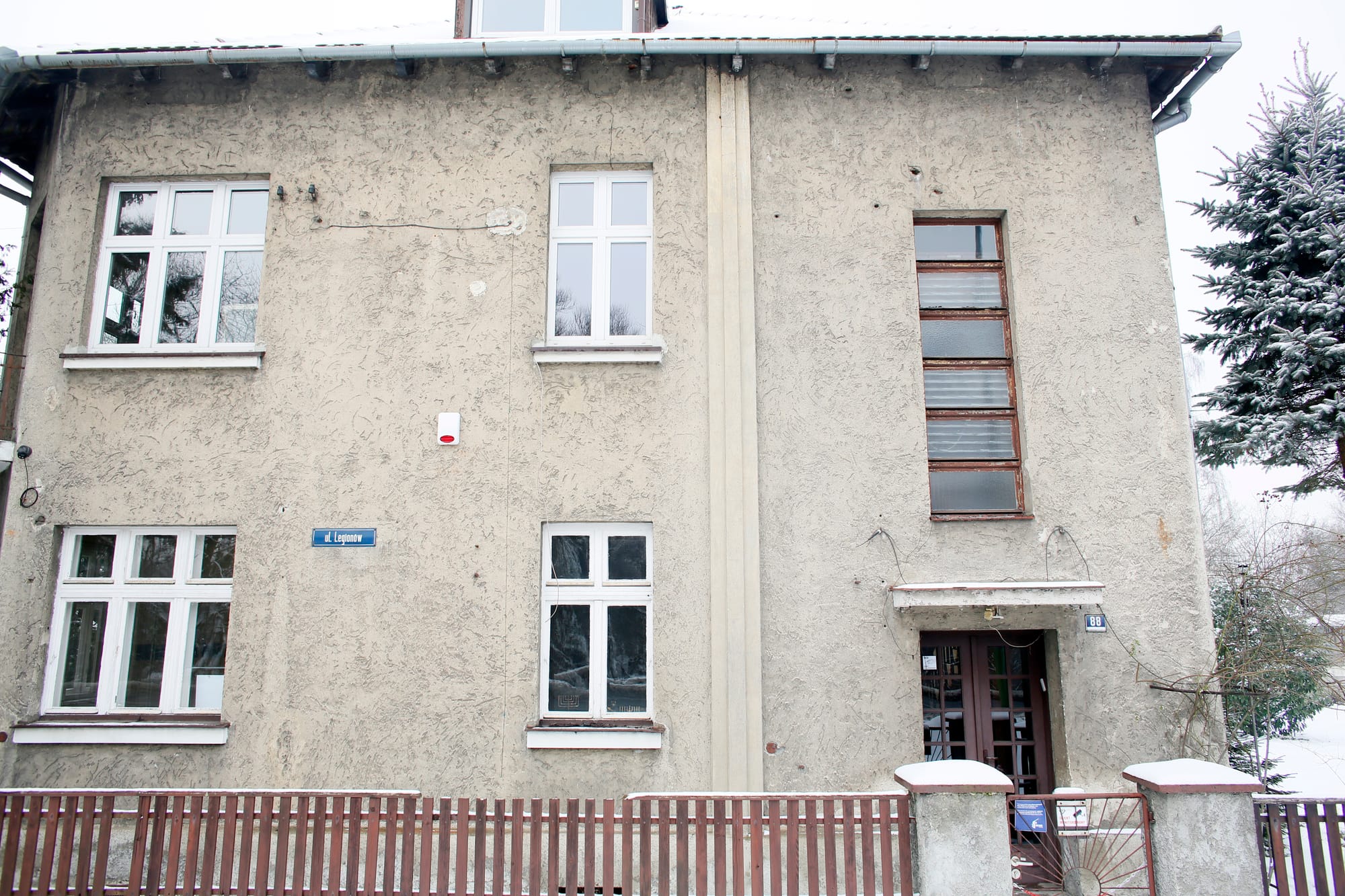
The Ferret visited Poland to visit House 88, the former home of Rudolf Höss, the SS officer who ran the Auschwitz-Birkenau extermination camp. The house is being transformed into a global centre to fight extremism.

In the former home of the SS commandant who ran Auschwitz, Jacek Purski is talking about neo-Nazis and reclaiming a number that represents “Heil Hitler” and white supremacy. He’s referring to the number 88, which is a code in far right circles for "Heil Hitler" because H is the eighth letter of the alphabet. Now that number is part of the name of a unique research centre. “We are sending a clear signal worldwide, saying, ‘no, it's not your code anymore. We understand your codes, and we are here to combat it and fight it’,” says Purski, who sports a greying beard and round spectacles.
This story exists thanks to you.
The Ferret doesn't answer to advertisers, owners, or paywalls. We answer to you, our readers and over 2,000 members who support journalism that holds power to account.
Keep stories like this coming.
A Polish Jew, he is an expert on far right extremism and The Ferret travelled to Poland to meet him to mark Holocaust Memorial Day which falls on 27 January each year to remember the tens of millions killed by the Nazis, including six million Jews. Last week in Scotland buildings lit up in purple in a collective moment of remembrance.
We are in ‘House 88’ – the former home of Rudolf Höss, the SS officer who lived here with his wife and children while he ran the Auschwitz-Birkenau concentration and extermination camp during World War II. Synonymous with genocide, this area is where an estimated 1.1 million people perished during the Holocaust.
The Ferret has been charting the rise of the far right for a decade and we’re here to understand more about its roots amidst a rise in anti-Semitism. In Britain last year, the Community Security Trust recorded 1,521 antisemitic incidents between January and June – the second-highest ever for the first half of a year – and towards the end of the 2025 there was an attack on a Manchester synagogue, which killed two British Jews, and the Bondi beach attack, in Australia, which killed 15 people.
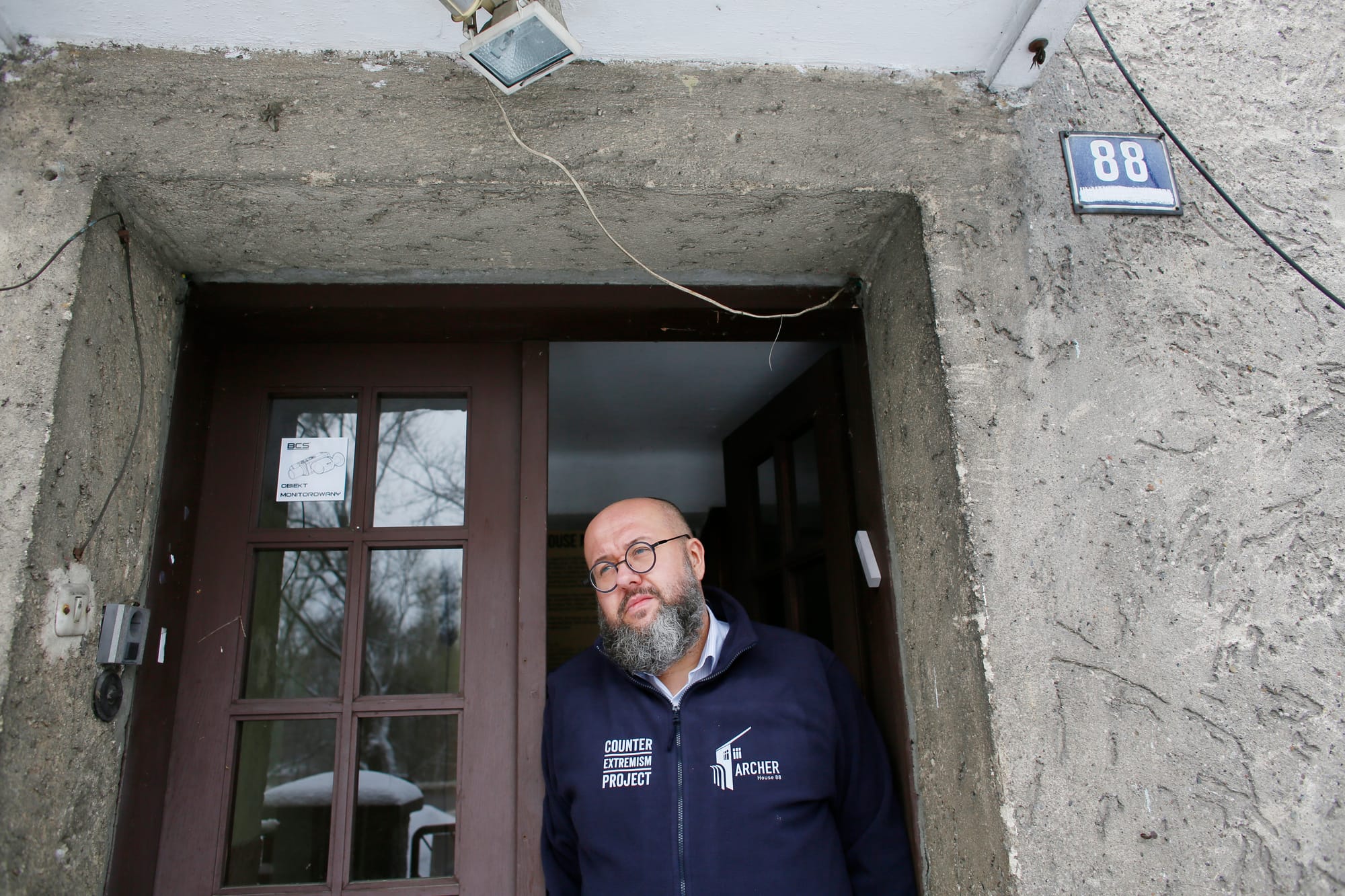
Höss’ former home sits cheek by jowl with Auschwitz, literally just metres away. It has been bought by a US organisation called the Counter Extremism Project and transformed into the Auschwitz Research Centre on Hate, Extremism and Radicalization (ARCHER) at House 88. A former symbol of hate is now a place where people can learn how to fight extremism and anti-Semitism. “We reclaimed this house after 80 years to do something positive,” says Purski, a political scientist and educator who researches extremist ideologies for the Counter Extremism Project. Drab and nondescript, House 88 resembles a bleak council house. The front door faces onto a busy road and cars whizz past, their wheels spraying brown slush onto snow piled at the roadside. The death camp is at its rear, shrouded today by a winter mist.
Auschwitz-Birkenau is a vast site and at one point there were more than 40 camps and sub-camps in the complex. Purski says that for three and half years Höss played a pivotal role in orchestrating genocide by overseeing the meticulously planned slaughter of millions of people. During his tenure, four additional gas chambers were built, making Auschwitz-Birkenau the deadliest of all the Nazi camps. Höss revealed he personally attended an early gassing experiment after being captured by the British after the war. “Protected by a gas mask, I watched the killing myself. In the crowded cells death came instantaneously the moment the Zyklon B was thrown in. A short, almost smothered cry and it was all over,” he confessed.
All the while, he apparently lived an idyllic family life at House 88 with his wife, Hedwig, and five children. They had a manicured garden, a swimming pool, a greenhouse and a sauna. The children – Klaus, Heidetraud, Brigitte, Hans-Jürgen and Annegret – rode horses and swam in a nearby river while genocide took place next door. A concrete wall and trees obscured the camp and apparently the children did not hear prisoners' screams, SS guards shouting, gunshots and barking dogs, with Höss’s daughter Brigitte claiming in 2021 that she knew nothing of what happened next to her home.
She reportedly said: “Later, we found out what’s going on. I don’t really like to talk about it because I didn’t like this idea what they did. But I know it was not my dad’s fault.” Hedwig told her husband that the villa was like "paradise". Their life was featured in the chilling Oscar winning film, The Zone of Interest, the euphemistic term used by the Nazis for the site. Purski says the film – some scenes were shot at House 88 – has been “unhelpful” because it was inaccurate in parts. “A tunnel under the house was a bunker rather than a quick route for Höss to get to his camp office,” he says, explaining that after Auschwitz was liberated in January 1945, House 88 became the home of a widowed Polish mother called Grazyna Jurczak, 62, who raised her two sons there.
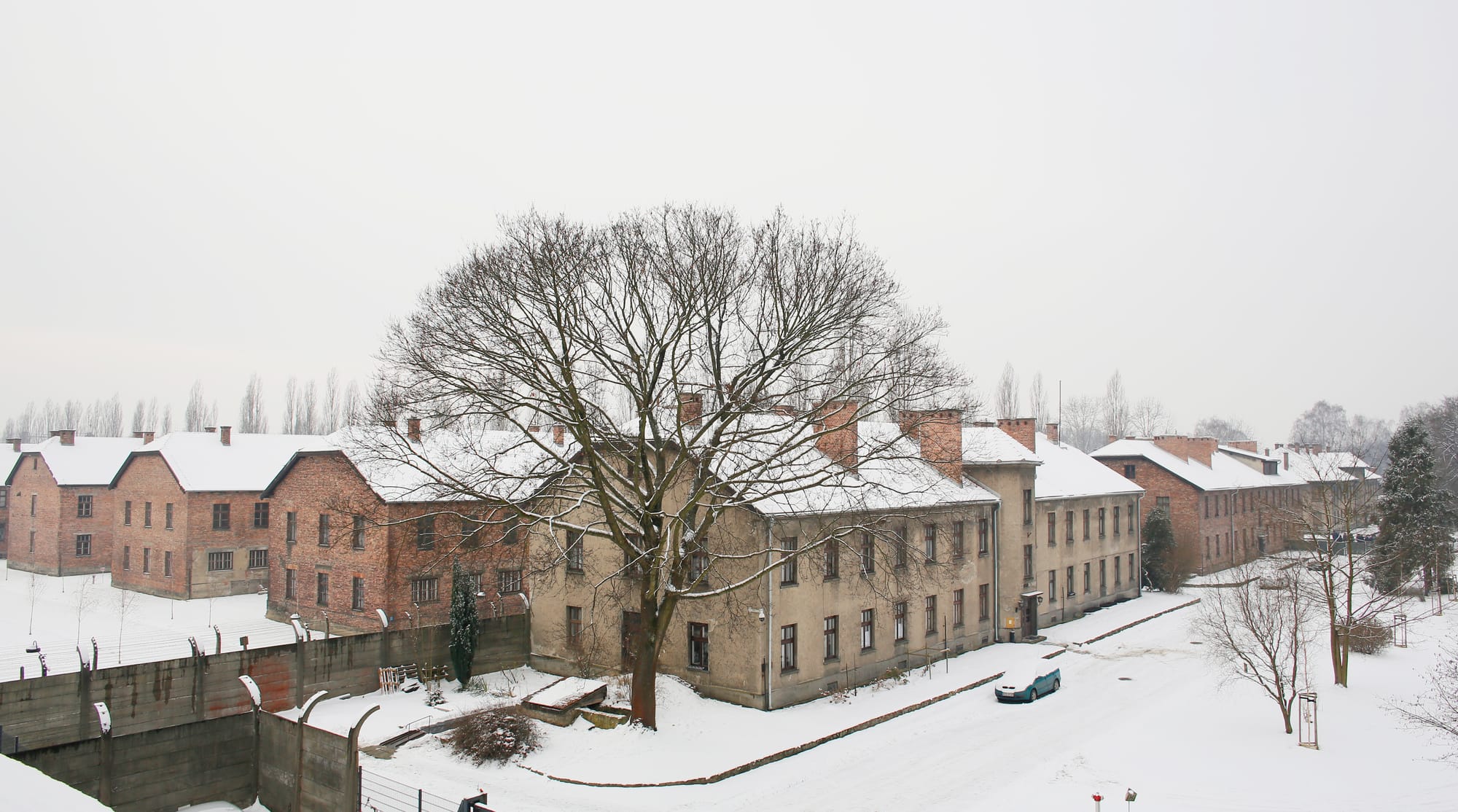
The notion to buy the house in October 2024 came about when Purski and colleagues trained staff at the Auschwitz-Birkenau museum. “We were asked to find the perpetrator of a very serious hate crime inside the museum,” he says. “We found him and started regular training for the staff in how to recognise and counter radicalisation and extremism inside the museum.” At the time, Purski briefly stayed in Auschwitz, in accommodation once used by the SS, close to the gas chamber and crematorium one – and the gallows where Höss was hanged.
This was when the concept for House 88 started to develop, he explains. The museum approved the idea and finance was provided by the Counter Extremism Project, a US organisation led by Mark Wallace, a former ambassador to the UN under President George W Bush. “Grazyna was living at the house on her own, after her kids had left. She was happy to sell it,” Purski says, adding that he “felt very stressed” the first time he entered the house at 88 Legionów Street in Oświęcim [Polish for Auschwitz]. “I was worried that I wouldn’t be able to explain what our aim is. I think that Grazyna understood that this was not a regular guy with a commercial offer, but something deeper.”
The need to act was underlined by the risk that House 88 could become a place of pilgrimage for the far right, he says, given the global success of The Zone of Interest. So they aimed to transform it into something radically new – a global centre to fight extremism seemed fitting. “What is important for us about perpetrators is the path of radicalisation they went through to be able to commit mass murder,” Purski adds. “This process is important because this process repeats…so researching how people become extremists and terrorists is crucially important for us. Auschwitz is a museum to remember the victims. Our initiative is more focused on prevention to ensure this never happens again.”
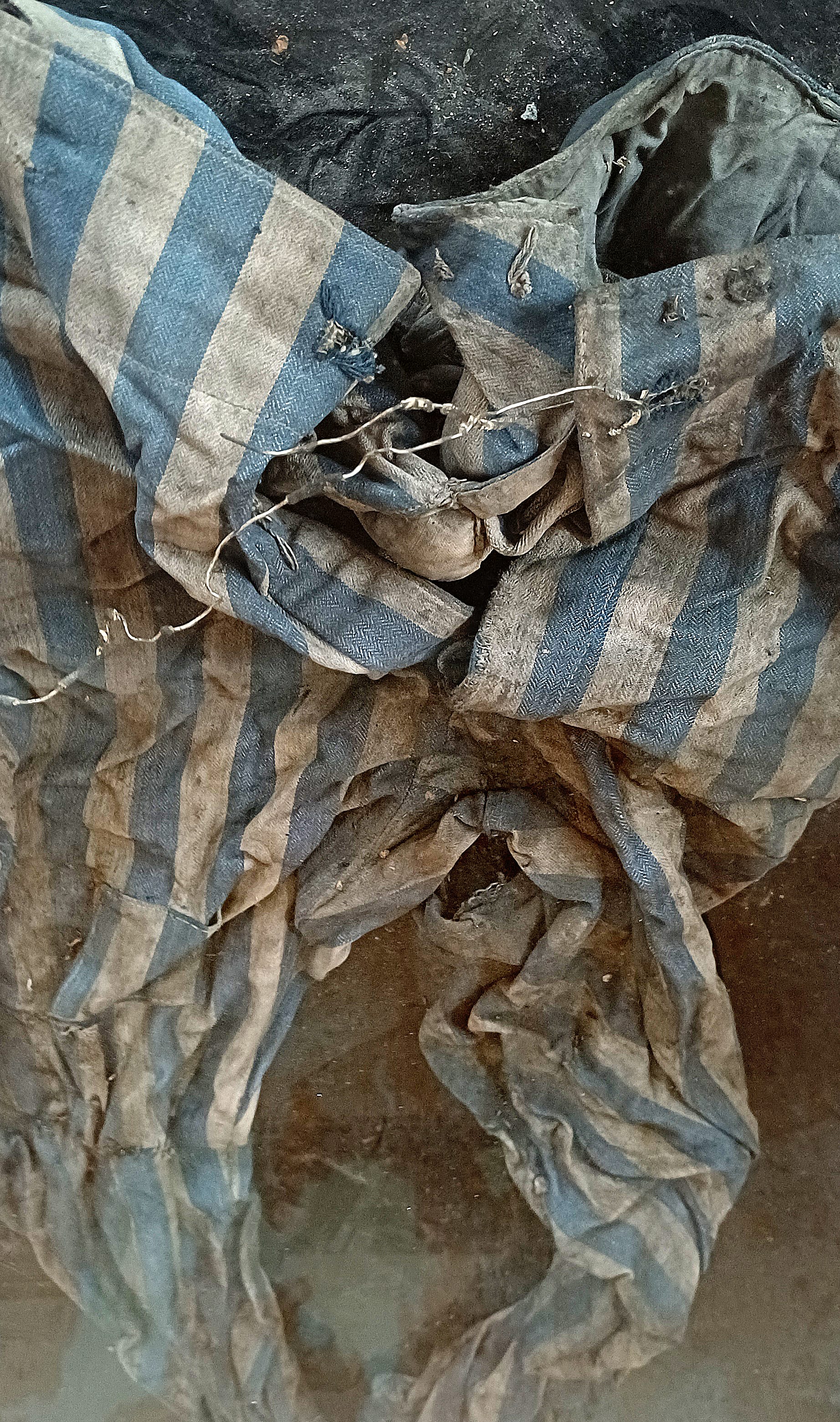
After getting the keys to House 88, the Counter Extremism Project found various historical items including a Nazi newspaper dated December 1944, a stamp with Adolf Hitler's head on it, an empty German cigarette box and a mug branded with a Waffen SS seal. In the attic, they found a hole in the roof plugged with a pair of prisoner’s striped trousers. “This prisoner was called Mordek Szyemanowicz,” says Purski explaining they were able to identify him from a number on his trousers – 79523 – which was next to the Star of David. “He was from near Grodno, Belarus. He was killed here. He came with a brother. For 80 years these [trousers] were in the roof but now we think about Mordek as a team member.”
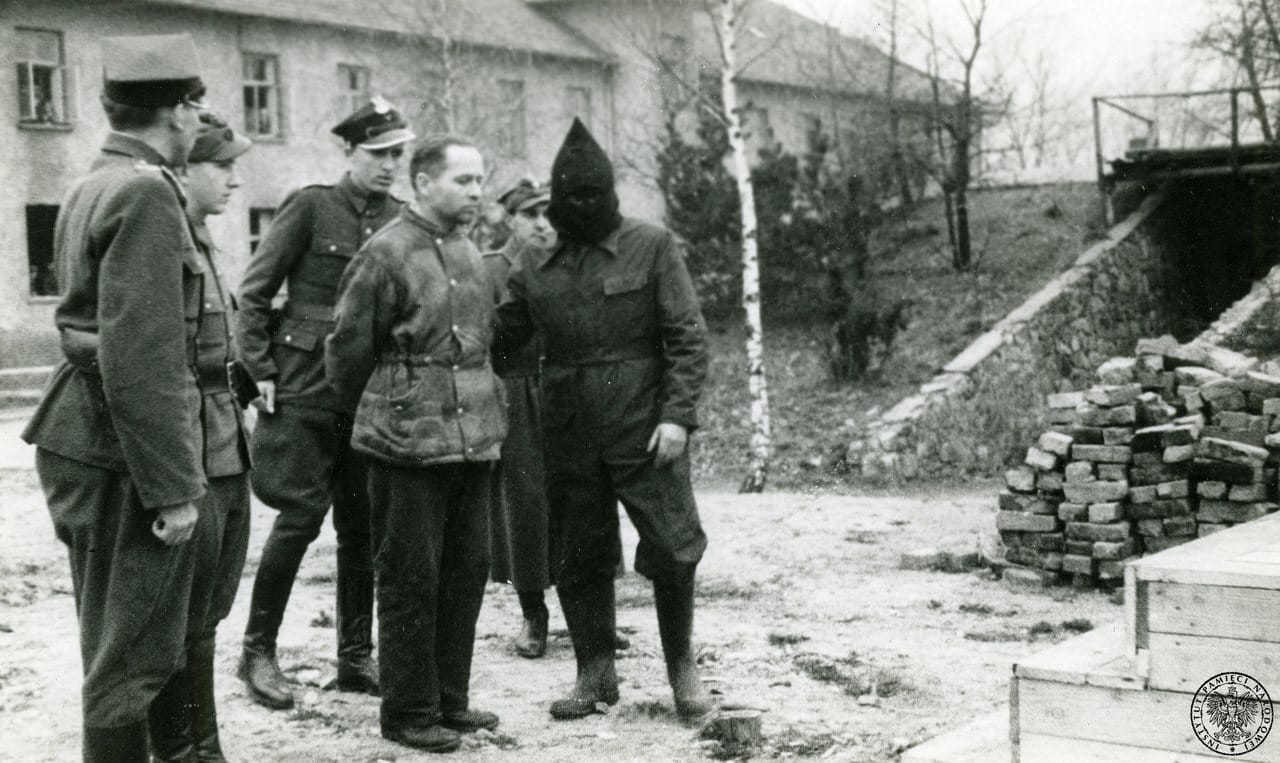
Upstairs they found that gas chamber one at Auschwitz could be seen from one of the children’s bedroom windows. It is only about 100 metres away, as are the gallows where Höss was hanged. After the Nazi regime fell in 1945 he obtained false documents under the name Franz Lang, the identity of a young sailor who had died, and went into hiding in the village of Gottrupel, Germany, where he worked as a farm labourer. He was captured on 11 March 1946 by British intelligence agents who transported him to Nuremberg, Germany, where Nazi leaders faced trial. During his trial, Höss sought to portray himself as someone who was simply carrying out orders and downplayed his knowledge of the extermination process. It was decided he should be hanged beside a gas chamber, close to House 88.
Höss' former home will now host researchers, policymakers, educators, and activists working on preventing extremism. “Our dream is that people come here after visiting Auschwitz to learn how to make their work more effective,” says Purski, who stresses that the world is changing and new strategies and approaches are needed. Technologies such as artificial intelligence are being embraced, and the Counter Extremism Project is developing an AI-powered database that tracks extremist propaganda networks. It aims to disrupt financial networks supporting extremism by investigating crimes and reporting to tax, treasury, and law enforcement bodies across the world. “There’s been a growing wave of anti-Semitism globally” which has become “more normalised”, says Purski. “This is very scary because I see tendencies that I never thought would happen again.”
Russia is another major concern. Purski says it is interfering, manipulative and trying to polarise European societies. “They invest in everything that causes hate, chaos and polarisation, everything that ruins democracy,” he claims. “They use far right actors and far left actors.” He also rails against social media platforms for “lacking [the] courage” to take action against anti-Semites and other extremist content generally.
“A lack of courage is for me a huge problem currently,” he explains.“ Courage is to fight for the truth. Courage is about not being manipulated. Social media platforms should be controlled and a lack of control has led us to an era of manipulation and disinformation. We have many Rudolf Höss’s now – but they are in front of a computer.”
The Ferret is Scotland's member-owned investigative journalism outlet. For ten years, we've been digging deeper into the stories that matter, holding power to account without fear or favour.
We don't have billionaire backers or corporate interests. We have you.
Every investigation you read is funded by readers who believe Scotland deserves better journalism. Join them.


Britain Remade has appointed two directors from a lobbying firm which represents EDF, the owner of Scotland’s last nuclear power station.

A Ferret investigation has found there was no registration to sell vapes at the Union Street premises in Glasgow where a major fire started - and we can reveal the name of the company behind the shop.

Huge volumes of sewage sludge have been used to fertilise Scottish farmland. Studies show it contains microplastics, forever chemicals and cancer-linked pollutants.

Far right actors have used gaming to recruit youngsters for some time but experts say they are increasingly using codes and imagery to avoid moderation.


