Scientists argue that research using animals is vital for the treatment and cure of human diseases like cancers. But experimenting on dogs and monkeys is controversial and critics say alternative methods should be used.
The Scottish Government is selling surveillance planes to save money and says drones are used to prevent illegal fishing. But critics argue that losing experienced pilots could mean criminality goes unchecked.
Ithaca Energy announced a major dividend on the eve of UK sanctions against companies operating in illegal Israeli settlements. A few weeks later it paid out £100m to a shareholder the UN says has ‘direct links’ to the occupied territories.
More than one million animal experiments in Scotland since 2021
Scientists argue that research using animals is vital for the treatment and cure of human diseases like cancers. But experimenting on dogs and monkeys is controversial and critics say alternative methods should be used.
More than one million tests have been conducted on animals in Scotland since 2021, including experiments on dogs and monkeys, and the breeding of genetically altered creatures, says a new report.
Research by animal welfare charity OneKind – shared with The Ferret – found that Glasgow and Edinburgh are among the top ten UK universities for the highest use of animals in research.
Experiments also take place at the universities of Aberdeen, Dundee, Heriot-Watt, Robert Gordon, St Andrews, Stirling, and Strathclyde. Private companies also conduct tests.
Scientists argue that research using animals makes an important contribution to the treatment and cure of human diseases and viruses, including cancers, Alzheimer’s disease, flu and arthritis.
But critics say that subjecting animals to painful and stressful tests is cruel and unnecessary, and that alternative methods should be used. OneKind described animal testing as a “mass campaign of mental and physical torture” and claimed most people will be “horrified” to learn that monkeys and dogs are experimented on.
Across the UK there were 2.54 million tests in 2025, OneKind’s report says. Horses, ferrets, sheep, cats, bats and birds have also been used in research. In Scotland there were 1,142,363 tests on animals conducted between 2021 and 2025, with 358,864 procedures last year. Of those, 64 per cent were on mice, 13 per cent on zebrafish, and eight per cent on rats. Other animals used included 721 beagle dogs and 548 cynomolgus monkeys.
OneKind’s research is based on data up until 2025, the latest available, but the charity said there is a lack of transparency about what happens in Scotland.
Scottish experiments
There were 254,893 tests conducted at Scottish universities in 2025, according to OneKind, which cited figures from Understanding Animal Research, a not-for-profit that explains why animals are used in medical and scientific research. Edinburgh and Glasgow conducted the most last year, with 131,103 and 87,791 respectively. The former was sixth highest in the UK while Glasgow came eighth. The Francis Crick Institute, a biomedical research centre in London, conducted the highest number of tests in 2025 in the UK – 216,508.
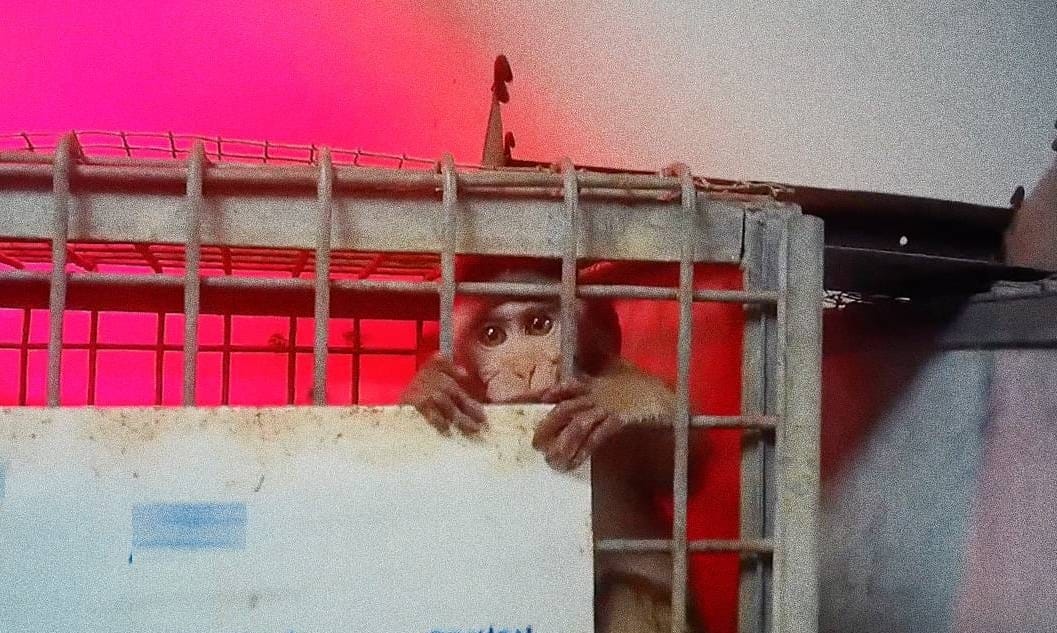
A picture from inside Novoprim, Mauritius. Image: One Voice, France.
Private companies also conduct tests on animals in Scotland. Charles River Laboratories, a multinational supplier of laboratory research services to pharmaceutical and biotech companies, operates the Elphinstone Research Centre in East Lothian, where it experiments on dogs, monkeys, rats and mice to make medicines, fertilisers and weed killers. It also has a site within Heriot-Watt University’s Research Park.
The Moredun Research Institute, in Penicuik, conducts research to improve farmed animal health and welfare through the prevention and control of infectious diseases. The number and type of procedures are not publicly available.
Concept Life Sciences has sites in Dundee and Edinburgh and elsewhere in the UK. In Dundee it advertises services based on designing tests on mice for companies before clinical trials in humans are conducted.
OneKind said the number of experiments has been falling over the past decade, both in Scotland and across Britain. There were 2.54 million procedures involving living animals in the UK in 2025 – a decrease from 2.64 million in 2024 and the lowest number since records began under the Animals (Scientific Procedures) Act 1986.
Monkeys from Camarney at Barcelona Airport before being flown out. Image: Abolician Viviseccion
What do 'procedures' on animals involve?
Procedures refer to a wide range of interventions, some far more invasive and harmful than others. In 2025, OneKind said, most experiments that used non-human primates and dogs, 88 per cent and 73 per cent respectively, were mainly for testing the safety of products and devices for human medicine, dentistry and veterinary medicine.
Its report highlights some of the “more worrying experiments” recently including one involving monkeys after a five-year licence was granted in 2021 for the study of brain mechanisms in 11 macaques. The research, OneKind noted, aimed to explain why damage to the front of the brain affects behaviour and involved very fine wires being inserted into monkeys’ brains.
“Behavioural testing sessions involve monkeys sitting in an enclosed testing chair, with access to a joystick or touchscreen monitor for interacting and responding to the experimental task,” the report said. “The monkey’s head may be immobilized to allow infra-red tracking of eye movements and safe collection of data. At the end of the project, all of the monkeys will be killed.”
Bats, a protected species in the UK, have also been used in research with the aim of understanding their ability to imitate new sounds. They undergo cranial surgery to allow the introduction of substances into the brain.
“It is appalling to think that the bulk of these tests are being carried out at universities that receive public funding.” — Jason Rose, OneKind
The number of procedures involving horses has been increasing since 2015. Horses have been used to produce medical products or in experiments studying human diseases and injuries. Their large size and some physiological similarities to humans have resulted in horses being used in studies involving infectious disease, respiratory illness, and musculoskeletal injuries.
Cats are also used in tests and the number of procedures has increased by 11 per cent since 2024. There were 91 tests last year during research which aims to expand knowledge of the physiology and behaviour of animals.
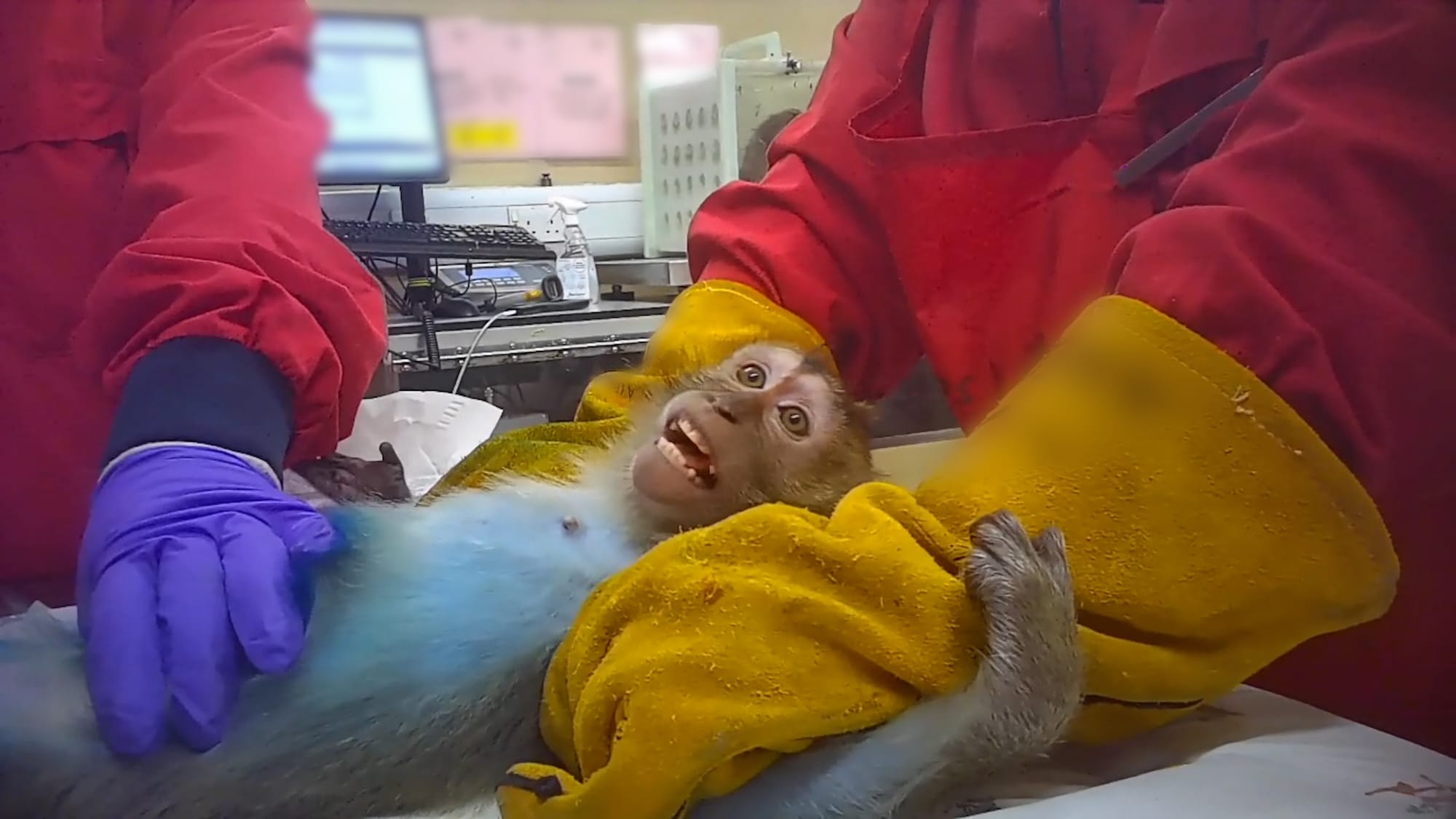
Most experiments last year that used monkeys and dogs were for testing the safety of products and devices for human medicine, dentistry and veterinary medicine.
Toxicity testing. Image thanks to Animals International
Animal welfare issues
The use of animals in science is reserved to the UK Government and regulated by the Home Office, which issues licences and reports on the number of procedures carried out in the UK.
Non-compliance reports which highlight problems during experiments are also produced by the Home Office. Examples cited by OneKind include a dog being kept alive “beyond humane ‘endpoints' designated by the licence” and a mouse having to be euthanised after being trapped by its tail for up to 16 hours.
Seven rats were left without food for up to 40 hours and 10 ferrets were exposed to constant light due to the malfunction of a control system for 48 hours. Three sheep were left without food and water for approximately 24 hours and 1,300 fish died when a chlorine tablet was accidentally added into the water.
In 2020 The Ferret revealed a whistleblower’s allegations that scores of rodents died after being crushed to death in a rubbish compressor, and others began self-harming after being given the wrong doses of chemicals during trials. The Home Office confirmed then that an inquiry led to sanctions against Charles River Laboratories in East Lothian.
Critics of animal testing include Jason Rose, OneKind chief executive who commissioned the research. He said each animal used in experiments is an “individual that is living in fear, enduring suffering" and pointed out they are usually killed once research projects end.
He added: “It is appalling to think that the bulk of these tests are being carried out at universities that receive public funding. We must have clear timescales from these institutions about ending the suffering and we must see some initiative from the Scottish Government who can boost the non-animal alternatives."
Dr Julia Baines, head of science policy at People for the Ethical Treatment of Animals (Peta), said animals may be genetically altered, poisoned and gassed in toxicity tests, or have electrodes inserted into their brains. She argued that institutions “must move with the times and embrace state-of-the-art, human-relevant methods that harm nobody, improve potential outcomes for patients, and end tests on animals for good”.
She added: “In addition to the animals who suffer at Scottish universities, Peta is aware of private testing laboratories, including Charles River Laboratories in East Lothian, Moredun Scientific in Midlothian, and Dundee-based Concept Life Sciences.”
A University of Edinburgh spokesperson said studies involving animals enable researchers to make important discoveries about conditions such as Alzheimer’s, heart disease and many forms of cancer, and to help improve animal health, adding that important scientific questions “cannot yet be fully answered” using non-animal methods alone.
“[Institutions] must move with the times and embrace state-of-the-art, human-relevant methods that harm nobody, improve potential outcomes for patients, and end tests on animals for good.” — Dr Julia Baines, Peta
“We use animals in research only when it is justified on scientific, ethical and legal grounds and no suitable alternatives are available,” the spokesperson continued. “The university is committed to the principles of the three Rs – replacing, reducing and refining the use of animals in research. This includes the development and use of approaches to replace animal models to optimise the quality of the work we undertake while minimising effects on the animals concerned. Reflecting this commitment, the number of animals used in our research has declined steadily over the past several years.”
A spokesperson for the University of Glasgow said animals are used in research “only where it is essential” and that it “remains dedicated” to the principles of reduction, refinement, and replacement. They added: "The university is committed to the development of alternative methods – such as computer modelling, tissue culture, cell and molecular biology, and research with human material – but some work involving animals must continue for further advances in medical sciences to be made. All research undertaken on animals is conducted under strict ethical and welfare guidelines, under licence by the Home Office.”
The Scottish Animal Welfare Commission, which gives scientific and ethical advice to the Scottish Government, told The Ferret it does not have a remit to “consider or review” the welfare of animals used in experiments, as detailed in its terms of reference, because “these matters are reserved to the UK Government”.
CRL, Moredun Scientific, and Concept Life Sciences have been asked to comment.
Go beyond the headlines with us
Deeper investigations, clear explainers, and reporting with real impact all depend on your support.
Billy is a founder and co-editor of The Ferret. He's reported internationally and from Scotland, and focuses on far right extremism, human rights, animal welfare, and the arms trade. Likes longform storytelling and photography.
The Scottish Government is selling surveillance planes to save money and says drones are used to prevent illegal fishing. But critics argue that losing experienced pilots could mean criminality goes unchecked.
Ithaca Energy announced a major dividend on the eve of UK sanctions against companies operating in illegal Israeli settlements. A few weeks later it paid out £100m to a shareholder the UN says has ‘direct links’ to the occupied territories.