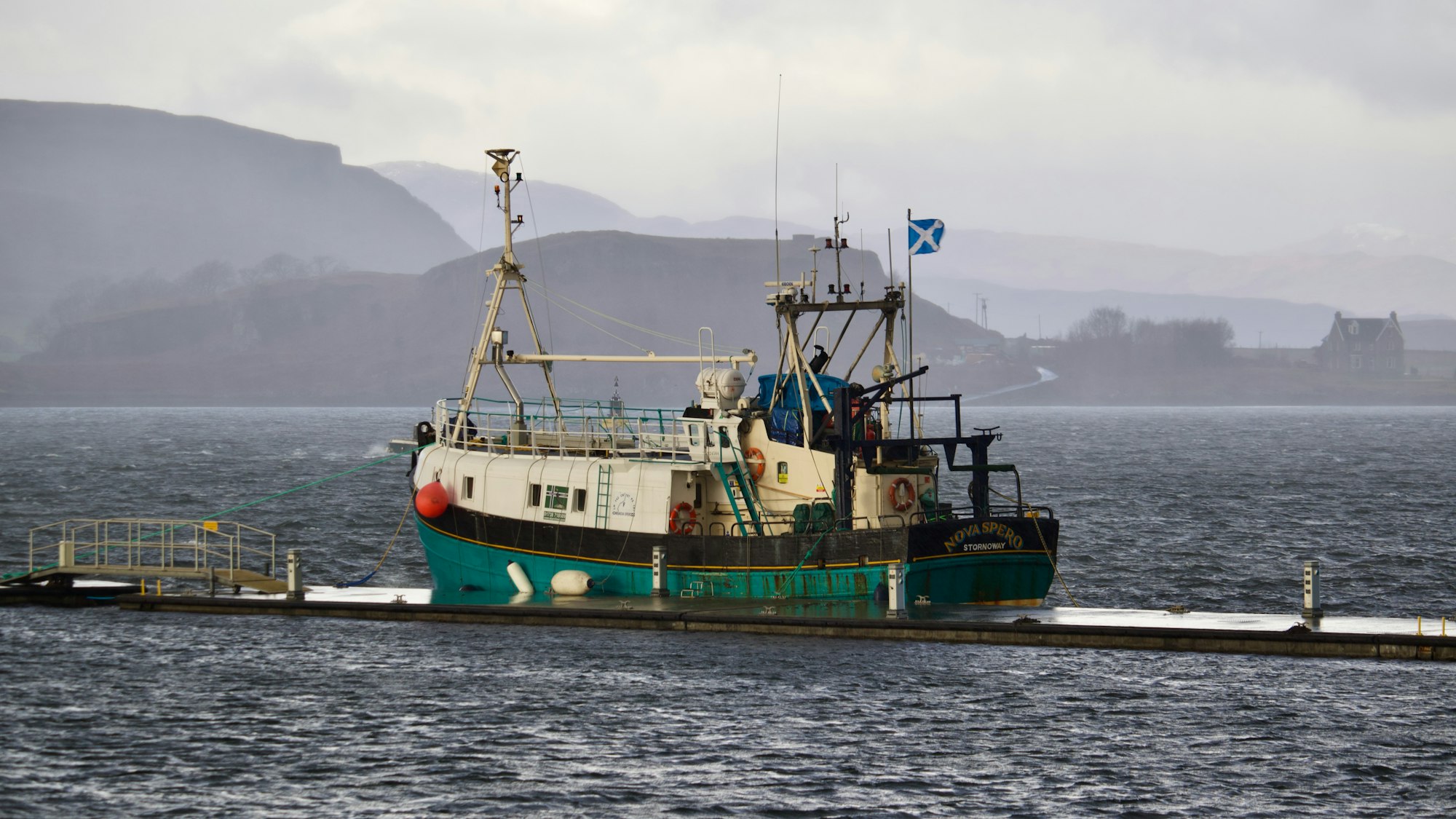
The Scottish Government is selling surveillance planes to save money and says drones are used to prevent illegal fishing. But critics argue that losing experienced pilots could mean criminality goes unchecked.
Ithaca Energy announced a major dividend on the eve of UK sanctions against companies operating in illegal Israeli settlements. A few weeks later it paid out £100m to a shareholder the UN says has ‘direct links’ to the occupied territories.
Prospective MSPs are legally required to evidence their election spending and confirm the records are correct. Following an investigation by The Ferret, Police Scotland is examining whether nine Reform UK candidates failed to do so.
Piloted flights protecting Scotland's waters from illegal fishing have more than halved due to cutbacks
The Scottish Government is selling surveillance planes to save money and says drones are used to prevent illegal fishing. But critics argue that losing experienced pilots could mean criminality goes unchecked.
Piloted flights protecting Scotland's waters from illegal fishing have more than halved due to cuts by the Scottish Government to its fisheries surveillance programme, The Ferret can reveal.
The government’s marine directorate put both its surveillance planes up for sale last summer, claiming there would be “no impact on dedicated fisheries surveillance” because of a new agreement to loan aircraft from the UK Government.
But we found the new deal secures less than half the number of hours flown on average annually by the marine directorate’s own planes.
Documents published when the aircraft went on the market – along with a copy of the deal’s terms obtained under freedom of information law – also show the new partnership gives the UK government priority over Scotland to use the planes.
Scottish officials could be left waiting as long as six days between requesting flights and getting them airborne, according to the agreement.
You don’t get stories like this elsewhere
The Ferret publishes investigations that go beyond the daily news cycle, dig deeper, and ask difficult questions. Help us stay independent.
The Scottish government said it would make up the difference by monitoring the seas with new drones, launched from its fleet of two offshore fisheries vessels.
But critics said losing “highly trained and experienced pilots” would allow more illegal fishing to go undiscovered.
The Scottish Government began searching for a broker to sell its surveillance planes in June, two months after £13.5m of cuts came into effect at the marine directorate.
A written answer published last week revealed the planes remained unsold as of December 2025, and that the Scottish Government is now paying the same company that staff the aircraft with pilots to maintain and stow them in a hangar in Inverness.
The made-to-order Cessna F406 Caravan II planes were bought by the marine directorate in 2008 and 2009. They were equipped with visible and infra-red cameras to record illegal marine activity and were “tasked daily” with making surveillance flights, according to the Scottish Government’s old webpage.
“Our fishermen have been badly let down by a government that does not take this issue seriously.” — Tim Eagle, Conservative MSP
The planes were grounded at the end of July 2025. Each accrued more than 6,000 flight hours, according to a third party market appraisal, together averaging 450 per year.
Tim Eagle, Conservative MSP and former party spokesperson on fishing, said their loss represented “downgraded services” and claimed that the old system worked because of “highly trained and experienced pilots based in Inverness who knew exactly where to go and look for fishing boats not following the rules”.
Months later former rural affairs minister Mairi Gougeon – in response to a written question from Eagle – shared details of a new deal with the UK Government’s joint maritime security centre (JMSC) to loan its aircraft for 200 hours a year.
Eagle, however, argued that the new arrangements did not constitute a replacement. "Our fishermen have been badly let down by a government that does not take this issue seriously,” he said after reviewing the figures.
"What makes it even worse are the denials from ministers who either don't realise the harm done, or don't care," Eagle added. "We now have planes which could have been carrying out this mission, just sitting on the runway unused."
The marine directorate signed a memorandum of understanding with the JMSC setting out the new arrangement in July 2025. In it, Scottish officials are required to request flight hours in writing, which the JMSC can take up to three days to consider. It could be another three days before the flights are airborne.
The deal also confirmed the change was prompted when Scottish officials “identified significant cost saving opportunities … by disposing of the marine directorate’s aircraft”.
A Scottish government spokesperson insisted the change would not impact the marine directorate’s ability to protect Scottish seas, and that calculating average flight hours under each arrangement was a false comparison because of the increased use of remote electronic monitoring aboard vessels, and drones watching them.
"Rather than represent a reduced service, the move to the current operating model reflects the evolution of fisheries surveillance capability which now includes both crewed aerial surveillance and use of remotely piloted aerial systems (drones) deployed from marine protection vessels,” they said.
The government said it has run drones from offshore patrol vessels since last May, and has required pelagic trawlers to record video onboard since March of this year.
“This allows us to incorporate newer, more environmentally sustainable technology into our surveillance activity, while also providing a more flexible and cost-effective approach, targeting and ensuring value for money while maintaining capability,” the spokesperson added.
Ten weeks after the planes were grounded, long-awaited fishing restrictions for Scotland’s offshore marine protected areas (MPAs) came into force. Earlier this mont, The Ferret revealed that 36 boats have since been fined for entering the MPAs, each caught virtually (using their tracking systems) and fined after the fact.
Environmental charity Open Seas said that while it was disappointed in the new arrangement, its expectations for marine surveillance were already low.
“At present, enforcement often arrives days after reports of illegal activity are made,” said a spokesperson. “So while our preference would be for a more effective system of on-the-water monitoring to be introduced, the government is probably technically correct in suggesting that it would make no real difference if the marine directorate reduced its activity."
Be part of something bigger
Supporting The Ferret is not just about access. It’s a way to back journalism that’s accountable, impactful, and independent.
Ithaca Energy announced a major dividend on the eve of UK sanctions against companies operating in illegal Israeli settlements. A few weeks later it paid out £100m to a shareholder the UN says has ‘direct links’ to the occupied territories.
The Scottish Funding Council has determined that the university has too much cash to receive a taxpayer bailout. Unions say it shows the level of cuts at Dundee is unnecessary.