

Claim Scottish Labour built six houses in government is False
Online claims questioned Scottish Labour's house building in government between 1999 and 2007.
Online claims questioned Scottish Labour's house building in government between 1999 and 2007.
A Ferret investigation has found there was no registration to sell vapes at the Union Street premises in Glasgow where a major fire started - and we can reveal the name of the company behind the shop.
Campaigners complained to a government animal welfare watchdog, with videos of badly injured salmon at a fish farm. This prompted a review, but should more have been done?
We visited the Polish city of Krakow ahead of Holocaust Memorial Day which is held to remember the millions murdered by the Nazis – including six million Jews. Krakow's Jewish population was decimated then but the city is now home to one of the fastest-growing Jewish communities in the world.

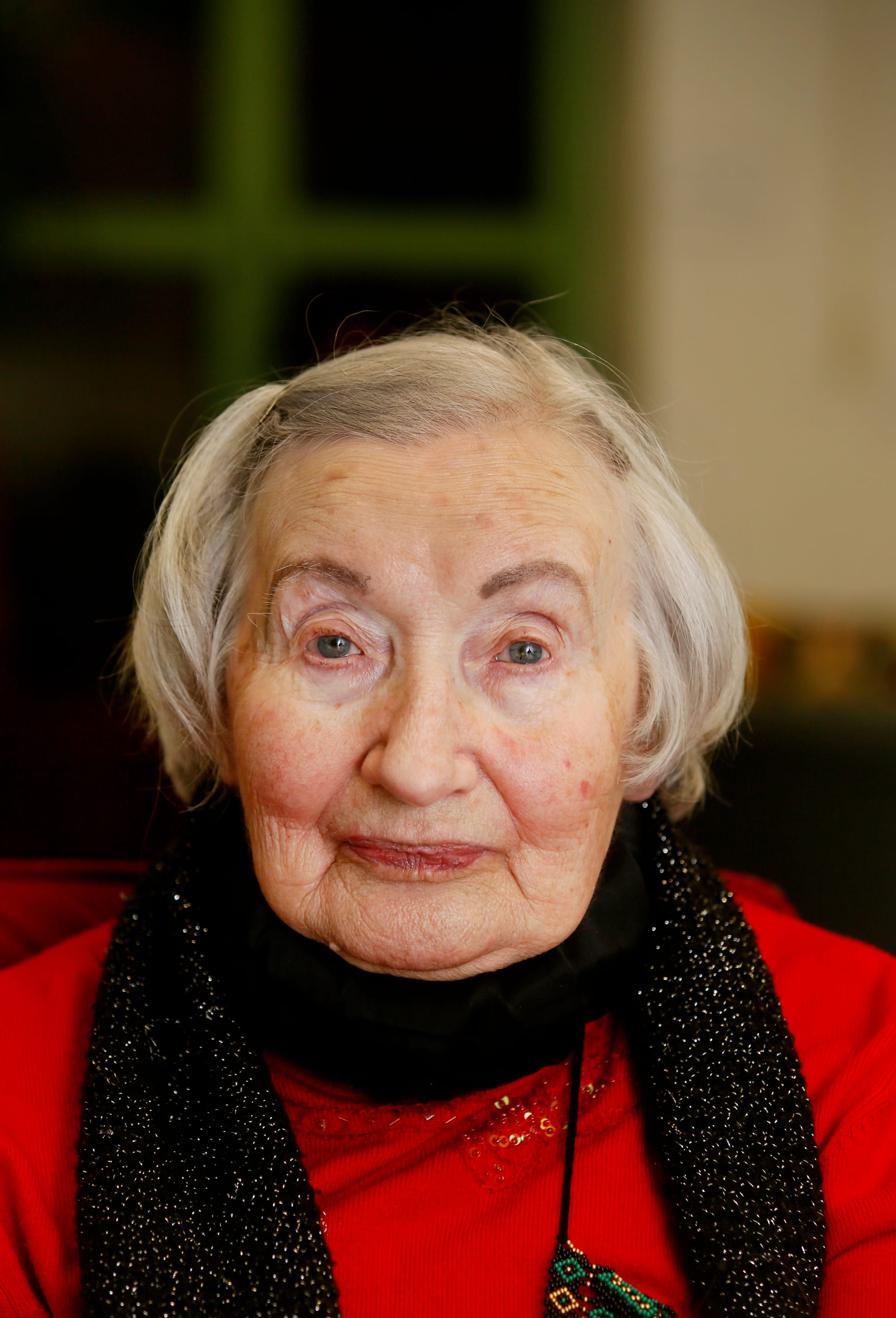
In the heart of Krakow's Jewish quarter, Zofia Radzikowska is talking about surviving the Holocaust and the last time she saw her father. That was in 1941, after a ghetto for Jews was established by the Nazis in Poland’s second city. Zofia’s father was called Yitzhak who, she says, had lived a good life with her mother until German forces targeted Jews after invading Poland. An early memory for Zofia is everything being taken from the family home including her bike – and then they had to leave. “My father went to the ghetto,” says Zofia. “But my mother decided that we should stay outside and live on Polish documents, while pretending to be Catholics. It was possible for us because we didn’t look very Jewish. My father was in another situation because it was very easy to prove that a man was a Jew.”
The Ferret is in Poland ahead of Holocaust Memorial Day which falls on 27 January each year. Zofia – remarkably sharp at 90 years old – is one of the so-called “Hidden Children”, a term for those who survived the Holocaust by changing their identity. She only saw her father once after he moved to the ghetto, in a suburb of Krakow called Podgorze where between 15,000 to 20,000 Jews were kept in horrendous conditions, enclosed by walls and barbed-wire fences. Hundreds were shot there – including at least 300 children – while thousands were put on trains to an extermination centre called Belzec, and Auschwitz-Birkenau, the infamous death camp that became synonymous with genocide.
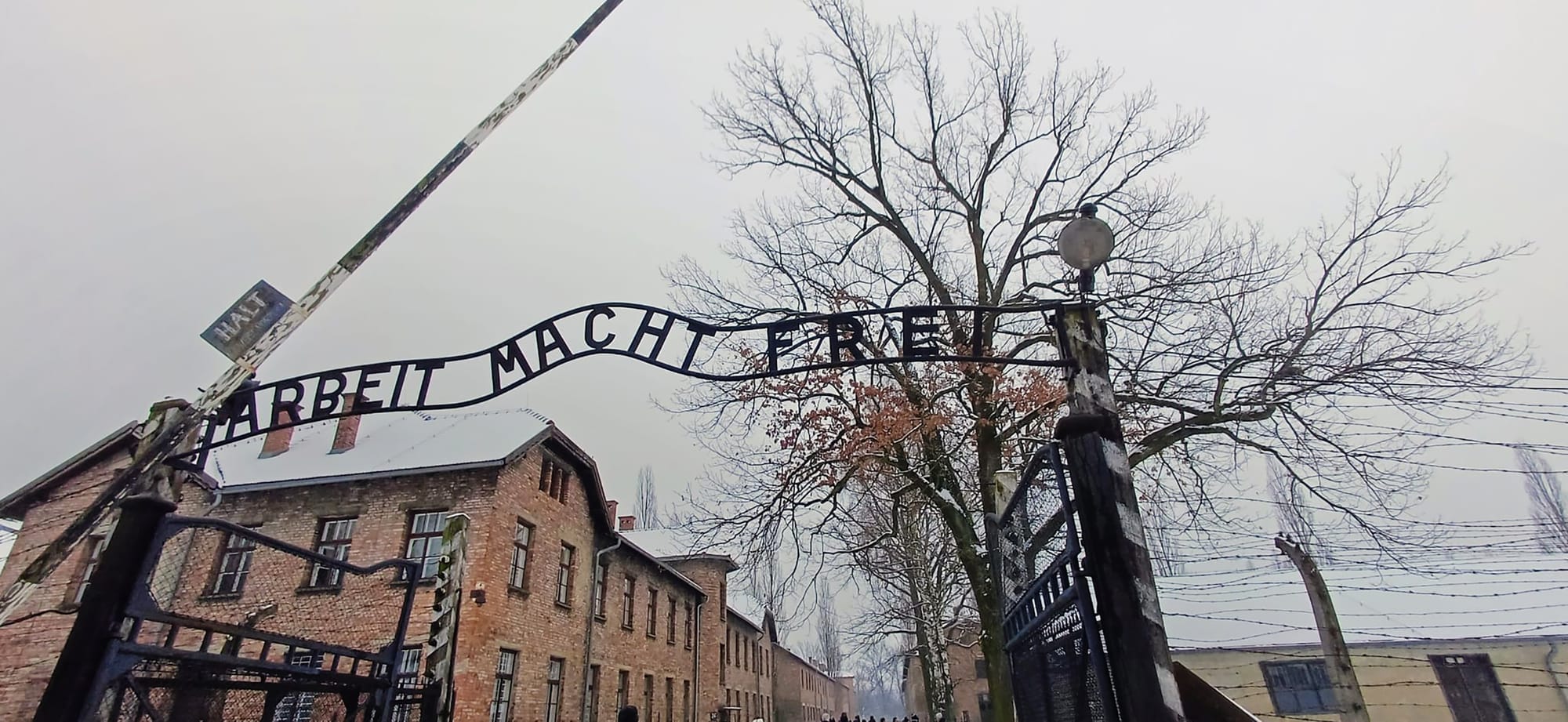
Zofia remembers her father talking to her mother, Sara. He was smiling. Zofia – six years old then – had no idea it would be the last time she would see him. “I just said ‘goodbye’ and we went away,” she explains. “After the war I waited and thought he would come back…but he didn’t.” It wasn’t until after World War II ended and Poland was liberated that she learned of her father’s fate – he perished in Auschwitz-Birkenau alongside an estimated 1.1 million other victims of the Nazis.
This week, events will be held across the world to commemorate the six million Jewish men, women and children murdered during the Holocaust by the Nazis, and millions of others killed including Slavs, Roma, disabled people, LGBTQ+ individuals, political opponents, Soviet prisoners of war, Jehovah's Witnesses, and people of colour. Holocaust Memorial Day is held on 27 January because it marks the anniversary of the liberation of Auschwitz by Soviet troops in 1945, the largest of the Nazi death camps. Services will take place in Scotland and in Krakow, which is home to one of the fastest-growing Jewish communities in the world. While antisemism is rising in some parts of the world, there is a rebirth of Jewish life in this exquisite Polish city, and that’s largely thanks to people like Zofia who’ve been helping younger people connect with their Jewish heritage.
This story exists thanks to you.
The Ferret doesn't answer to advertisers, owners, or paywalls. We answer to you, our readers and over 2,000 members who support journalism that holds power to account.
Keep stories like this coming.
She’s lived an extraordinary life. After her father went to the ghetto, Zofia and her mother, who changed her name to Józefa Litefka, moved to a village near Krakow. They had obtained false documents and lived as “Polish Christians” until a policeman learned they were Jewish and blackmailed them by threatening to inform the Gestapo. They paid him to stay silent but he returned to demand more money so they moved again to be safe, and after surviving the Holocaust they returned to Krakow and found somewhere to live – in a Poland freed from Nazism but now under communist rule.
“We were liberated by the Red Army [main military force of the Soviet Union] and we were given new papers,” Zofia says, adding that she initially believed communist propaganda but later realised much of it was untrue. She started to oppose the regime and joined Solidarity, a Polish trade union which campaigned for political change and became editor of an underground anti-communist newspaper. “In the end we won [referring to the end of communism], and we established the Association of Children of the Holocaust. That was my first Jewish organisation.”
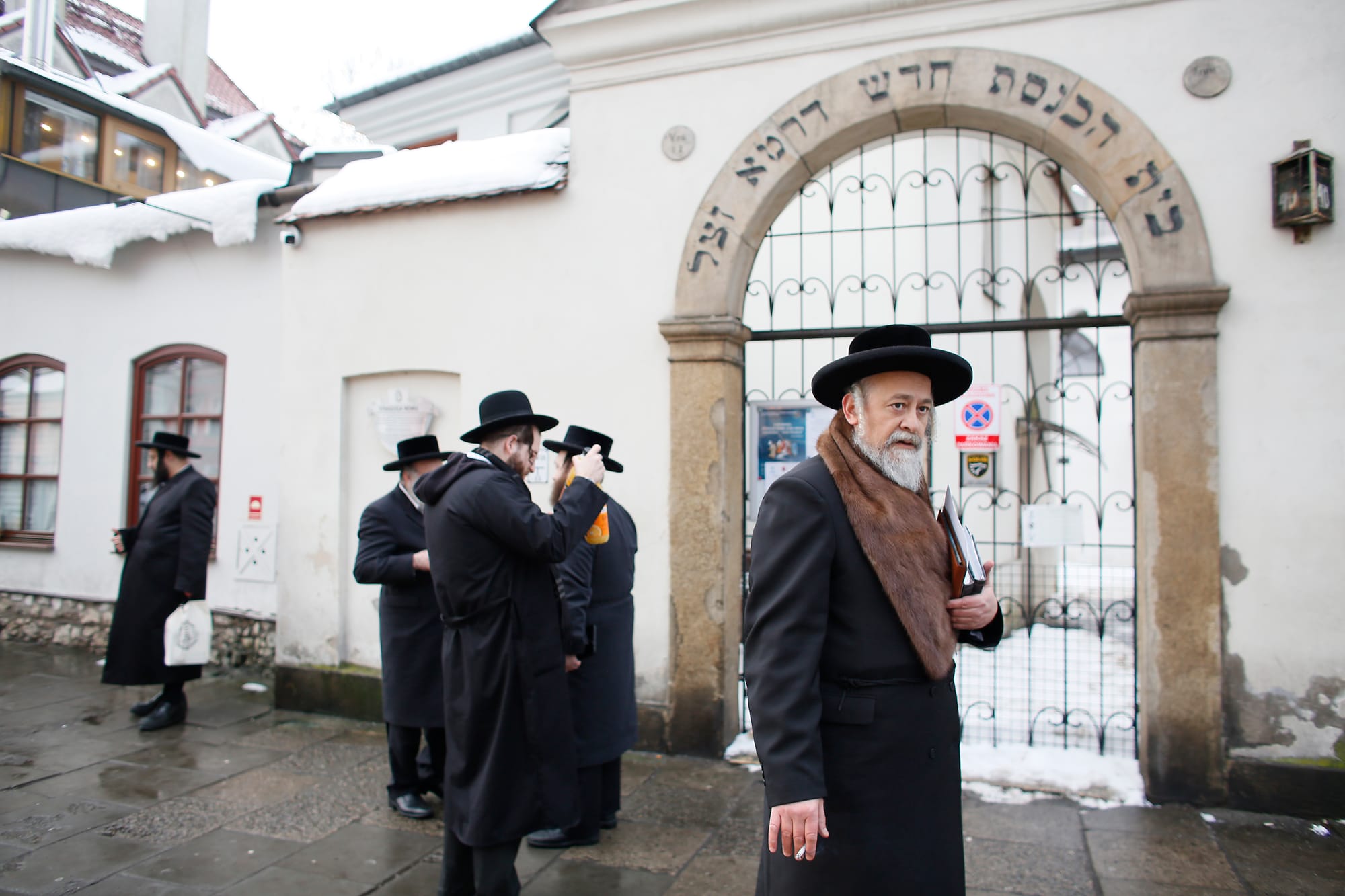
Zofia also helped establish the Jewish Community Centre (JCC) Krakow, which is based here in the city’s historic Jewish quarter, known as Kazimierz. It is cheek by jowl with a synagogue, in a part of the city where Stephen Spielberg shot scenes for the Oscar winning film Schindler's List. It was opened in April 2008 by King Charles – who has been supportive of the organisation since the outset – and serves as a focal point for the resurgence of Jewish life in Kraków. “I met King Charles last year when it was the 80th anniversary of the liberation of Auschwitz,” Zofia recalls. “He came here, he’s a fantastic guy. He’s very kind and easy to talk to”.
The JCC Krakow is 45 miles from Auschwitz-Birkenau. It is secular and open to everyone including people who've recently discovered Jewish roots or previously distanced themselves from their Jewish heritage. Holocaust survivors such as Zofia support them by sharing their experiences of the war, living through communism, and Krakow’s Jewish revival. Weekly Shabbat dinners and events to mark Jewish holidays are held, as well as arts and cultural programmes, and social activities.
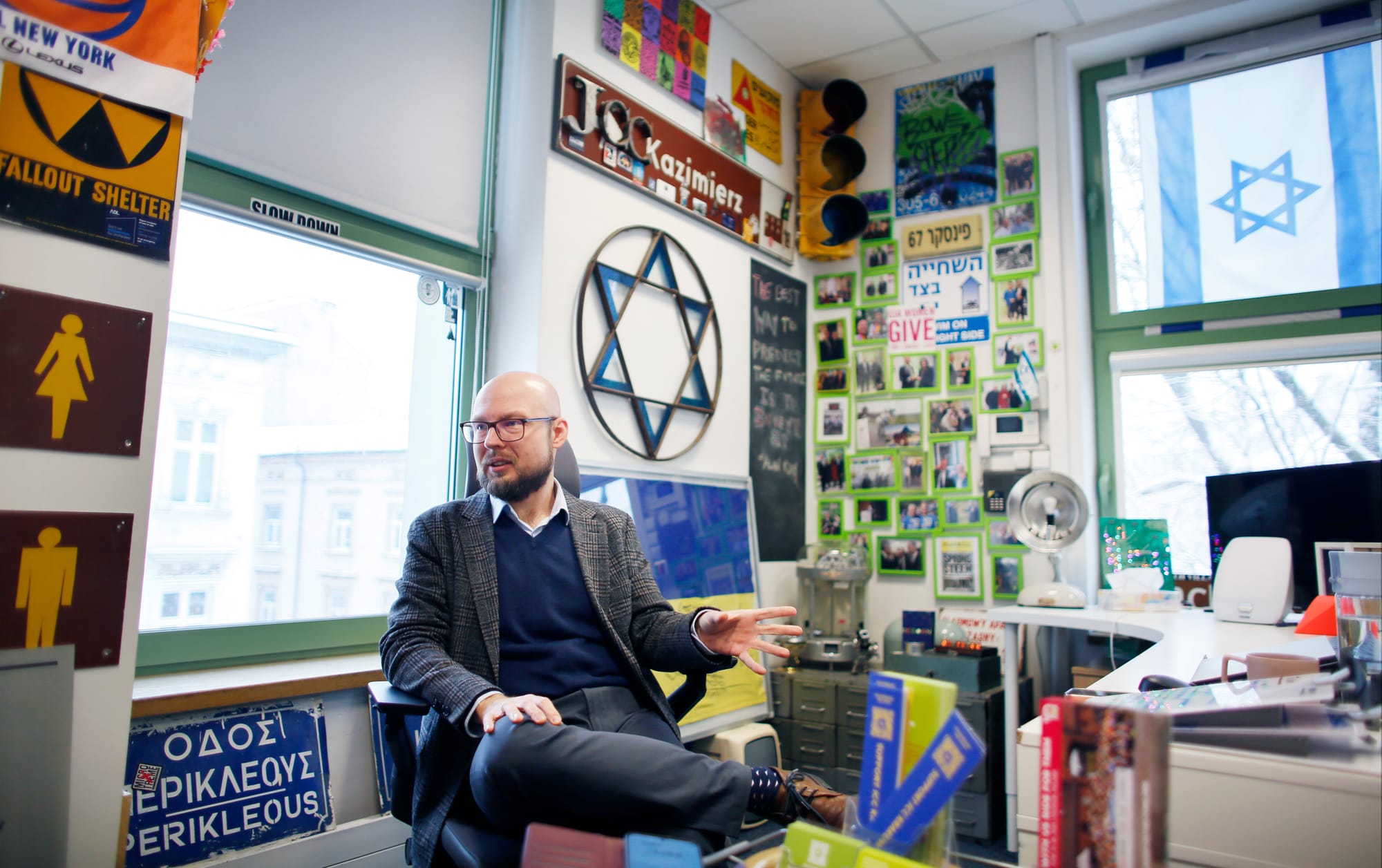
There is a proud Jewish history in Krakow, which was one of the Jewish capitals of Europe before World War II, when most of its population perished in the Auschwitz-Birkenau camp. The city was 25 per cent Jewish before World War II, while one in ten people in Poland – around 3.5 million – were Jews. “The Jewish community has been here for more than 1,000 years,” says Sebastian Rudol, who’s worked at JCC for 15 years. “Jews were an incredibly important part of Poland which was one of the most welcoming places for Jews.”
Only 300,000 Polish Jews survived the Holocaust. Rudol says “Jewish life limped on” after the war but under communism, antisemitism resurfaced in the 1950s and 1960s. Jews were being scapegoated for society’s problems once again, he adds, as they had been during the Holocaust and for centuries. “Jews were ‘evil capitalists’ and the ‘reason you can’t have bread on your plate’,” he says. In 1968, for example, many Jews left Poland for countries such as Israel, Canada, the US, Sweden, and Denmark due to anti-Israeli propaganda in Poland. But not all Jews left. Some didn’t have the money, even if they wanted to leave, and many hid their Jewish identity to make life easier. As happened during the Holocaust, people changed their names, which is why many have Polish names now, and they stopped going to synagogues and disconnected themselves from their Jewish identity.
After communism ended, however, everything was questioned, Rudol says. In the 1990s many Poles started to realise they had been fed propaganda and false narratives for decades and they wanted to rediscover the parts of Polish history that had been eschewed by communism. Now, he says, there is a young generation of Poles wanting to reconnect with their Jewish identity and JCC’s focus is to “reach out to them” and be an entry point for Jewish culture.
“People want to know why their family kept Jewishness a secret,” Rudol says. “How did they survive? There are a lot of heavy questions people need answered.“ According to the JCC Krakow, someone can claim Jewish identity if at least one of their grandparents was a Jew. The organisation has 1,200 members but anyone is welcome and it’s a place where Jews and non-Jews can meet, to promote understanding and combat antisemitism, albeit Rudol says the Jewish community feels relatively safe in Krakow. In his view, there are lower levels of antisemitism in Poland than in countries such as France and the UK.
The Jewish community has also helped Ukrainian refugees since Russia invaded Ukraine in 2022, regardless of faith. In the first year of the war, it helped more than 450,000 refugees, and more than 98 per cent are not Jewish. It still helps hundreds of people a day through its food pantry, which also stocks clothing, toys, and medications. Refugees are given psychological support and help with housing, employment and legal issues and the organisation sends humanitarian aid to Ukraine. “Ukraine is only three hours away,” says Rudol. “We understand how it is to be persecuted – 80 years ago, that was our Holocaust survivors. We have a moral obligation to do something.”
On Tuesday, JCC Krakow will observe Holocaust Memorial Day. There are over 50 Holocaust survivors in the Krakow area – including Zofia – but Rudol says it is “not the most important day in our calendar”. He adds: “We celebrate them for who they are now, not for what they experienced 80 years ago. We are always in the shadow of the Holocaust but careful that we are not defined by it.”
The Ferret is Scotland's member-owned investigative journalism outlet. For ten years, we've been digging deeper into the stories that matter, holding power to account without fear or favour.
We don't have billionaire backers or corporate interests. We have you.
Every investigation you read is funded by readers who believe Scotland deserves better journalism. Join them.
Words by Billy Briggs, photography by Angela Catlin


A Ferret investigation has found there was no registration to sell vapes at the Union Street premises in Glasgow where a major fire started - and we can reveal the name of the company behind the shop.

Huge volumes of sewage sludge have been used to fertilise Scottish farmland. Studies show it contains microplastics, forever chemicals and cancer-linked pollutants.

Far right actors have used gaming to recruit youngsters for some time but experts say they are increasingly using codes and imagery to avoid moderation.

Investigations into allegations of poor fish welfare at salmon farms by the UK Animal and Plant Health Agency have risen by more than ten times in six years, while site inspections have decreased.


