Gypsy Travellers have been persecuted for centuries. But despite a Scottish Government apology last June for the Tinker Experiment – which tried to assimilate them into settled culture – some claim their cultural rights are still being denied.
The Scottish Government has continued to back Ming Yang’s proposed investment at Ardersier despite national security concerns. It’s now being accused of a “staggering” failure of due diligence on the firm.
This summer we revealed that convicted loyalists from Belfast travelled to Glasgow for a far right protest. Further digging has unearthed a rapidly expanding anti-immigration network between Scotland and Northern Ireland.
Scotland has apologised for the 'Tinker Experiment'. So why do some Gypsy Travellers say it’s still going on?
Gypsy Travellers have been persecuted for centuries. But despite a Scottish Government apology last June for the Tinker Experiment – which tried to assimilate them into settled culture – some claim their cultural rights are still being denied.
The Ferret is Scotland's member-owned investigative journalism outlet. For ten years, we've been digging deeper into the stories that matter, holding power to account without fear or favour.
We don't have billionaire backers or corporate interests. We have you.
Every investigation you read is funded by readers who believe Scotland deserves better journalism. Join them.
In Gypsy Traveller Fiona Townsley’s archive, there’s a faded colour photograph of the camping ground where family stayed while they waited for Double Dykes caravan site, just outside Perth, to be ready.
In the image, she’s with two of her cousins on their grassy pitch, a white touring caravan and a washing line strung up with clothes drying behind them. Her youngest cousin, sombre-faced, cradles a naked plastic baby doll, and they’re all sporting the blunt-cut fringes of the early eighties that date the image even before Fiona confirms it.
“It would have been taken in 1982 when I was nine,” she remembers, “just before we moved into Double Dykes.” Under the soft focus memories of playing outside, guddling in the burn with the other kids, she knew the family was under pressure. This wasn’t a permanent place to stay.
“My parents kept going down the road to see how the Double Dykes caravan site was coming on,” she says. “I knew we were waiting for it to open.” Some of the older Gypsy Travellers camped with her family had campaigned long and hard for this council-run site, a place with running water and electricity and crucially, where no-one could be moved on.
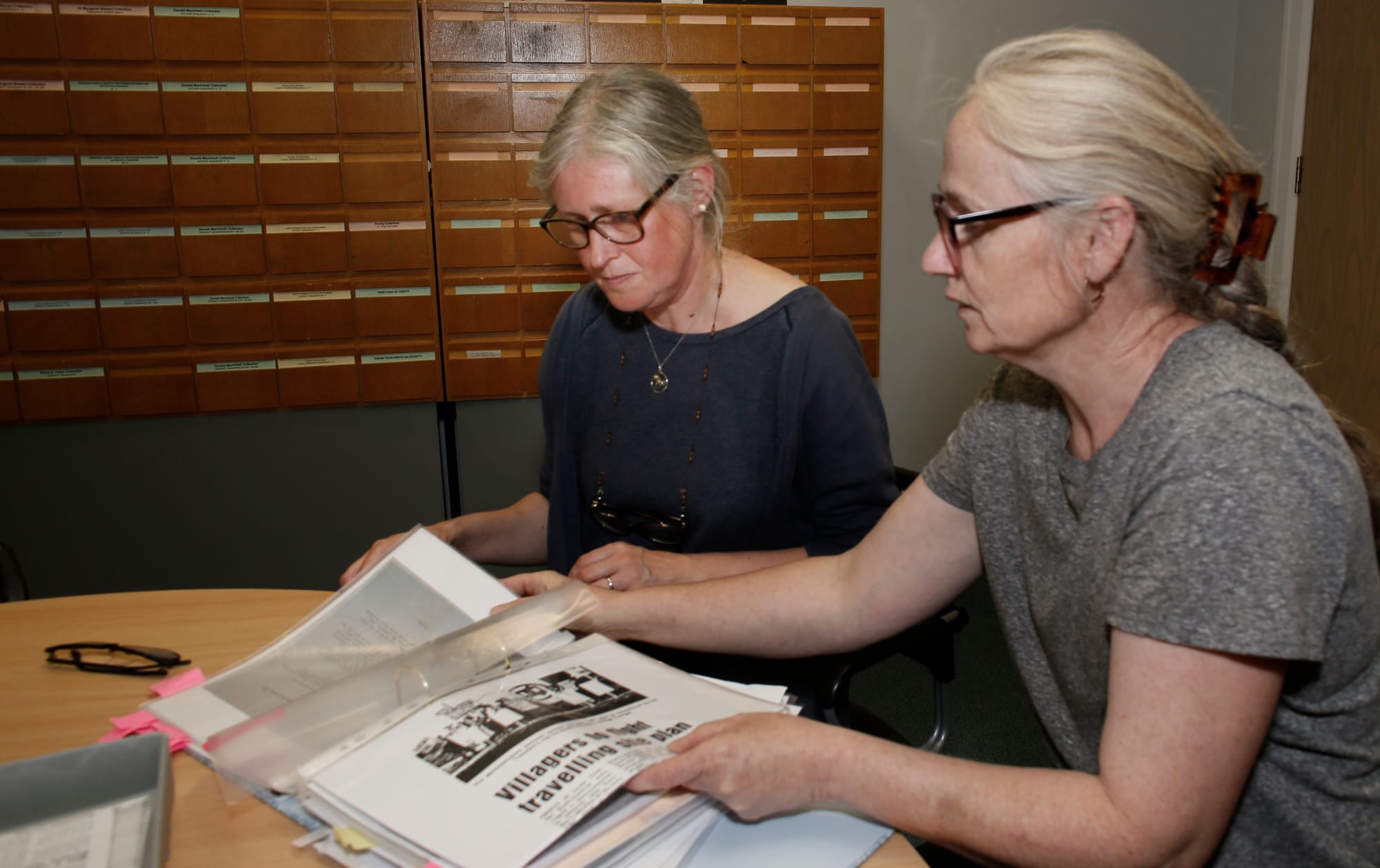
She flips through the archive box to a newspaper clipping from 1963, which details how “twelve men and two women representing a colony of 20 families” were charged with trespassing on a parcel of farmland known as Double Dykes. The defendants, the report says, argued this had been a traditional Gypsy Traveller camping ground for more than 40 years. In that “colony” were three generations of Fiona’s family. “My parents, my grandparents and my great grandparents were all prosecuted for living on that site,” she explains.
So moving into Double Dykes on 13 December 1982, was huge for her family. Her home base was now Double Dykes caravan site “and it’s been that way ever since”. “Living on a caravan site is part of my identity as a Gypsy Traveller,” she says.
Fiona Townsley with researcher Rhona Ramsay at the Perth and Kinross archives.
__
More than 40 years on, she and others in this community are fighting once again. The subject this time is an upgrade to the site, which might seem – on the face of it – welcome, given concerns raised by some residents that their prior homes were inadequate, damp and mouldy. But it’s more complicated than that.
The council announced the £6.5m "transformation" to Double Dykes back in January 2023 - secured with the help of funding from the Scottish Government’s Gypsy/Traveller accommodation fund. The aim, the council said, was to give residents “access to safe, warm, secure and energy-efficient homes that exceed current standards”.
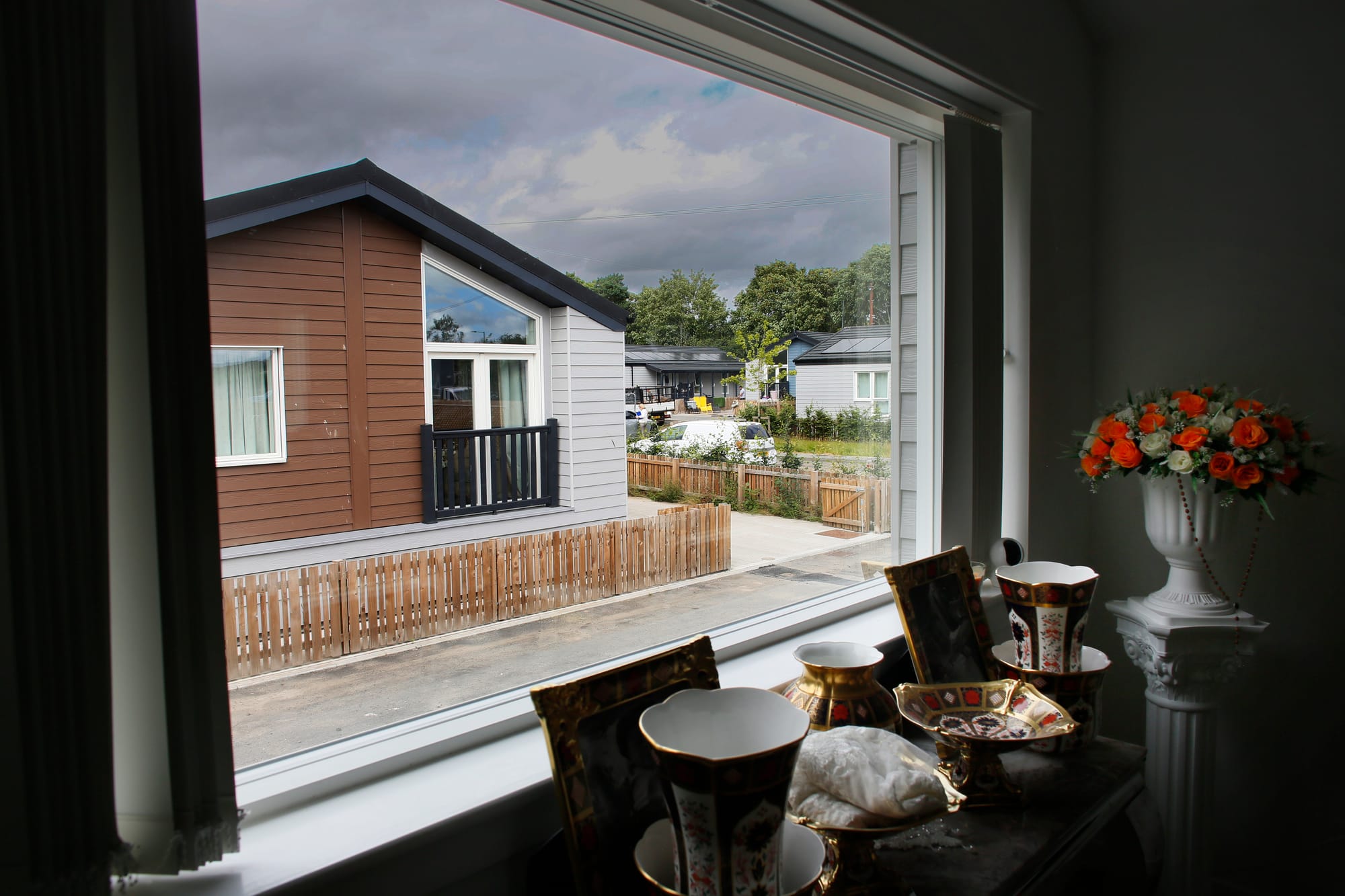
But Fiona and some other residents claim the modular homes, fixed to the ground, unlike the old mobile ones, are not culturally appropriate and the way the changes have been implemented, they say, constitute a denial of their cultural rights.
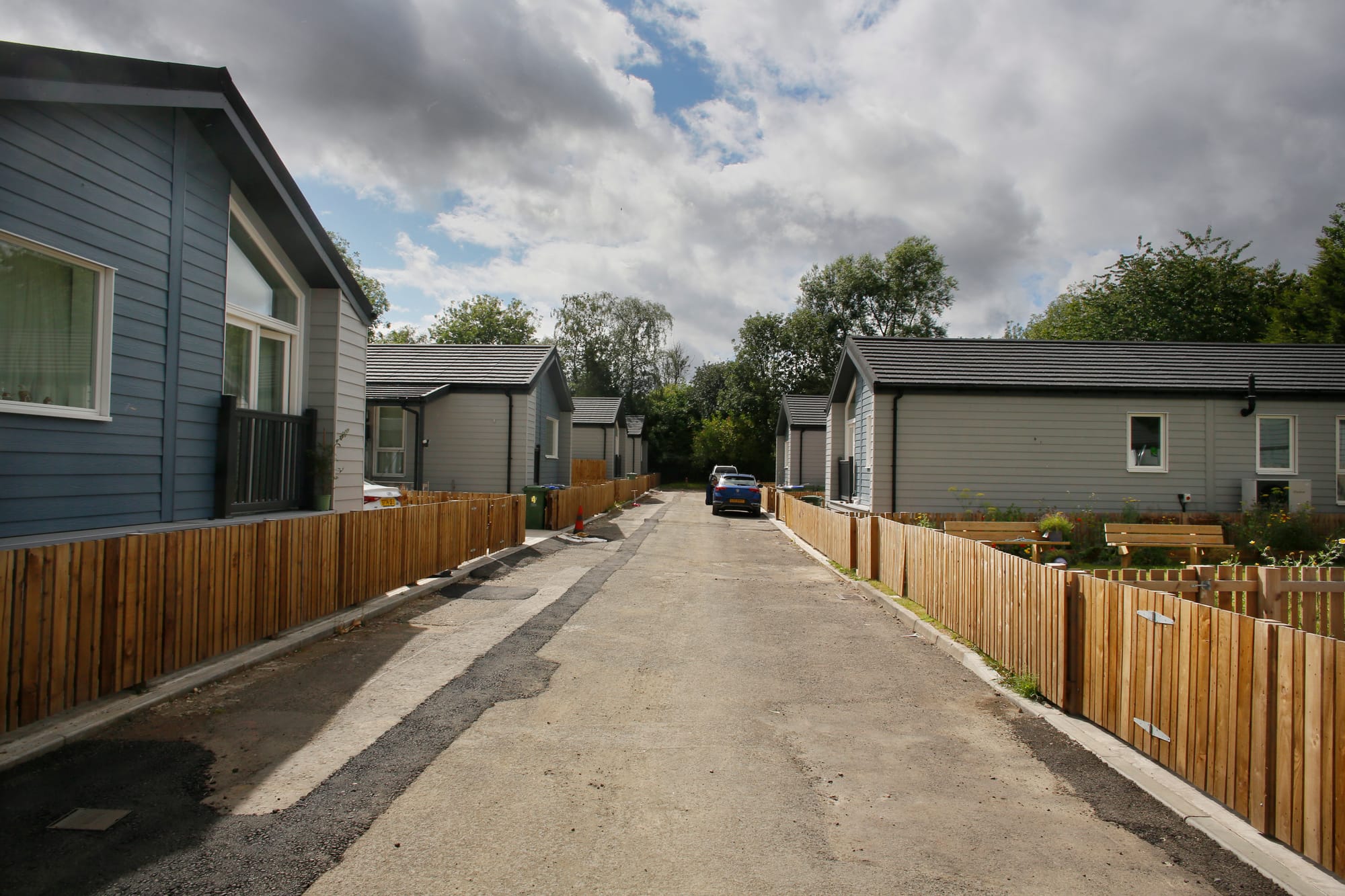
More than three years on the construction team is still out in force as we put into the narrow gate to Double Dykes, where Fiona meets us to guide the way up a tarmaced road past the 20 near identical, new three-bedroom modular homes.
We stop at the corner to take a look at the new homes. “The first five went in over a year ago and that’s when we realised that they were putting spikes into the ground,” Fiona explains. “The homes weren’t going in on a chassis, like a mobile home and like the previous chalets and caravans were, but going in on foundational screws. The old chalets you could hook them on to a car and pull them.”
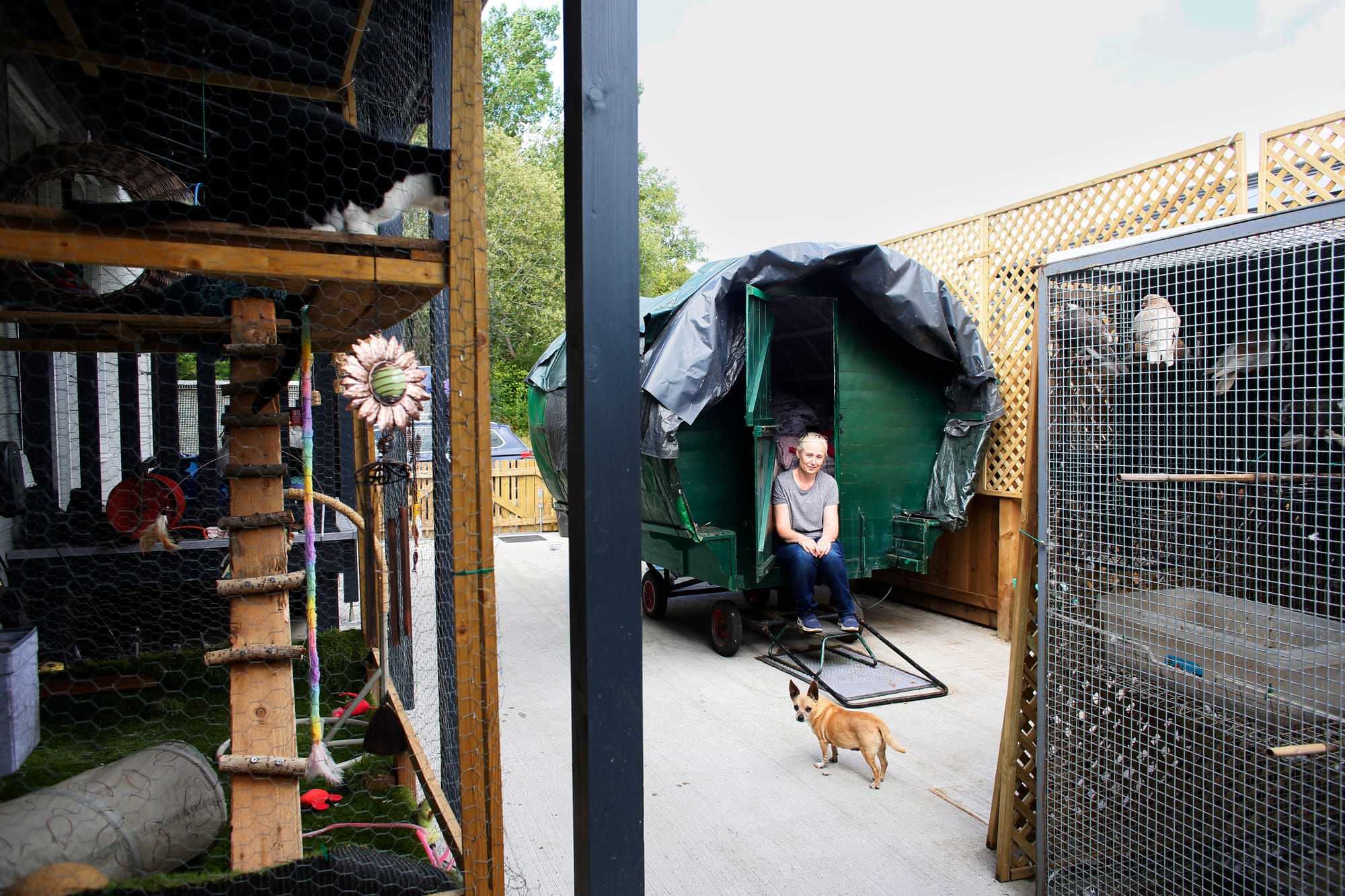
We continue to her own pitch, where we’re met by Pup Pup, a feisty but friendly chihuahua with bat-like ears, who she took in for her neighbour while she was recovering from cancer. Alongside the house there are wooden cages where she keeps her rescue cats and cooing roosting pigeons. Next to those is the traditional Gypsy Traveller wagon she built herself as a project to keep her grief-striken mind busy when her father died about a decade ago.
Fiona says her outdoor space is more important to her culturally than the inside.
In recent months she’s been sleeping in the wagon, asserting her right, she says, to live according to tradition. But the council does not approve. Since the upgrade it says rules state residents may keep their caravans alongside their new modular homes, but must not live or sleep in the vans. Several residents have received enforcement visits.
“These homes are no longer covered by either the mobile homes or the caravan’s act,” explains Fiona. “And the council no longer considers this a caravan site, even though it's always been one. I have always lived at Double Dykes Caravan site. What is it now?”
Inside, Fiona pulls out a copy of an occupancy agreement given to residents in 2023 but which she did not sign. It encapsulates what she considers the absurd contradiction she finds herself living with. “This is the agreement which stipulates that they are living on a caravan site and that they are going to be provided with mobile homes,” she says, pointing to the wording in black and white. “But now they say this isn’t a caravan site. And that means the homes they have provided can’t be mobile ones.
“How does it make sense? The occupancy agreement says the council can legally evict me off the site if I don’t stay in the mobile home provided. But it provided me with a house that doesn’t come under the mobile homes act. Then if I go and sleep in the wagon, which really is a mobile home, then the council says it will evict me.”
Her neighbour, who doesn’t want to be named but whose family members were amongst those who campaigned for the site, pops in to visit. She was just 13 when the site opened and three generations of her family still live here. She shares Fiona’s concerns. Some of the younger generations, she says, now want to return to a more traditional way of life so protecting travelling sites is crucial.
“But now it feels like we are on a reservation,” she says, evoking the language of indigenous American people, who were coerced under post-colonial policy to accept housing on pieces of land “reserved” for them by the government. “It’s like a housing scheme now,” says Fiona. “And we’re guinea pigs here. I feel like we’re being experimented on with this Scottish Government money.”
The upgrade has improved the conditions for some residents but feels "culturally inappropriate" to others.
__
The roots of what is known as “the Tinker Experiment” lie in historic persecution of Gypsy Travellers and it traces back to a 1895 report which concluded the "eradication" of the culture was the only solution. It led to policies, including criminalising encampments and taking children into care.
After the Second World War, Bobbin Mill, a Gypsy Traveller site in Pitlochry, Perthshire, became the centre of the experiment, a state-backed assimilation policy that forced Gypsy Travellers off the road and into intentionally substandard housing from the 1940s to the 1980s. In January this year Perth and Kinross Council issued an apology for the Tinker Experiment, six months after another apology made by first minister John Swinney on behalf of the Scottish Government.
But to Fiona the words are hollow. That same month a report by the Scottish Human Rights Commission concluded: “The Tinker Experiment has not yet ended in Scotland. Its legacy and impacts continue to the present day.”
Fiona considers the way this upgrade has unfolded, with residents’ views not acted on, to be part of this continuation. “By denying that this is a caravan site they are trying to assimilate the Gypsy Traveller communities in Scotland into the settled communities,” she says.
She is not the only Gypsy Traveller who feels this way. A few doors down, lives Claire as we’ll call her because she doesn’t want to use her own name. She says she feels “traumatised” by the upgrade process, suffering panic attacks due to uncertainty in the long months residents spent in a mainstream caravan site while work was ongoing here.
Like others, she has complaints about the time taken for basic amenities like water to be sorted and like Fiona, insists residents were misled by the council. Claire frets about her grandchildren growing up without knowing where they come from. “All their cousins live on caravan sites,” she says. “So what is this now if the council says it’s not a caravan site?”
She resents the control imposed on her - the removal of the communal site fire pit, the fact that when her elderly and unwell uncle came to stay he wasn’t allowed to sleep in her caravan because of the site regulations, changes to the length of time they can spend away from the site on the road. “It’s all just chipping away at our culture,” she says.
Roseanna McPhee lives in Bobbin Mill, the site at the centre of the Tinker Experiment and has served on committees with Fiona. When she was growing up, she lived in a former RAF hut on the site with no running water or electricity. The huts were replaced but she is still living in substandard accommodation and fighting the council for appropriate upgrades.
“It’s nice we’ve got the apology,” she says. “But what does that mean when we are still sitting here in a chalet with mould and without central heating?” Currently, she claims, the council has rejected the log cabins they have asked for and is offering replacements she describes as “like a garden shed”.
She considers their position more perilous than that of Double Dykes residents. But she agrees with Fiona’s assessment of her ongoing fight to be heard as a continuation of the Tinker Experiment. “What we have in common with Fiona and the others in Double Dykes is that we are not being listened to,” she explains. “The Gypsy Traveller community is not one homogeneous group. There is no one solution that works for all of us. What’s going on in both places is a continued denial of our cultural rights.”
She and others from Bobbin Mill are now petitioning for reparations to be paid for the generations of harm caused by the Tinker Experiment policies, a position backed by human rights experts.
Fuel our next investigation
This story was funded by people who want journalism that uncovers new things, challenges power, and serves the public. Help make the next one possible.
A spokesperson for Perth and Kinross Council told The Ferret that it was “committed to supporting the Gypsy/Traveller community”. The redevelopment at Double Dykes, it insists, “was never intended to change the nature of the site or encourage residents to adopt a settled lifestyle.
Rather, it was undertaken to provide modern accommodation while continuing to support the culture, traditions and way of life of the Gypsy/Traveller community.”The council claims it worked closely with residents throughout the process with feedback informing the designs and says everyone has room for a caravan beside their home.
While they acknowledge “individual concerns” can arise in “any major redevelopment project”, they say the majority of residents are happy with the upgrades and insist “we remain committed to listening to residents and addressing issues where they are identified.”
The Ferret understands that some residents are happier with the changes, even though the process has been imperfect. But others are not. Townsley provided the Ferret with copies of surveys, with concerns about this upgrade supported by 11 residents from the 20 households on this site. Many considered there to be discrimination present and backed the view it was another version of the Tinker experiment.
Meanwhile at Bobbin Mill, the council says the upgrade project is at “a very early stage” and says it is “committed to working closely with residents” to ensure they can inform proposals. "While it is disappointing to hear concerns raised about our approach, we recognise that residents are passionate about their community and want to be fully involved in decisions affecting the future of the site.”
Last year the Scottish Housing Regulator found Perth and Kinross Council had not met the minimum standards in terms of a number of factors including fair treatment, maintenance and repairs, consultation, participation and communication. It confirmed it is receiving regular updates from the council as part of an ongoing engagement process.
Campaigning organisations, like Making Rights Real, which is working with residents of several Scottish sites, also have concerns. For law professor and Gypsy Traveller expert, Máiréad Enright of Loughborough University one key issue here is that reparations - which she believes could include financial compensation for those directly impacted by discriminatory policies – must also include a commitment not to make the same mistakes.
She calls it a “guarantee of non-repetition”. “An apology, and even compensation payments, are inadequate if the same people who suffered under the Tinker Experiments and their wider families are being subjected to aspects of forced assimilation or inadequate housing provision,” she points out. “It is crucial that any decisions taken about their housing for the future are made on a genuinely collaborative basis.” Nothing about this community, she says, should be decided without their input. __
Back in Perth’s archives Fiona puts her photographs and newspaper clippings back in their boxes, along with the freedom of information requests, complaint letters and other Double Dykes paperwork – the past packed up with the present, for now at least.
Be part of something bigger
Supporting The Ferret is not just about access. It’s a way to back journalism that’s accountable, impactful, and independent.
Karin is The Ferret’s co-editor and has reported on people, power and planet for the UK’s leading outlets. She co-founded our Community Newsroom in Glasgow and is interested in participatory approaches to journalism. Audio is her favourite medium.
The Scottish Government has continued to back Ming Yang’s proposed investment at Ardersier despite national security concerns. It’s now being accused of a “staggering” failure of due diligence on the firm.
Authorities tightened the rules around this Scottish business scheme after years of exploitation for financial crime. Moscow entities – and a man accused of facilitating child sex abuse – are still selling it to clients seeking “financial privacy”.
The Scottish Government’s green watchdog sent seven letters over three years alleging multiple breaches at a fish farm – and then issued a final warning letter.
This US-style right-wing political pressure group keeps its funders a secret. Its members have helped man Scotland’s anti-migrant and asylum demonstrations.