The Scottish Government is selling surveillance planes to save money and says drones are used to prevent illegal fishing. But critics argue that losing experienced pilots could mean criminality goes unchecked.
Ithaca Energy announced a major dividend on the eve of UK sanctions against companies operating in illegal Israeli settlements. A few weeks later it paid out £100m to a shareholder the UN says has ‘direct links’ to the occupied territories.
Prospective MSPs are legally required to evidence their election spending and confirm the records are correct. Following an investigation by The Ferret, Police Scotland is examining whether nine Reform UK candidates failed to do so.
Alarm over bid to keep cracked reactors running by cutting nuclear safety margins
The company that runs Scotland’s ageing nuclear power station wants to weaken safety standards to keep it running for at least four more years. But the nuclear safety watchdog has its doubts.
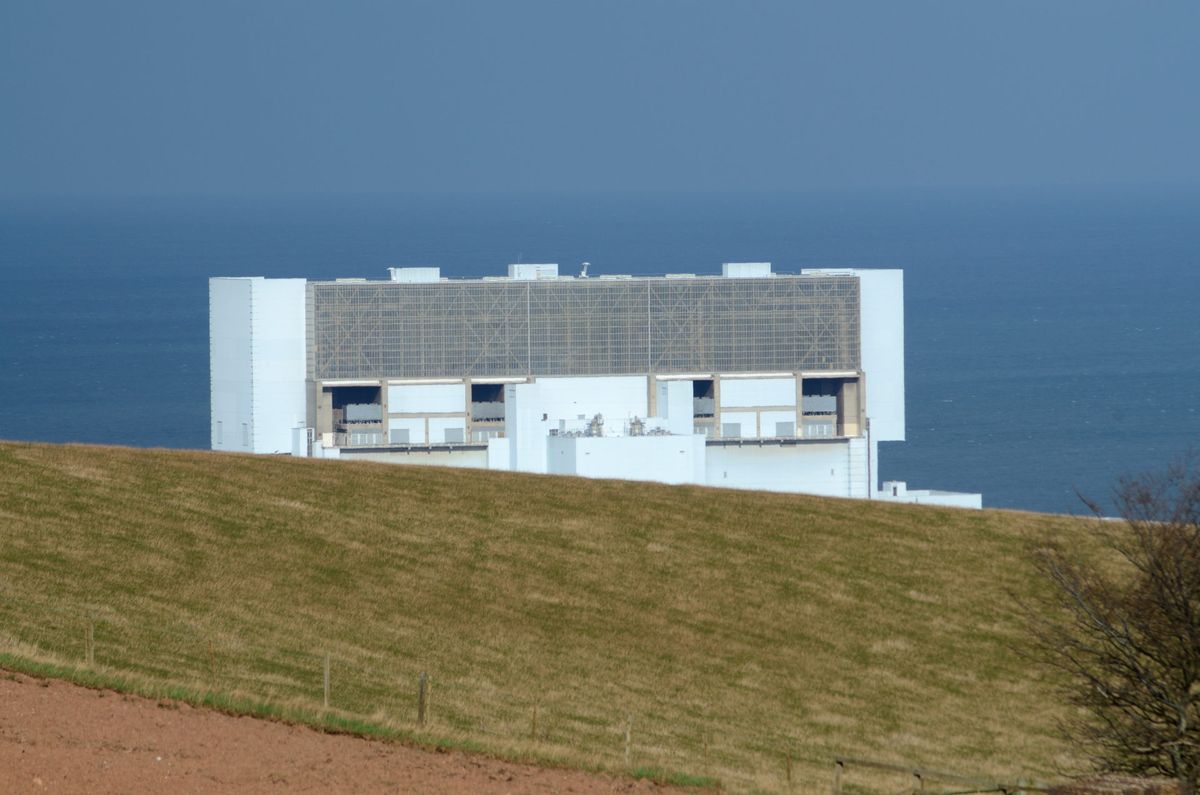
Moves to keep Scotland’s increasingly cracked reactors at Torness in East Lothian generating electricity until 2030 or 2032 have prompted formal action from the UK government’s nuclear safety watchdog, according to internal files obtained by The Ferret.
The station’s operator, EDF Energy, has been pressing for safety margins to be relaxed so reactors can keep running for as long as possible with hundreds of cracks spreading through their highly radioactive cores.
But the Office for Nuclear Regulation (ONR) has “concerns” and has demanded that the company justify its understanding of the safety implications. ONR inspectors lacked confidence in some of the company’s measurements, and accused EDF of a “trend of under-predicting cracking”.
ONR has also revealed that the estimated number of cracks in one of the reactors at Torness leapt by more than a third from 585 to 782 in just six months. A further 62 cracks have been found in the second reactor at the site, which only started cracking in May 2025.
Helping you make sense of what really matters
From fact checks to investigations and explainers, The Ferret helps cut through noise with journalism that is careful, sourced, and worth your time.
Campaigners urged ONR not to be “bullied” by EDF into allowing safety margins to slip. The cracks were “extremely worrying” and keeping Torness running was “gambling with public safety”, they said.
ONR told The Ferret that its inspectors made “independent and proportionate challenges” to EDF's claims. It stressed that the current number of cracks at Torness did not breach safety margins.
EDF said that “robust challenge” by regulators was essential to a strong nuclear safety culture that prevented accidents. The company's ambition was to generate electricity from the station “for as long as it is safe and commercially viable to do so.”
In 2016 the planned life of the station was extended from 2023 to 2030. In 2021 EDF backtracked on that, saying that Torness would be closing two years earlier in 2028 because of expected cracking.
But in 2024 EDF again changed its mind, and announced that Torness would keep generating electricity until March 2030. According to ONR, EDF had decided to extend the lifetime of the station “to 2030 plus or minus two years”, suggesting that operating to 2032 was also being considered.
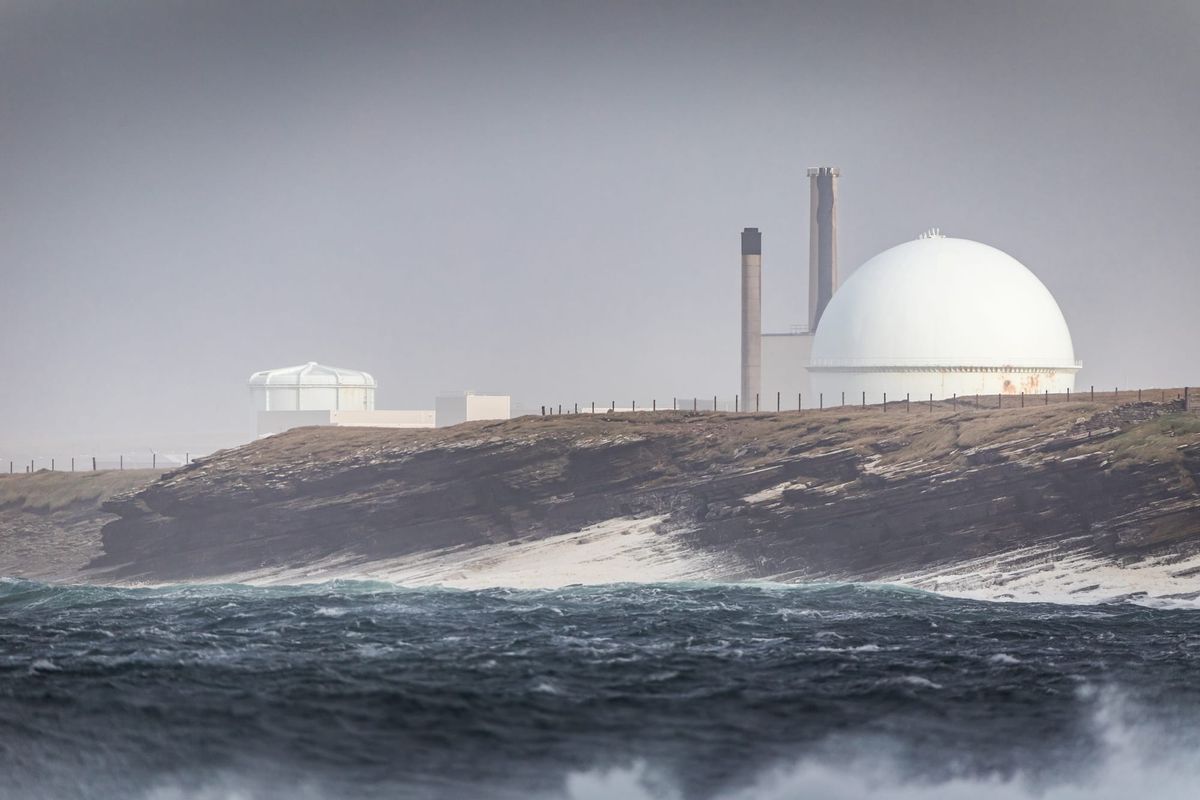
Meanwhile, Scotland’s other nuclear power station at Hunterston in North Ayrshire was closed down in January 2022, more than a year earlier than planned. This followed the discovery of an estimated 586 cracks in its two reactors.
The graphite bricks that surround the uranium fuel in reactors, such as those at Torness and Hunterston, crack after being bombarded by radiation for decades. The danger is that this could distort reactor cores, making them more difficult to manage.
ONR previously said that spreading cracks could result in debris inhibiting the cooling of the hot fuel. In some scenarios, this could lead to a reactor meltdown, which could result in the escape of radioactivity to the environment.
In response to a freedom of information request by The Ferret, ONR has released 11 heavily redacted files about its latest moves to regulate cracking at Torness. They reveal that between April 2025 and April 2026 ONR held 23 meetings with EDF, and formally demanded action on safety issues.
There have been prolonged and gritty tussles between ONR and EDF over how to understand the way in which cracks were impacting safety. Some of the technical issues at stake are difficult to understand because key words and phrases have been blacked out.
But it is clear there have been a series of disagreements between the regulator and the company. EDF has been arguing to cut safety margins to allow Torness to operate for longer, while ONR has been challenging EDF’s assumptions, methodologies and conclusions.
ONR raised a formal “regulatory issue” because of potential shortfalls in EDF’s understanding of how cracks are spreading. ONR said it had “concerns over EDF’s ability adequately to predict the number of cracked bricks within the graphite core”.
ONR disputed EDF moves to relax the so-called “damage tolerance boundary”, which limits the operation of Torness. According to one account from ONR, after a series of meetings in 2025 consensus “has not been reached.”
ONR pursued a second regulatory issue in 2025 because it lacked confidence in EDF’s measurements of the width of cracks and resulting fragments. The company accepted that "a number of errors and incorrect assumptions” had been made, but rectified them and the issue was resolved.
“Safety margins cannot be something to be negotiated simply to keep an ageing reactor running.” – Kristopher Leask MSP
After an inspection in September 2025, ONR’s expert graphite panel commented that there was “reason to pause and think”. They said that EDF forecasts “suggested a continuation of the trend of under-predicting cracking”.
One meeting between ONR and EDF in 2025 was about the risk of vital safety systems shutting down because of “snags” caused by cracking. EDF was said to be proposing to increase the number of permissible snags from one to five.
The Ferret also used freedom of information law to ask for an update on the number of cracks in the two reactors at Torness. We previously reported that there were an estimated 585 cracks in reactor one in March 2025, and the first crack had been found in reactor two in May 2025.
ONR has now told us that “reactor one was inspected in August 2025 where it was estimated the number of cracked bricks were 782.” It added that after an inspection of reactor two in February 2026 “it was estimated that 62 bricks were cracked”.
"This is an extremely worrying situation,” said SCRAM’s Pete Roche. “There is bound to be huge public concern that the ONR will be bullied by EDF and the UK Government into allowing safety margins to slip.”
He added: “The bottom line is that continuing to operate these reactors with cracks in the reactor core is gambling with public safety.”
The Scottish Greens described The Ferret’s revelations as “deeply concerning” and called for a “just transition” for Torness. “Safety margins cannot be something to be negotiated simply to keep an ageing reactor running," said the party’s energy spokesperson, Kristopher Leask MSP.
“EDF must answer these concerns transparently. If it cannot demonstrate safe operation against robust standards, the reactors simply must not operate.”
Former government radiation adviser, Dr Ian Fairlie, questioned whether there were “different priorities” other than safety in play. “If public safety were the number one concern then the reactors should be phased out, as their electricity is not needed in Scotland,” he said.
The Office for Nuclear Regulation (ONR) stressed that EDF had demonstrated that the reactors at Torness could be safely shut down. “This position is supported by updated modelling and inspection evidence, which is reviewed by ONR,” a spokesperson told The Ferret.
ONR’s inspectors were supported by an independent technical advisory team. “This work enables our inspectors to formulate independent and proportionate challenges to EDF's assumptions and safety case claims,” the spokesperson said.
“The current number of cracked fuel bricks at Torness does not challenge the safety margins set out in EDF's safety case. As the independent nuclear regulator, we will not allow any plant to operate unless we are satisfied it is safe to do so.”
EDF pointed out that changes to the graphite cores of ageing reactors had long been understood. “EDF has invested more than £300m over the past 20 years to assure good understanding of how the graphite cores age,” said a company spokesperson.
This had resulted in some “incredible developments” which had helped provide “a clear understanding of the available safety margins”. New safety arguments gave “high confidence that we will be able to safely shut our reactors down in all circumstances,” the spokesperson added.
“It would be surprising if the regulator did not question the operator or request more information and evidence. Robust challenge is a healthy and essential part of the regulatory regime and a strong nuclear safety culture.”
When The Ferret asked EDF in June about whether it planned to keep Torness running until 2032, it said its ambition was to keep generating electricity “for as long as it is safe and commercially viable to do so”. The station’s lifetime would be kept under review “to assess whether further life extensions can be achieved”.
Both ONR and EDF requested publication of their statements in full. They are here. The complete freedom of information response from the Office for Nuclear Regulation is here.
Fuel our next investigation.
This story was funded by people who want journalism that uncovers new things, challenges power, and serves the public. Help make the next one possible.
Rob has more than 40 years’ experience specialising in reporting on environmental issues. He has co-authored three books about nuclear power, produced radio and television programmes. He likes muckraking.
The Scottish Government is selling surveillance planes to save money and says drones are used to prevent illegal fishing. But critics argue that losing experienced pilots could mean criminality goes unchecked.
Ithaca Energy announced a major dividend on the eve of UK sanctions against companies operating in illegal Israeli settlements. A few weeks later it paid out £100m to a shareholder the UN says has ‘direct links’ to the occupied territories.