

Claim 'abortion to birth' is now legal in the UK is Mostly False
Changes to abortion law in England and Wales have been misrepresented on social media.
Changes to abortion law in England and Wales have been misrepresented on social media.
Climate change is causing rising sea levels and coastal erosion and 109 Scottish golf courses are at risk. We examined the issue as part of Green drive: Golf and the environmental crisis – a special Ferret series on golf and the environment.
The Ferret exposed the extreme views of Reform UK’s Scotland’s candidates before Nigel Farage promised to improve his party’s “poor” vetting processes, but many of them have been re-selected to fight the Holyrood election.

A group representing coastal communities has criticised the Scottish Government’s new fish farming strategy for lacking environmental targets or stronger decision making powers for local residents.
The Scottish Government’s new plan to support the fish farming sector – the Vision for Sustainable Aquaculture – promises to protect the environment, promote innovation and ensure local communities see lasting benefits.
The Coastal Communities Network (CCN), which is made up of 24 local groups across Scotland, welcomed the environmental principles outlined in the government’s new strategy.
But it criticised an absence of clear targets and interim deadlines to measure if the sector is improving sustainability.
The group also wants communities to have the power to reject unwanted new fish farms via “a mechanism that promotes true democratic decision making”.
The government said “environmental protection and enhanced community benefits” were “key outcomes” of its plan, and were already being progressed.
CNN argued the strategy fails to address the industry’s environmental impact five years after a Scottish Parliament committee expressed concern.
In a 2018 report, the parliament’s cross-party environment committee found a “lack of progress” in tackling the environmental risks of salmon farming first outlined in 2002, despite a plan to double the economic contribution of the aquaculture industry by 2030.
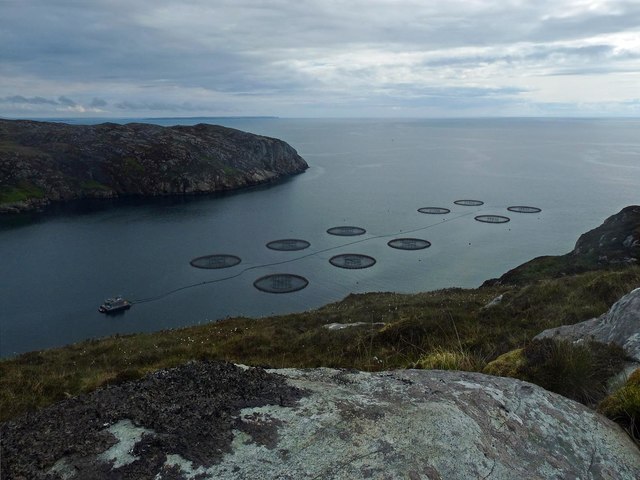
There were “significant gaps in knowledge, data, monitoring and research around the adverse risk the sector poses” to the environment, the committee added.
CNN has asked the government for more detail about the current environmental impact of the fish farming industry, and for precise definitions of “sustainable” practices.
“The industry has lost its social licence in many coastal communities up and down Scotland’s west coast, which want open pen fish farms to be phased out and our coastal waters revived,” claimed John Aitchison, CCN’s aquaculture spokesperson.
“At present, planning refusals for fish farms are usually overturned on appeal by Scottish Government reporters who have no knowledge of aquaculture, and communities have no means of challenging this apart from very expensive court proceedings.
“We need a mechanism that promotes true democratic decision making.”
The Ferret previously revealed that between March 2017 and 2023, the government approved four of seven fish farming developments originally rejected by local councils.
A Scottish Government spokesperson said: “Improved environmental protection and enhanced community benefits are two key outcomes that are enshrined within our Vision for Sustainable Aquaculture and progress is already being made on meeting these outcomes.
“This work includes an upcoming trial of a new process for managing fish farm applications focussed on coordination and improved engagement at the pre-application stage as well as placing a renewed emphasis on innovation and regulation within the sector to minimise the impact of the sector on Scotland’s marine environment.”
Header image by Tapani Hellman from Pixabay.


Climate change is causing rising sea levels and coastal erosion and 109 Scottish golf courses are at risk. We examined the issue as part of Green drive: Golf and the environmental crisis – a special Ferret series on golf and the environment.

Britain Remade has appointed two directors from a lobbying firm which represents EDF, the owner of Scotland’s last nuclear power station.

Campaigners complained to a government animal welfare watchdog, with videos of badly injured salmon at a fish farm. This prompted a review, but should more have been done?

Huge volumes of sewage sludge have been used to fertilise Scottish farmland. Studies show it contains microplastics, forever chemicals and cancer-linked pollutants.


