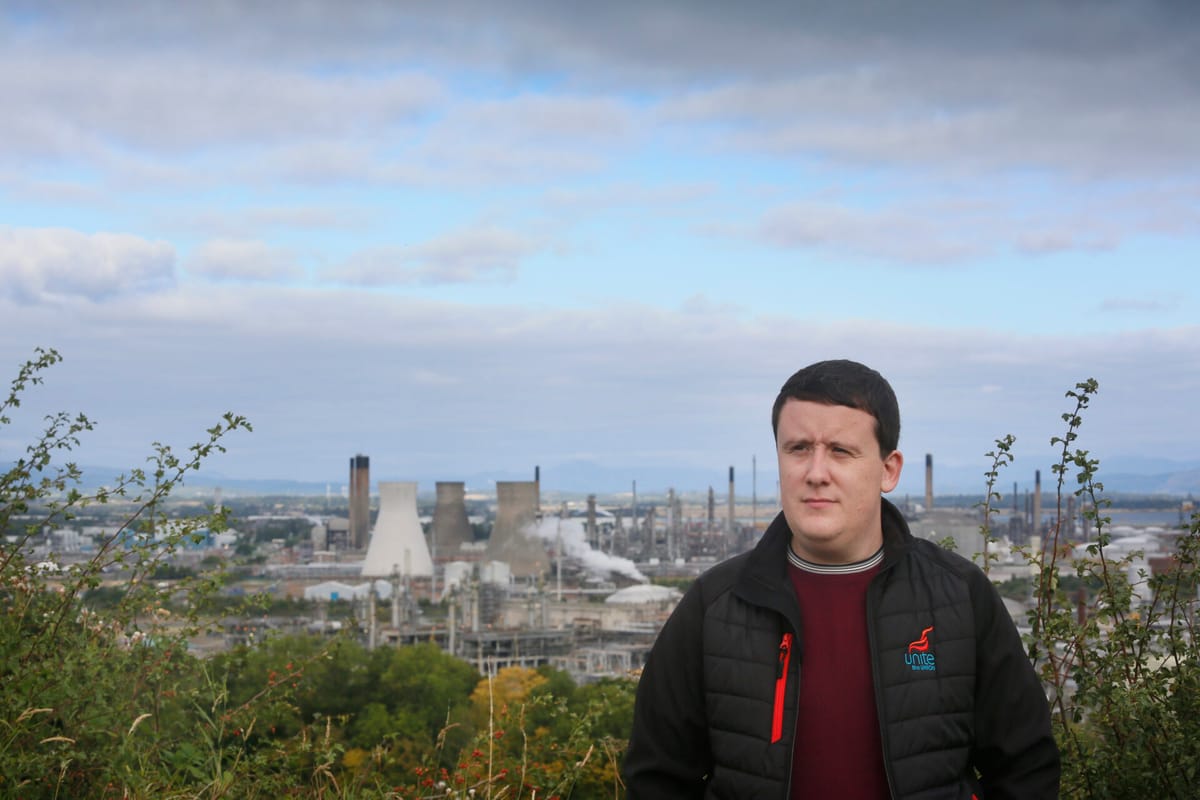
With a decision on the Rosebank oil field imminent – and lobbying around the windfall tax at fever pitch – some are questioning whether the Scottish Government's current stance on oil and gas is in step with their ambition to be a world leader in climate action.
Far right actors have used gaming to recruit youngsters for some time but experts say they are increasingly using codes and imagery to avoid moderation.
Investigations into allegations of poor fish welfare at salmon farms by the UK Animal and Plant Health Agency have risen by more than ten times in six years, while site inspections have decreased.
Has the Scottish Government changed its stance on oil and gas?
With a decision on the Rosebank oil field imminent – and lobbying around the windfall tax at fever pitch – some are questioning whether the Scottish Government's current stance on oil and gas is in step with their ambition to be a world leader in climate action.
More than four years ago then-first minister Nicola Sturgeon called time on fossil fuels, claiming that it would be “fundamentally wrong” to keep extracting oil and gas for as long as possible. Later she claimed the Cambo oil field should not get the green light.
But now controversial plans for another new oil field 80 miles off Shetland threatens to expose a growing split in the Scottish Government and the SNP over whether a quick transition away from oil and gas is possible, or the right thing to do.
The debate is increasingly fierce with MPs and MSPs picking sides outside the usual partisan lines. Proponents of the Rosebank oil field claim it will support the UK’s energy security, create jobs and reduce oil imports in an increasingly unstable world.
But opponents are adamant that its development is incompatible with Scotland’s much-trumpeted climate goals and question how it can contribute to energy security, given much of the oil extracted is expected to be exported.
Meanwhile the Scottish Government’s view is far from clear – the issue is reserved, it points out, and a matter for Westminster. But is this simply a factual statement, or part of a change in rhetoric on oil and gas which undermines Scotland’s climate commitments?
The Ferret is Scotland's member-owned investigative journalism outlet. For ten years, we've been digging deeper into the stories that matter, holding power to account without fear or favour.
We don't have billionaire backers or corporate interests. We have you.
Every investigation you read is funded by readers who believe Scotland deserves better journalism. Join them.
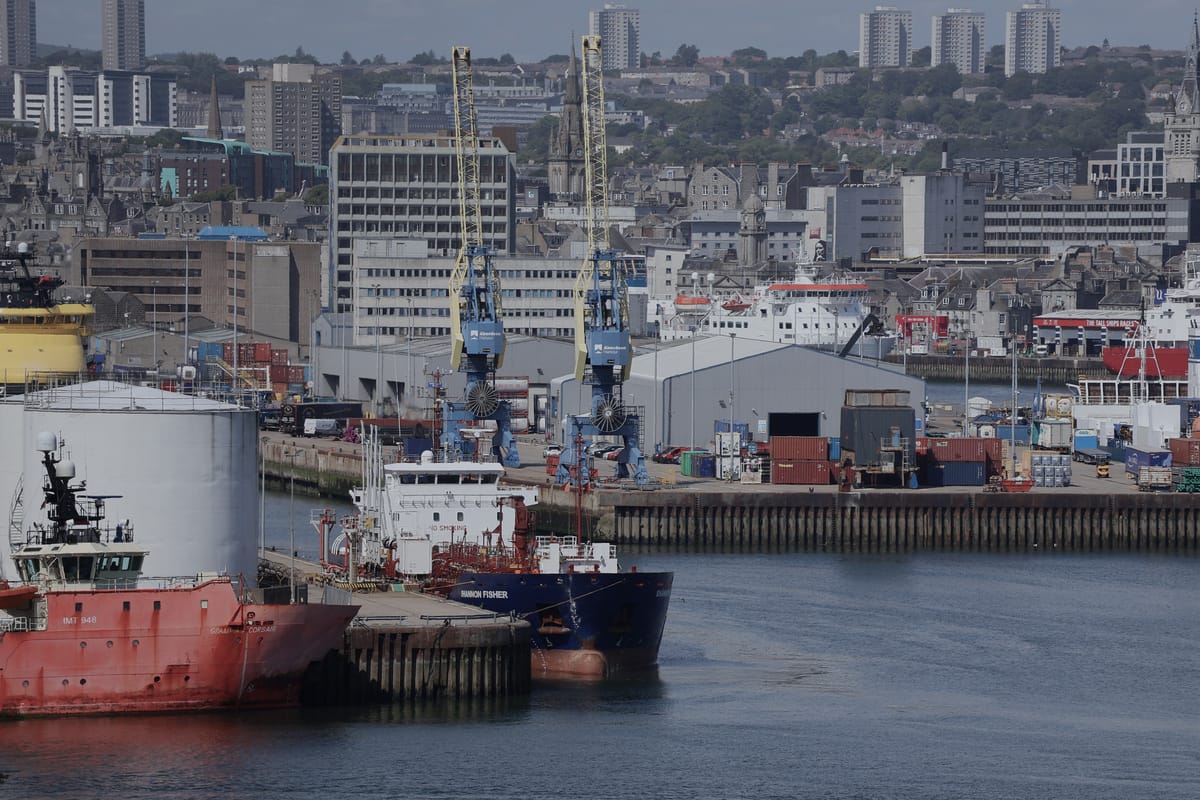
For over 50 years Scotland’s oil and gas industry, with rigs mostly clustered off the coast of Aberdeen and Shetland, has played a crucial role in the economy and energy provision. But it is widely acknowledged that the UK oil and gas fields are reaching the end of their lifespans, and fossil fuel jobs in cities like Aberdeen and the surrounding area will decrease along with the black stuff.
Energy is the responsibility of the UK Government, as is employment and elements of taxation. The Scottish government, meanwhile, has devolved authority over economic enterprise, skills and training, as well as the environment. It also aims to oversee a ‘just transition’ which will mean jobs in oil are replaced by others in greener economies and that communities reliant on high carbon economies are not left behind.
So while it has plenty of room to manoeuvre within its devolved powers, it has fewer direct power levers in terms of oil and gas.
The rise of the SNP – which has been in power since 2007 – and the history of oil and gas are woven together, according to Ewan Gibbs, energy and industry historian at Glasgow University. “It’s Scotland’s oil” was the party’s campaign slogan in the 1970s, as it argued that Scotland should reap the benefits of the oil wealth, newly discovered in the North Sea.
The party initially “had a lot of suspicion towards the oil and gas industries,” says Gibbs, but this gradually changed under Alex Salmond’s leadership. He won the Aberdeenshire Banff and Buchan seat in 1987, having previously had an “oil adjacent role” at the Royal Bank of Scotland. “The SNP wanted to be seen as a pro-oil sector party,” Gibbs added. “But that becomes a very difficult circle to square when it comes to the need to transition.”
In recent years that need for transition towards greener energy has been in sharp focus. In 2018 the world’s leading climate scientists warned that unless action was taken to keep global warming to a maximum of 1.5C, there would be catastrophic consequences including drought, floods, extreme heat and poverty for millions of people. In response to the lack of political action, young people heldschool strikes and climate activists Extinction Rebellion, launched a campaign of civil disobedience.
In April 2019 Nicola Sturgeon acknowledged that Scotland was in the grip of a global climate emergency and announced it would amend its climate legislation to set a legally binding target of reaching net zero greenhouse gas emissions by 2045. It has since dropped its flagship target of reducing greenhouse gas emissions by 75 percent by 2030.
The Just Transition Commission had been set-up in January 2019 and the following year the Scottish Government announced £62m to support companies to invest and diversify from oil and gas. By the time Glasgow hosted global climate conference COP26, the SNP had been returned into power on a manifesto that claimed government support for North Sea industry should be “conditional” on it “contributing to a sustainable, secure and inclusive energy transition”.
Its position offered stark contrast to the UK’s Government, then led by Boris Johnson, who in 2021 signed a deal allowing the oil and gas sector to “contribute” to the government’s net zero target. While Sturgeon backed Labour calls for a windfall tax after record profits from companies like BP and Shell in the face of escalating energy bills, Johnson dismissed the proposed tax as "totally ridiculous".
The Scottish Government’s draft energy strategy, published in 2023, was seen as a signal of change. It claimed that “overall use of fossil fuels across heating and transport sectors must decline” making way for alternative technology, and moved to restrict new exploration and drilling. Crucially it opened a consultation on whether there should be a presumption against new exploration for oil and gas, which was “significant, however heartfelt it was,” says Gibbs.
Announcing the strategy Michael Matheson, then energy minister, told the Scottish Parliament that while oil and gas had been “part of our national identity for decades”, the previous policy of “maximum economic recovery” – in other words extracting as many economically viable barrels as possible from the North Sea – was “no longer appropriate.”
The majority of the 132 responses to the energy consultation supported a presumption against new exploration. The strategy, however, has remained at draft stage and three years on, seems no further forward.
The Scottish Government told The Ferret that it was taking time to “analyse and reflect” and claimed the plan involved “ongoing developments in the UK Government’s energy policy and recent court decisions”.
The Rosebank question
In 2023, newly installed first minister Humza Yousaf said he opposed the new licences given in the North Sea despite the draft status of the energy strategy and said the UK Government was “wrong” to approve Rosebank.
Less than two years later that position was backed by the Court of Session in Edinburgh, which found the UK decision had been unlawful, after a legal challenge by Uplift and Greenpeace UK. But now Norwegian state-owned energy company Equinor, and Ithaca Energy – part owned by the UN blacklisted Israeli oil and gas company Delek Group – have revised and resubmitted the plan.
More than 60 cross-party MPs and MSPs have signed a pledge to oppose the oil field and support a transition away from fossil fuels. Michael Matheson is among them.
On the other side, those supporting the proposal include eight former Conservative and Labour energy ministers, as well as former SNP minister Fergus Ewing, who quit the party last year to sit as an independent MSP. They recently wrote to the UK Government urging it to approve Rosebank as well as proposals for the Jackdaw gas field off the Aberdeen coast.
The Scottish Government will have no vote on the Rosebank proposal. It stressed that decisions on North Sea oil and gas licensing were reserved to the UK Government. But that neutral stance has been read by many as a change in tack.
Laurie MacFarlane of think-tank Future Economy Scotland says ministers have been “noticeably dialling back criticism of projects such as Rosebank”, a shift, he argues, that is increasingly in contradiction with its commitment to net zero and just transition policies.
This position is an attempt to “speak to two audiences at once”, he claims, preserving its green ambition “while offering reassurance to the fossil fuel industry and its workforce”. He and others point to the intense lobbying by the fossil fuel industry, which comes both directly and indirectly and has targeted politicians in the North East. MacFarlane claims lobbying "has been effective in reshaping political conversation". SNP Westminster leader Stephen Flynn and the current energy minister Gillian Martin both have constituencies in the region.
Following the publication of the draft energy strategy, oil giants lobbied Humza Yousaf claiming his government’s oppositional stance was “damaging” at a private dinner hosted by PR firm True North.
However Jake Molloy, a Just Transition commissioner, former oil worker and RMT union organiser, points out that the reserved status of such decisions means previous opposition could be considered “political posturing”. He sees oil exploration as a global issue – much of the oil extracted off the Scottish coast isexported.
“Consider the oil extraction going on in Africa and Nigeria, in Guyana, Venezuela,” he says. “Shutting down Rosebank and Jackdaw is not going to save the world.” Instead, he claims, governments should be working together to force big companies to work under stringent environmental and health and safety codes.
A changing position on the windfall tax
One policy on which the Scottish Government’s opposition is now clear, however, is the Energy Profit Levy (EPL), also known as the windfall tax.
The levy was initially called for by the then-Labour opposition and backed by Nicola Sturgeon’s Scottish Government. But it was first introduced by the UK Conservative government in May 2022, and both the rate and the length of time it applies for have been increased subsequently by both the Tories and Labour in Westminster.
The Scottish Government says that while it supported the Energy Profits Levy (EPL) at its original rate and duration, it opposes subsequent changes made by UK Governments, which it claims are “driving an accelerated decline in the North Sea and costing jobs”. It is calling for it to be scrapped.
Jake Molloy claims the Scottish Government has been forced to change its position on the EPL due to the high profile industrial losses of Grangemouth and Mossmorran.
“For anybody who has been involved in the oil and gas industry for any length of time the word tax inevitably means redundancy,” he claims. “The minute you start hammering the oil and gas industry – it's an industry we don't own, remember – the oil companies threaten to stop investment, activity dries up and thousands get paid off.”
Campaigners point to the industry’s lobbying power and point out the position is at odds with net zero policies. “Calls to scrap the windfall tax are, at the very least, ill-timed,” Tessa Khan, executive director at Uplift, tells The Ferret. “Oil and gas firms, who have already made billions at our expense during the energy crisis, look set to make billions more as a result of high prices caused by the conflict in the Middle East.”
To energy historian Ewan Gibbs, the Scottish Government campaign against the windfall tax is jarring because the public purse loses out. “To me, this seems like a complete reverse of the “it’s Scotland's oil” argument that was once made,” he says, noting that the current Scottish Government position on the windfall tax puts them in step with both Reform and the Conservatives.
Government in limbo
The combination of these positions, along with its commitment to climate action, one of five key priorities highlighted in the latest Scottish programme for government, means the rhetoric is increasingly confused, according to Gibbs.
Laurie MacFarlane believes the Scottish Government has moved from “evidence based opposition” towards “strategic ambiguity” under John Swinney, who became first minister in May 2024.
“The party appears to have calculated that a less confrontational stance towards new oil and gas developments is necessary to retain support in these constituencies,” MacFarlane added. “At the same time, it is seeking to avoid alienating party members and voters elsewhere in Scotland, for whom a just transition to net zero remains a popular priority.
“However, by attempting to balance climate commitments with fossil fuel interests, there is a growing risk that it satisfies neither and achieves little.”
Jake Molloy also believes the lack of clarity on oil and gas is deliberate. “There's that fear that by coming out with a definitive position they could be attacked,” he says. “So they try some kind of circus act, with all the balls in the air at the same time, to meet every demand and every expectation.”
The answer, he says, is to commit to using the devolved powers it has to push forward the “green revolution” in ways that not only create jobs but benefit communities, helping to create the future possibility for a transition that learns from the mistakes of past industrial transition failures, such as was seen with coal in the 1980s. “You know, where we are just now is so frustrating,” he says.“Because the opportunities, the potential, is just huge.”
Help us keep digging.
If this reporting mattered to you, you can help fund the next one. The Ferret is independent, member-owned investigative journalism, backed by readers who want accountability in Scotland.
Karin is The Ferret’s co-editor and has reported on people, power and planet for the UK’s leading outlets. She co-founded our Community Newsroom in Glasgow and is interested in participatory approaches to journalism. Audio is her favourite medium.
Sharia law is a contentious issue in the UK. Some question whether it is compatible with so-called British values while claiming it's a separate legal system operating parallel to UK laws. In our latest De-noiser, we look at the facts.
The pressing need to address difficulties the Scottish public reports in getting an appointment with their GP was raised in last week’s budget. So will new funding and proposals for walk-in surgeries help? What are the underlying reasons for the issue?