A freedom of information response revealed there have been 193 charges in Scotland under the Terrorism Act 2000. The alleged offences link to banned groups like the Ulster Volunteer Force, Ulster Freedom Fighters, the IRA, and neo-Nazi group, National Action.
The number of Scottish terrorism charges in relation to Palestine Action in the last seven months is more than all the other charges put together since the 2000 Terrorism Act came into force, new figures reveal
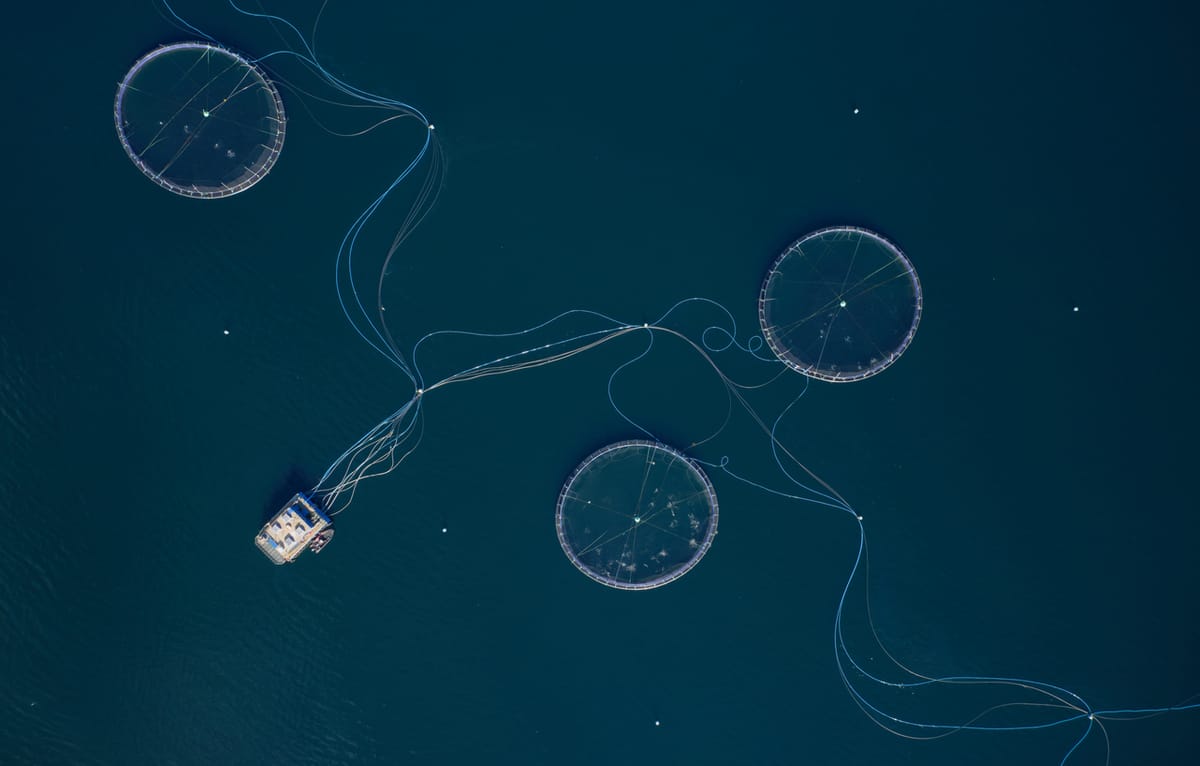
Seven million lice-eating fish have died at Scottish salmon farms
A campaigner has made the first estimate of the total number of cleaner fish that have died while grazing lice on farmed salmon. It’s condemned as a “colossal waste of life” that should cease.
At least seven million fish which eat lice that infest caged salmon have died from disease, mistreatment or other causes since 2020, according to official data.
Detailed research by a campaigner has uncovered the first estimate of the total number of so-called cleaner fish lost in salmon farms around Scotland’s coast. The figure has been calculated from information released by the Scottish Government.
The data was not examined by the government’s Scottish Animal Welfare Commission (SAWC) before it published its report on cleaner fish in November 2025. The report accepted that losses “may be very high”, but didn’t recommend any changes in current practice, saying that more research was needed.
Campaigners said the death toll was “unacceptable”, “appalling” and “a colossal waste of life”, and described the use of cleaner fish as “desperately cruel” and “unethical”. They criticised the SAWC report as “deeply flawed”, and called on Scottish Ministers to require the routine publication of industry figures on cleaner fish deaths.
The SAWC said that a total of seven million cleaner fish deaths was “within the same range” as estimates from different salmon farms. It stressed that this was one of its “biggest concerns” and was why the aim should be to phase out the use of cleaner fish.
The salmon industry did not dispute the figure, but stressed that it had high welfare standards and acted “responsibly”. The Scottish Government said it was working to improve welfare standards for cleaner fish.
This story exists thanks to you.
The Ferret doesn't answer to advertisers, owners, or paywalls. We answer to you, our readers and over 2,000 members who support journalism that holds power to account.
Sea lice infestations have long been a major problem for salmon companies because they can weaken and kill farmed fish. Pesticides are used to kill them, and there are a variety of treatments aimed at detaching them from salmon.
But because lice can become resistant to pesticides and salmon can be harmed by removal treatments, the use of cleaner fish to graze the lice has grown since 2008. Two fish have mainly been used, ballan wrasse and lumpfish, which are either caught in the wild or bred in farms.
The Scottish Government’s Marine Directorate and Fish Health Inspectorate do not publish statistics on the number of cleaner fish used, or how many die. But they have released data under freedom of information law on transfers to and from salmon farms, as well as hundreds of inspection reports on individual farms.
For the last three years Roddie Macpherson, a researcher and campaigner from the Black Isle, has been analysing the data and reading the reports. A 76-year-old retired planning consultant, his study of 139 salmon farms suggested they have used more than 22 million cleaner fish since 2020, including 16 million lumpfish and six million wrasse.
According to the SAWC report, most of the cleaner fish are killed by salmon farmers at the end of production cycles, which last one or two years, rather than being re-used. There are fears that they could transmit diseases or lice.
Macpherson has now also analysed transfer data and inspectors’ reports to estimate the total number of cleaner fish that have been killed during salmon production. He has concluded that between 2020 and the end of 2024, at least seven million have died, including 5.8 million lumpfish and 1.2 million wrasse.
In many cases the cause of death is not given, with a few fish health inspectors describing them as “black losses”, a term used in agriculture to describe deaths from causes unknown.
But some inspectors’ reports do identify a range of causes, including viruses, bacteria and “handling”. On several occasions they attributed mass cleaner fish deaths to freshwater or warm water treatments used by fish farms to remove lice from salmon.
Staff at farms were reported as saying that they had difficulties separating cleaner fish from salmon before such treatments. Fish health inspectors referred a few incidents since 2020 to the UK Animal and Plant Health Agency, but there is no record of any subsequent enforcement action.
Macpherson stressed that seven million deaths was an underestimate because it excluded incidents in which fewer than 10,000 wrasse or 20,000 lumpfish died. It was also limited to just 69 of the bigger salmon farms, omitting 69 smaller farms.
The Ferret reported in August 2025 that Scotland’s biggest fish farming company, Norwegian-owned Mowi, was going to stop using lumpfish to clean lice from salmon. This followed the loss of 135,000 lumpfish and wrasse from a salmon farm in Torridon.
Macpherson described the failure to publish cleaner fish statistics as a “huge hole”. Scottish Ministers should require “routine publication” of their deaths and known causes, he argued, “so that the public can judge whether using cleaner fish is an acceptable practice."
He pointed out that the industry had told SAWC that it kept weekly records of cleaner fish deaths. The commission’s failure to follow this up had resulted in its recent report being “fatally flawed”, he told The Ferret.
The Coastal Communities Network Scotland, which brings together 30 groups concerned about the marine environment, pointed out using animals to remove parasites from livestock was unusual in farming. “No other farming system would be allowed to kill them all afterwards,” said the network’s fish farming spokesperson, John Aitchison.
He added: “Scottish Ministers insist that the reporting of mortality of farmed fish is fit for purpose but the painstaking work needed to reveal these millions of hidden deaths for the first time shows that it is nothing of the sort. It is high time that the Scottish Government came clean about the scale of this issue.”
Aitchison described the death toll as “appalling” and “unacceptable”, and argued that it was “unethical” to use cleaner fish. “The Scottish Government is deliberately looking the other way,” he said. “This has to stop.”
The Scottish Greens reiterated their call for a “pause” on new salmon farms. “This analysis is very concerning and raises big questions,” said Green MSP Ariana Burgess.
“The reality is that too many companies have been raking in huge profits while failing to make the kind of improvements that are so badly needed in terms of animal welfare or our environment.”
The campaign group Animal Equality UK described the use of cleaner fish as “desperately cruel” and “a colossal waste of life”. It called on Scotland to “move away from cleaner fish use urgently”.
This level of mortality is one of the biggest concerns in the use of cleaner fish in the industry.
The SAWC report concluded that “further research” was needed to find out the causes of “unexplained losses” of cleaner fish. “The losses may be very high and the missing animals are likely to have died and likely experienced poor welfare before death due to disease or predation,” it said.
The commission’s chair, professor Cathy Dwyer, highlighted evidence of cleaner fish death rates of between 22 and 57 per cent at different salmon farms. “Mr McPherson’s figures suggest 32 per cent mortality, which is within the same range,” she told The Ferret.
“We suggest that this level of mortality is one of the biggest concerns in the use of cleaner fish in the industry and also note that cleaner fish are typically culled at the end of deployment.”
She added: “We did not recommend that, currently, the use of cleaner fish should be immediately halted, due to our concerns about other methods of sea louse treatment for salmon welfare. However, we do recommend that other methods should be sought and the use of cleaner fish phased out.”
The UK Government’s Animal and Plant Health Agency (APHA) said it was unable to comment on individual cases. “APHA treats all reports of suspected cases of poor welfare at salmon farms seriously,” said a spokesperson.
The Scottish Government promised to deliver better welfare for cleaner fish. “We are progressing work to improve welfare standards for farmed fish by bringing forward guidance under the Animal Health and Welfare (Scotland) Act 2006, which will extend to cleaner fish,” a spokesperson said.
A spokesperson for Salmon Scotland, which represents salmon farming companies, said: "Scottish salmon farmers operate to some of the highest health, welfare, and environmental standards in the world, acting responsibly for all fish in their care, including cleaner fish."
The Ferret is Scotland's member-owned investigative journalism outlet. For ten years, we've been digging deeper into the stories that matter, holding power to account without fear or favour.
We don't have billionaire backers or corporate interests. We have you.
Every investigation you read is funded by readers who believe Scotland deserves better journalism. Join them.
Rob has more than 40 years’ experience specialising in reporting on environmental issues. He has co-authored three books about nuclear power, produced radio and television programmes. He likes muckraking.
A freedom of information response revealed there have been 193 charges in Scotland under the Terrorism Act 2000. The alleged offences link to banned groups like the Ulster Volunteer Force, Ulster Freedom Fighters, the IRA, and neo-Nazi group, National Action.
The number of Scottish terrorism charges in relation to Palestine Action in the last seven months is more than all the other charges put together since the 2000 Terrorism Act came into force, new figures reveal
The Ferret visited a Scottish golf course that's won plaudits for its eco-friendly management to learn about the relationship the industry can have with nature and the environment.
We asked about the environmental records of Scotland’s 25 best golf courses. The US president’s resort in the north east was the only one to breach its licence in recent years.