

Claim 'abortion to birth' is now legal in the UK is Mostly False
Changes to abortion law in England and Wales have been misrepresented on social media.
Changes to abortion law in England and Wales have been misrepresented on social media.
Climate change is causing rising sea levels and coastal erosion and 109 Scottish golf courses are at risk. We examined the issue as part of Green drive: Golf and the environmental crisis – a special Ferret series on golf and the environment.
The Ferret exposed the extreme views of Reform UK’s Scotland’s candidates before Nigel Farage promised to improve his party’s “poor” vetting processes, but many of them have been re-selected to fight the Holyrood election.
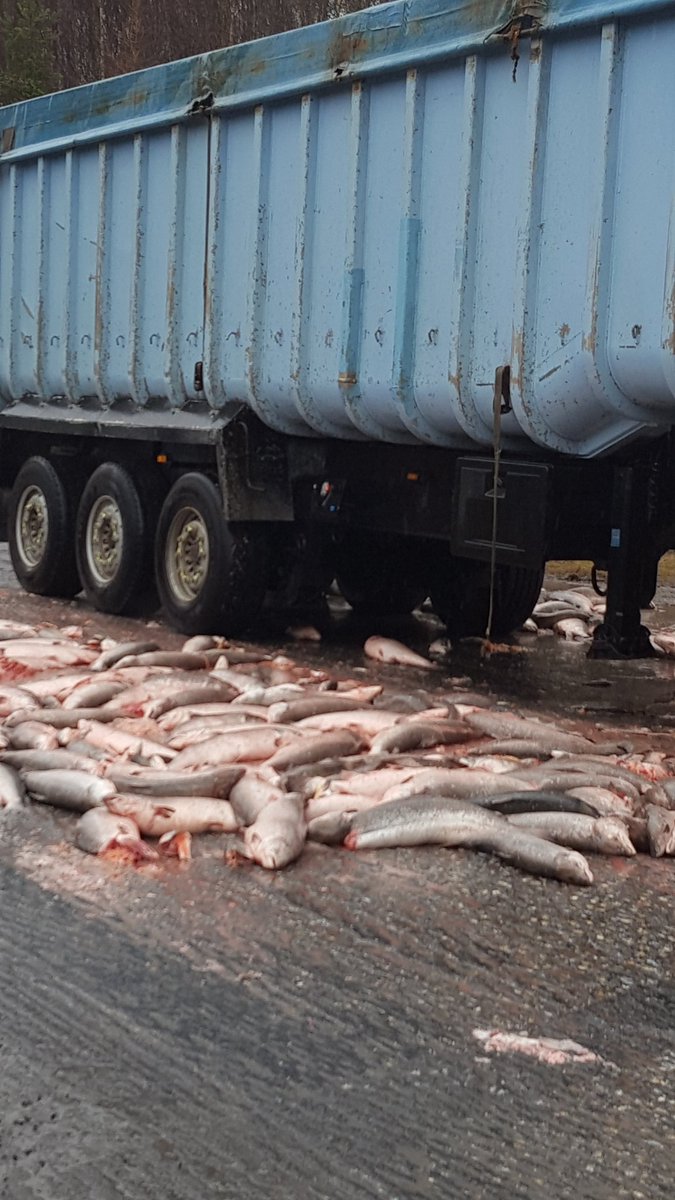
Scotland’s fish farming industry must bow to tougher environmental regulation if wants to expand, a committee of MSPs has concluded.
A new report from the Scottish Parliament’s rural economy committee has criticised the industry for “extremely high mortality rates”, for failing to deal with sea lice infestations and for the environmental damage caused by pesticides.
MSPs called for “urgent action” to improve regulation and to address fish health and environmental problems, making 65 recommendations for change. The current regulatory regime was “confusing and poorly coordinated”, they concluded.
Campaigners have lauded the long-awaited report as a “vindication” of their criticisms, while the industry has highlighted the “opportunities” it offers for “well-regulated, sustainable growth”. The Scottish Government said many of the issues raised were “already being addressed”.
Fish farm companies, backed by the Scottish Government, want to double their business from £1.8 billion in 2016 to £3.6 billion by 2030. The industry earns £600 million a year as Scotland’s biggest food export.
But in recent years salmon farmers have been hit by a raft of problems with disease and lice, admitting that they threw away 10 million fish in 2016. They have been strongly criticised by the parliament’s environment committee and in November the Scottish Environment Protection Agency (Sepa) warned that pesticides used to kill lice were harming marine wildlife.
Wildlife widely damaged by fish farm pesticides, says Sepa
In June 2018 The Ferret published hundreds of official photos showing damaged and diseased salmon from fish farms. In September we revealed underwater video footage of lice-infested salmon in a cage off the island of Lewis, prompting government investigations.
The rural economy committee’s convener, Tory MSP Edward Mountain, warned that the industry had to change. “It is essential that the serious challenges it faces such as the control of sea lice, lowering fish mortality rates and reducing the sector’s impact on the environment are addressed as a priority,” he said.
“If the reputation of Scottish salmon as a premium product is to be maintained, Scotland’s salmon farmers must demonstrate responsible and sustainable production methods. Importantly, the committee is strongly of the view that the status quo in terms of regulation and enforcement is not acceptable, and that we need to raise the bar in Scotland by setting enhanced and more effective standards.”
There was still no effective way of dealing with sea lice, he argued. “The committee considers that the sea lice compliance policy must be robust and enforceable with appropriate penalties,” he added.
“The committee also deems the current level of fish mortalities to be too high in general across the sector and is concerned about extremely high mortality rates at particular sites. It is of the view that no expansion should be permitted at sites which report high or significantly increased levels of mortalities, until these are addressed to the satisfaction of regulators.”
Horror photos of farmed salmon spark legal threat
A majority of the committee, however, rejected calls for a moratorium on industry expansion “as there was insufficient evidence to support this”. Two members of the committee dissented from that view: the Green MSP, John Finnie, and the Labour MSP, Colin Smyth.
The committee said it was “essential that Sepa introduces a significantly enhanced regulatory and monitoring regime under which it will robustly and effectively enforce compliance with environmental standards.” There had to be a move away from the “self-assessment culture that appears to be prevalent at present”, it concluded.
The report recommended that “a precautionary approach” must be taken on the potential impact of sea lice infestation from salmon farms on wild salmon. “There should be an immediate and proactive shift towards locating new farms in more suitable areas away from wild salmon migratory routes,” it said.
“A more strategic approach should be taken to identify those areas across Scotland that are either suitable or unsuitable for siting of salmon farms. There should be immediate dialogue with the industry to identify scope for moving existing poorly sited farms.”
The report was welcomed by the wild fish group, Salmon and Trout Conservation Scotland. “This report is a strong vindication of the campaign we have spearheaded for some years now,” said the group’s solicitor, Guy Linley-Adams.
“We are pleased to see that the committee has recognised that the law is currently insufficient to protect wild salmon and sea trout from the damaging impacts of salmon farming. We now look to Scottish Government to grasp the nettle and move quickly to legislate.”
Fisheries Management Scotland, which represents fisheries groups, also commended the report, pointing out that two parliamentary committees had now concluded that the status quo is not an option. “It is now vital that the changes needed to put this in place are made without delay,” said the organisation’s chief executive, Dr Alan Wells.
“Scotland should have a world-leading regulatory and planning system which protects wild migratory fish and proactively seeks to address any local negative impacts.”
[aesop_quote type=”block” background=”#282828″ text=”#ffffff” align=”center” size=”1.5″ quote=”This scathing report is a shot across the bows of the industry.” cite=”Don Staniford, Scottish Salmon Watch” parallax=”off” direction=”left” revealfx=”off”]
Don Staniford, director of Scottish Salmon Watch, was disappointed that most MSPs stopped short of urging a moratorium. “This scathing report is a shot across the bows of the industry,” he said.
“The damning video evidence of lice infestation and welfare problems inside salmon farms and footage of mass mortalities reveal Scottish salmon farming to be dead in the water.”
Julie Hesketh-Laird, chief executive of the Scottish Salmon Producers Organisation, welcomed the report. “We note the committee’s recognition of the opportunities for well-regulated, sustainable growth in order that the industry can continue to offer economic and social value to Scotland,” she said.
“The Scottish salmon farming sector is at a critical phase of its development and the committee’s recommendation that regulation should be improved to keep pace with potential growth is encouraging. We produce the world’s most sought-after farmed salmon and are fully aware that, with that, comes the responsibility to ensure world-class fish welfare and environmental standards.”
She pointed out that salmon farm companies were already voluntarily reporting lice levels and were “world-leading” in publishing survival data on a farm-by-farm basis. The industry was also involved in the Scottish Government’s 10-year farmed fish health framework to promote collaboration between industry, regulators and scientists.
[aesop_quote type=”block” background=”#282828″ text=”#ffffff” align=”center” size=”1.5″ quote=”It is disappointing that the committee has not fully explored nor analysed the economic and social contribution and benefit more fully.” cite=”Fergus Ewing MSP, Scottish Government” parallax=”off” direction=”left” revealfx=”off”]
The Scottish Government promised to carefully consider the committee’s recommendations. “A number of sustainability issues identified in its report are already being addressed through the fish health framework working groups and the new wild and farmed salmon interactions working group,” said rural economy secretary, Fergus Ewing MSP.
“Aquaculture must be delivered and developed sustainably, with appropriate regulatory frameworks that minimise and address environmental impacts. But we are also clear that the sector is hugely important to Scotland’s economy, particularly in remote and rural communities and it is disappointing that the committee has not fully explored nor analysed that economic and social contribution and benefit more fully.”
This story was updated at 07.55 on 27 November 2018 to include comments from the Scottish Government.


Climate change is causing rising sea levels and coastal erosion and 109 Scottish golf courses are at risk. We examined the issue as part of Green drive: Golf and the environmental crisis – a special Ferret series on golf and the environment.

Britain Remade has appointed two directors from a lobbying firm which represents EDF, the owner of Scotland’s last nuclear power station.

Campaigners complained to a government animal welfare watchdog, with videos of badly injured salmon at a fish farm. This prompted a review, but should more have been done?

Huge volumes of sewage sludge have been used to fertilise Scottish farmland. Studies show it contains microplastics, forever chemicals and cancer-linked pollutants.


