

Non-native trees dominate Scotland’s national woodlands. Experts are concerned
Thousands of species rely on Scotland’s indigenous trees to survive. In our public woodlands, they’re vastly outnumbered by non-native timber plantations.
Thousands of species rely on Scotland’s indigenous trees to survive. In our public woodlands, they’re vastly outnumbered by non-native timber plantations.

Last September Holyrood voted for sanctions against Israel due to the genocide in Gaza. This week the government was in England promoting arms dealers who sell products to Israel’s military.

The company that runs Scotland’s ageing nuclear power station wants to weaken safety standards to keep it running for at least four more years. But the nuclear safety watchdog has its doubts.

Thousands of species rely on Scotland’s indigenous trees to survive. In our public woodlands, they’re vastly outnumbered by non-native timber plantations.

Less than a quarter of Scotland’s public forests and woodlands are made up of native trees that scientists say are crucial to protect wildlife and the environment, The Ferret can reveal.
Scots pine, birch, oak, rowan, alder and other types of indigenous tree species make up just 23 per cent of Scotland’s nearly 356,000-hectare national forest estate.
Non-native trees such as North American Sitka spruce, Douglas fir and lodgepole pine, as well as Norway spruce and Japanese larch, cover 71 per cent. The specific species that make up the remainder have not been recorded.
Meanwhile, the presence of Scots pine has continued to decline, with coverage of Scotland’s national tree having fallen by 1,000 hectares in the last five years.
The exclusive data, which the Royal Society of Edinburgh told The Ferret was “deeply troubling”, was obtained via freedom of information from Forestry and Land Scotland (FLS).
Campaigners argued that FLS, which looks after around a third of the nation’s woodland on behalf of the public, should “do far more” than produce timber, and urged it to plant many more native trees to help tackle the climate and nature crises.
Power our next investigation
Investigations take time, persistence, and backing from people who believe journalism should go beyond the daily news cycle.
FLS highlighted that its predecessor was established in 1919 to secure post-war timber shortages. It said non-native trees are essential to sustainably meet a growing demand for timber without relying on imports, and that they store carbon and can support many native species.
According to NatureScot, forests have been planned “with greater sensitivity since the mid-1980s” in order to support biodiversity and rural development. It says there has been “a dramatic move from timber plantations to more diverse tree cover”.
However, the new data casts doubt on the claim. Research has repeatedly shown indigenous trees are typically better for native wildlife as they have co-evolved together over thousands of years, and can support thousands of species including many plants, animals, and the wider ecosystem they rely on to survive.
Commercial forests can also support native species if they are actively managed and include enough space and light. But several types of Scotland’s specialist species cannot survive in them, and experts question their overall carbon capturing capabilities.
FLS data shows more than half of Scotland’s public woodland hosts Sitka spruce, a fast-growing timber crop from Alaska. It covers double the area of all native species combined. Sitka was first planted in Scotland in the early 1800s and has thrived in our climate and soils.
But if left unmanaged, it can crowd out and kill native species, and spread into peat bogs – which make up a fifth of our land – risking the release of vast amounts of stored carbon.
Scientists have also warned that during planting more carbon may be released by disturbing soils than the trees can absorb for decades, while many uses of timber mean carbon is not stored long enough to support net zero. Forestry bodies say Sitka absorbs carbon quickly, is key to woodland growth, supports 25,000 jobs, and adds £1bn to the economy.
Just under an eighth of the national forest estate is covered by the iconic Scots pine, which can live for up to 300 years. However, coverage of Scotland's national tree has fallen by 1,000 fewer hectares compared to 2022.
A recent study led by Scotland’s James Hutton Institute found that 23 tree species would be needed to support much of the variety of life that is bolstered by Scots pine. The tree supports nearly 1,600 species, almost 200 of which depend on it exclusively for survival. These include hundreds of plants and fungi, and dozens of birds and mammals.
 Jamie Mann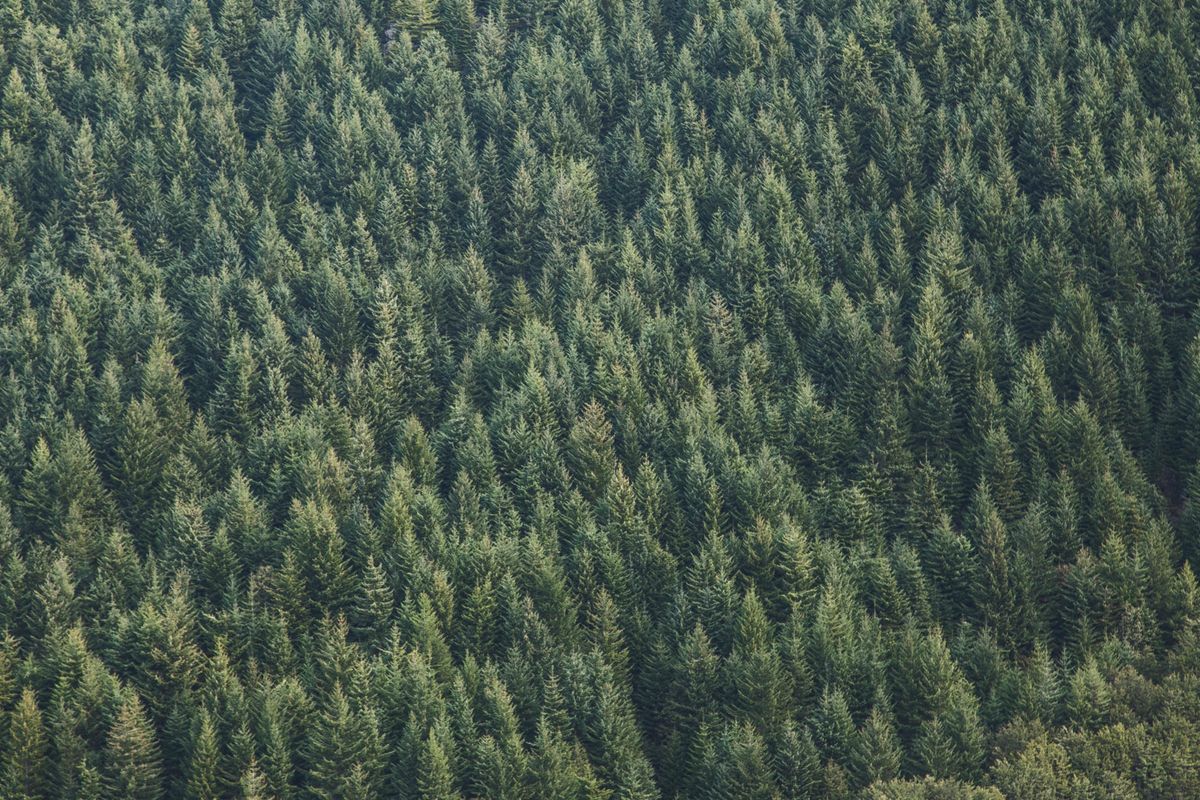
Other common tree species in Scotland include North American lodgepole pine and Douglas fir, Norway spruce, and Japanese larch – all key timber crops – as well as native downy and silver birch.
The two birch species, along with two types of oak and European beech – all native – were found by the Hutton Institute to be “the most promising alternative species” to Scots pine. They support 15 per cent of the biodiversity associated with Scotland’s national tree.
Oaks once made up a third of Britain’s tree coverage and the two types native to Scotland can support 2,300 species including mammals and birds – more than any other native tree. They also have an 800-year lifespan. A recent UK study suggests that trees can also absorb more carbon as they age. But oaks make up just one per cent of our public woodlands.
Rowan, which came second to Scots pine in the running for our national tree, makes up less than one per cent, although its coverage has doubled since 2022.
The indigenous balance in Scotland's national forestry estate has marginally improved since 2022, with the area of non-native trees having fallen by more than 10,000 hectares (ha), and native tree cover having grown by about 7,000ha .
However, the overall size of the national forest estate dropped by 4,000ha.
 Jamie Mann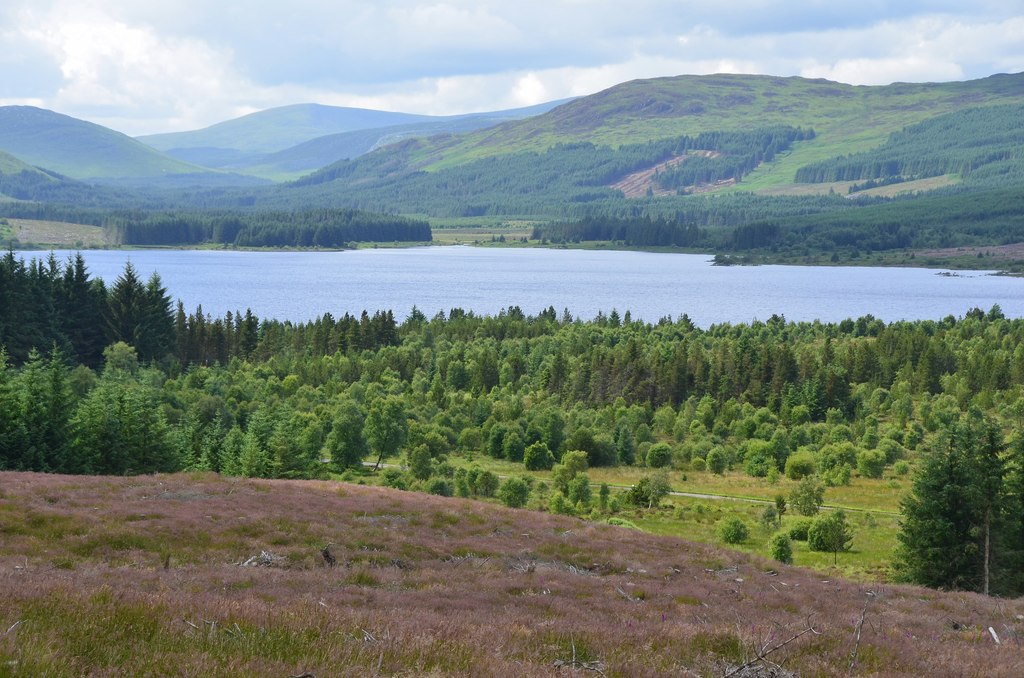
Professor Ian Wall of the Royal Society of Edinburgh (RSE) chaired a 2024 tree planting enquiry that called for the Scottish Government’s forestry agencies to stop the spread of “invasive” species like Sitka spruce and foster more diverse plantations.
The Ferret previously calculated that, as of 2023, Sitka spruce made up 43 per cent of Scotland’s woodlands – both public and private.
In March this year, NatureScot published an action plan to tackle the threats of some non-native invasive species. But Wall claims it failed “to acknowledge the massive extent and adverse impacts of non-native tree species on biodiversity”.
“It is deeply troubling to see such a prevalence of non-native species” in public woodlands, he told The Ferret. “There is growing and acute concern regarding the unchecked spread of non-native Sitka spruce onto peatland habitats, torpedoing their carbon capturing capabilities.”
“It is deeply troubling to see such a prevalence of non-native species [in public woodlands].” – Professor Ian Wall, Royal Society of Edinburgh
He added: “Sitka also supports a much lower diversity of other woodland species when compared to native species such as Scots pine or oak. This means significant public funds are required for the restoration of already damaged peatlands and could result in a cost to the public purse of close to £1bn.”
Richard Bunting, of Trees for Life, added that only fragments of the once vast Caledonian forest survive, citing “artificially large numbers of deer grazing on young saplings, rhododendron choking life away, and Sitka spruce trees crowding out native Scots pines”.
He stressed that Scotland is one of Europe’s least wooded countries, with tree coverage in the average European Union member state sitting at 39 per cent. The Scottish Government aims to expand our woodlands from around 19 per cent today, to 21 per cent by 2032.
Trees for Life wants native woodland to be doubled, mostly via natural regeneration, “and for nature recovery to become the primary purpose of Scotland’s national parks”.
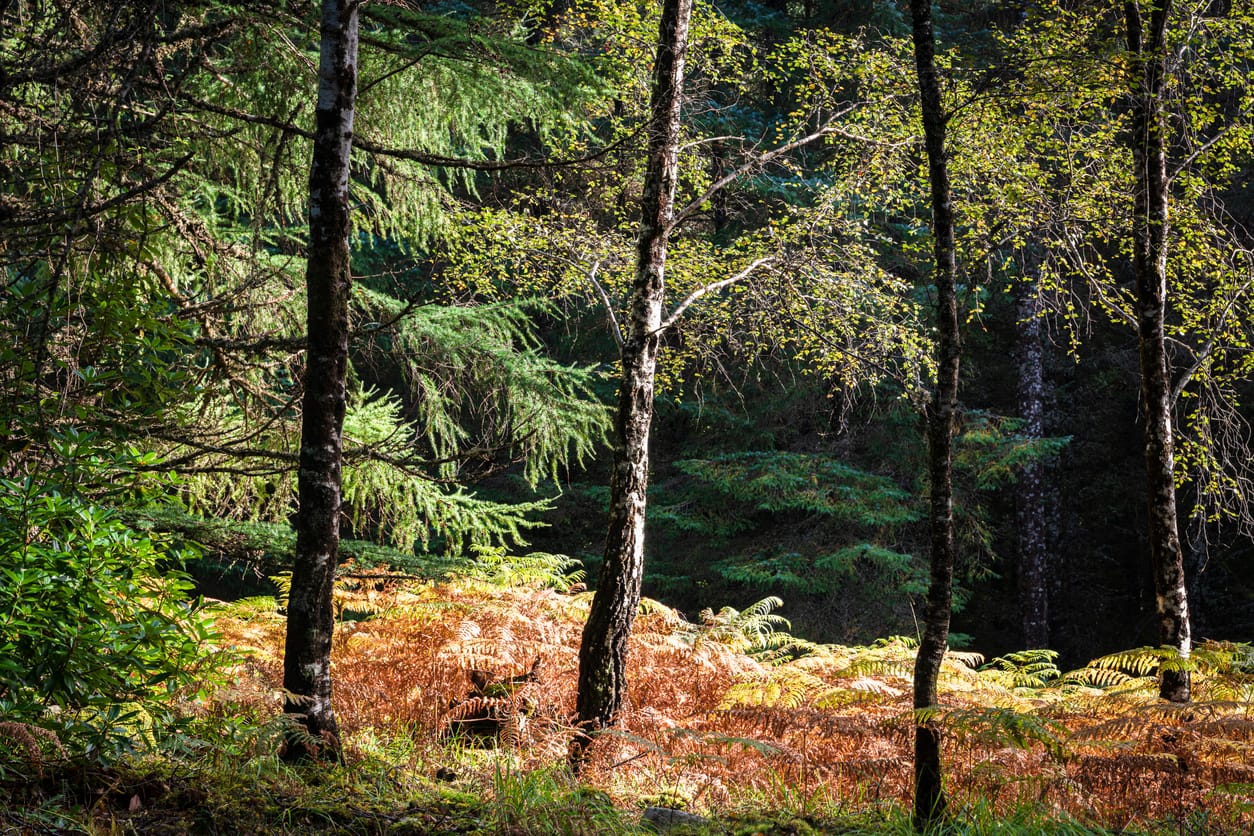
Woodland Trust Scotland’s Simon Ritchie acknowledged the importance of timber produced by non-native trees. But he argued that public woodlands must “do far more” than produce it. “We need far more native woodland to benefit nature and natural processes to address the deepening challenges of nature loss and climate breakdown,” he argued.
Willie McGhee of the Forest Policy Group think-tank, agreed. FLS “should be leading the way” in tackling the twin crises, he said.
“Moving public land to being more species mixed, less Sitka spruce-dominated, would imbue more climate change resilience in the face of warmer, drier, windier weather; encouraging more biodiversity, with an emphasis on growing more mixed, native species-dominated forests.
“And if FLS actively managed our forests, with an emphasis on local employment, greater economic and social benefits would accrue to local communities,” he added.
“We need far more native woodland to benefit nature.” – Simon Ritchie, Woodland Trust Scotland
NatureScot, the Scottish Government’s wildlife agency, said: "Of all new woodlands that are currently created in Scotland, 40% are native species. While our native wildlife is generally better able to use native than non-native woodland, some – especially birds and mammals – depend on woodland conditions as much as the trees themselves, and are able to survive, and even thrive, in non-native plantations.”
They claimed Norway spruce offers “a seed-rich habitat for red squirrels when it's part of a diverse tree planting mix”. “However, many of Scotland’s internationally important specialist species, [including animals and plants], are much more restricted, and unable to use the non-native conifers grown in most commercial plantations."
The wildlife agency acknowledged the importance of Sitka spruce for timber production, “carbon and nature”, but also the “negative impacts” it can have on water systems, soil chemistry and some species when it self-seeds in nearby habitats.
NatureScot works with FLS and others to advise on any potential harms caused by non-native species, and on how to promote recovery, the spokesperson added.
FLS highlighted that its predecessor was established over a century ago to secure home-grown timber after the first world war, and to reduce reliance on overseas supplies.
“In an extremely volatile economic and political world, that directive is more relevant than ever,” a spokesperson stressed, with global demand for timber “set to increase substantially over the next 30 years”.
Scotland’s “fast-growing commercial forests” reduce the carbon emissions, and woodland and biodiversity loss overseas associated with imports, they argued.
“We have for many years been planting native species and continue to adapt our forests, changing the make-up of species and age-classes within them.
“However, productive timber will continue to be fundamental to our rural economy, to Scotland’s climate emergency response and to long-term efforts to the conservation of species such as pine marten, red squirrel and raptors such as goshawks.”
Keep The Ferret independent
The Ferret does things differently: sharp fact checking, and public-interest investigative journalism backed by our readers.

Last September Holyrood voted for sanctions against Israel due to the genocide in Gaza. This week the government was in England promoting arms dealers who sell products to Israel’s military.

The company that runs Scotland’s ageing nuclear power station wants to weaken safety standards to keep it running for at least four more years. But the nuclear safety watchdog has its doubts.

Academics are raising concerns that an increasing percentage of young people, unable to cope with school, are withdrawing into their bedrooms, while families claim support is “woefully inadequate”.


A disproportionate number of children and young people growing up in care are dying prematurely, prompting calls for preventative action.
