This summer we revealed that convicted loyalists from Belfast travelled to Glasgow for a far right protest. Further digging has unearthed a rapidly expanding anti-immigration network between Scotland and Northern Ireland.
Authorities tightened the rules around this Scottish business scheme after years of exploitation for financial crime. Moscow entities – and a man accused of facilitating child sex abuse – are still selling it to clients seeking “financial privacy”.
The Scottish Government’s green watchdog sent seven letters over three years alleging multiple breaches at a fish farm – and then issued a final warning letter.
Revealed: Scotland and Northern Ireland's rapidly expanding anti-immigration network
This summer we revealed that convicted loyalists from Belfast travelled to Glasgow for a far right protest. Further digging has unearthed a rapidly expanding anti-immigration network between Scotland and Northern Ireland.
As we drive into east Belfast, union flags on lampposts flap in the wind and murals with startling imagery honour banned paramilitary groups like the Ulster Defence Association and Ulster Freedom Fighters.
“This is Freedom Corner on the left – and on the right are side streets where homes and cars were burned during the riots,” says Sara, the driver, as she slows down so we can take photos.
The Ferret is on Newtownards Road in this loyalist heartland. It’s a busy thoroughfare stretching from east Belfast to the city centre and this summer it was a focal point for anti-immigration riots that swept the city when homes and vehicles were set on fire – violent protests that quickly spread across the North Channel.
We’re here to investigate links between far right actors in Northern Ireland and Scotland after revealing that convicted loyalists from Belfast travelled to Glasgow for an anti-immigration protest. Our investigation is a collaboration with Northern Irish investigative website The Detail and a local group called the Accountability Project. We can reveal that dozens of anti-immigration Facebook groups have been established in the past year, as well as street patrols accused of vigilantism in a rapidly growing network. Today our sources are showing us where riots took place in Belfast, but they’ve requested anonymity so we’ll call them Sara and Ruth to protect their identities as they fear retribution.
Helping you make sense of what really matters
From fact checks to investigations and explainers, The Ferret helps cut through noise with journalism that is careful, sourced, and worth your time.
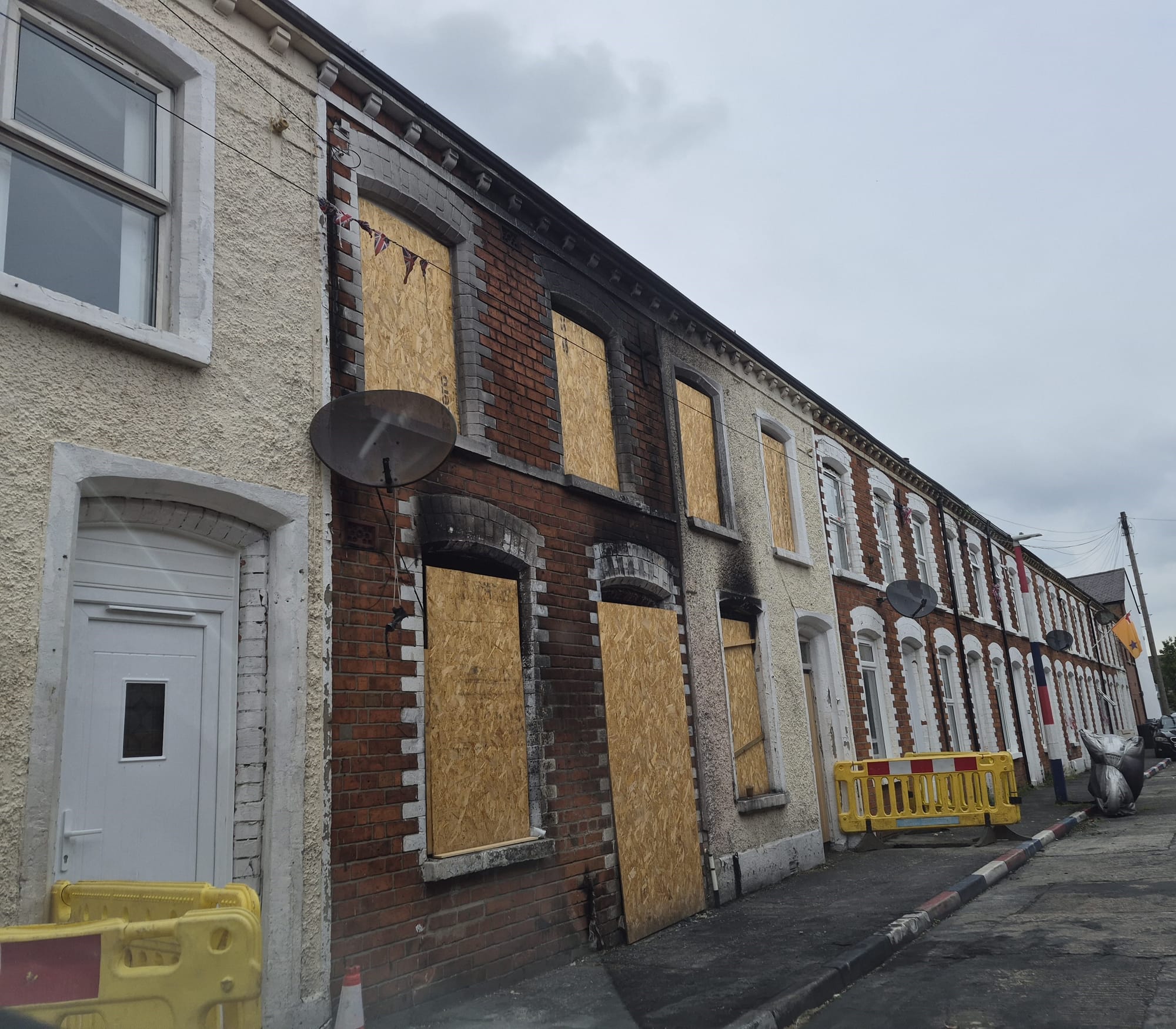
We drive past Freedom Corner, an Ulster landmark featuring loyalist political messaging, before Sara does a U-turn then takes a left. Here, more union flags hang from windows of red-bricked terraced houses, alongside Ulster banners. The scars of arson are still visible. On McMaster Street there are houses with windows and doors boarded up. These were homes until a mob went hunting asylum seekers in what has been described as a pogrom. “There were about three or four cars in this street that were burned out,” Sara says, pointing. Just around the corner in Lendrick Street more properties, blackened by smoke, sit empty.
Rioting erupted here in June after footage of a grotesque knife attack in north Belfast went viral on social media. A Sudanese refugee called Hadi Alodid was later charged with the attempted murder of Stephen Ogilvie, originally from Scotland, who lost his left eye and was severely injured. Despite pleas for calm by Ogilvie’s family, violence took hold in Belfast – mostly in loyalist areas – on 9 and 10 June. Buses and cars were set ablaze and the homes of refugees and asylum seekers were targeted during widespread disorder. In response, police in riot gear and armoured vehicles deployed water cannons. At least 88 households were forced from their homes as a result of the riots, according to figures from the Northern Ireland Housing Executive. Community organisations estimated that around 200 people were displaced.
It’s not the first time Northern Ireland has witnessed a race riot. In 2025 Ballymena’s Roma community was targeted after the alleged sexual assault of a teenager, an incident that lit a tinderbox of tensions over immigration that had simmered for years in the Country Antrim town. During that week of chaos more than 60 police officers were injured and 46 people were later charged for their roles in the disorder.
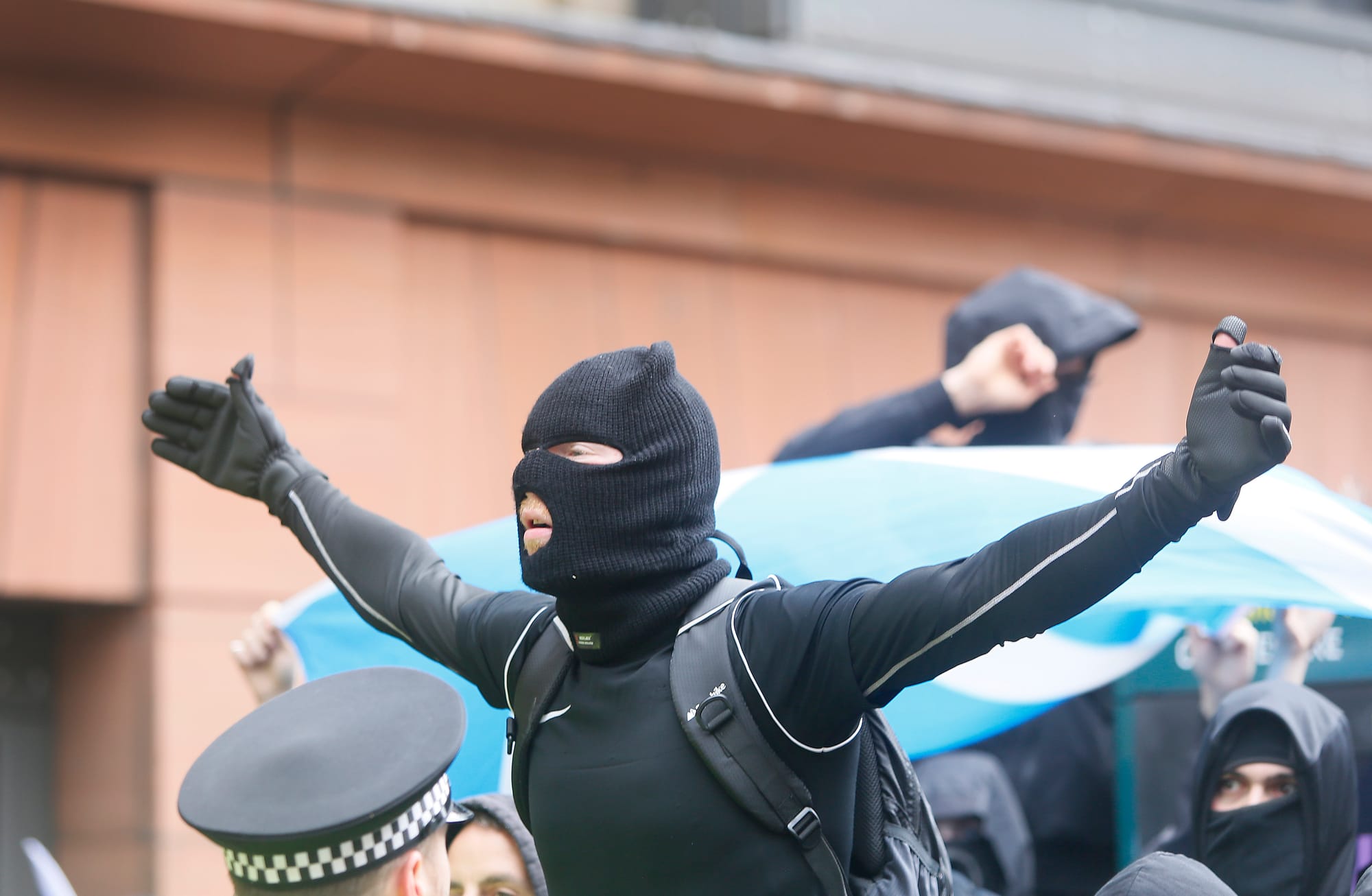
Up until this summer Scotland had not suffered the levels of anti-migrant violence seen in Northern Ireland, or in England where rioters set fire to a hotel housing asylum seekers in 2024 after three girls were murdered in Southport. But trouble erupted in Glasgow following the attack on Stephen Ogilvie in Belfast. Masked men in black ran amok in the city centre following a protest when the banner of a white supremacist group was displayed, heralding a summer of discontent over immigration. People of colour were attacked and police made a number of arrests. Glasgow has since seen more anti-migrant violence and The Ferret has exposed clear links between loyalists and far right Scottish groups.
Anti-immigration protestor in Glasgow on 13 June 2026. Image by Angela Catlin.
The Scottish-Northern Irish anti-migrant ecosystem
There are now at least 40 anti-immigration Facebook pages in Scotland and 35 in Northern Ireland, says the Accountability Project whose research has been verified by The Ferret. There is no suggestion that all people with concerns around immigration are racist, but it is well documented that far right actors are exploiting the situation.
Eighty per cent of the Scots anti-immigration Facebook pages analysed were created during 2025 and 2026, as were the vast majority in Northern Ireland. Many of these entities are also active on X, Instagram, TikTok and YouTube.
Collaboration includes reciprocal sharing and amplification of information, says Sara, who mapped the digital landscape. Other similarities between Scotland and Northern Ireland include a proliferation of ‘street patrols’ in the past year, the “division-style” namings of groups such as “patriots” and “against illegal immigration” and the sharing of propaganda framed around women’s safety and cultural identity. The publication online of photos and/or footage of people of colour alongside allegations of criminality or suspicious behaviour is common, Sara adds, as is the filming of mosques and targeting of ethnic-minority owned businesses. So-called paedophile-hunting is also on the rise, an activity often exploited by far right actors.
Scots groups include Scottish Patriot Scene News, Nature’s Nationalist and Unite the Clans Scotland-Aberdeen Against Illegal Migration, which has 67,000 followers and this week publicly defended National Socialism under Hitler. A Facebook group called Save Our Future and Our Kids Futures organised protests for months in Falkirk but permanently closed in January after admitting that neo-Nazis had infiltrated its demonstrations.
Key Ulster anti-immigration pages include The Great Province-wide Protest NI, which has 51,000 followers, and Our Northern Ireland Voice, with 40,000 followers. The latter claims to be “dedicated to protecting, preserving, and celebrating the culture, traditions, and heritage that make Northern Ireland unique”. Last week it called for the televised public hangings of politicians who “imported third world parasites”. Another post said: “I don't want them to assimilate...I want them to fuck right back off to where they came from!!!”.
A house in Lendrick Street, Belfast, that was burned by rioters in June. Image by Billy Briggs.
But this isn’t just online abuse. It spills, Sara stresses, into real world harm. She sent screenshots of posts by a Facebook page called Loyalist Glengormley whose content is currently available. On 9 June it posted messages the day after the attack on Stephen Ogilvie. The first was a “request” to people in the Cloughfern, Rathcoole and Rathfern areas of Belfast to turn off ring doorbells and cameras that evening, along with a “strict” warning that no phones or recordings were to be made. The “Glengormley anti-immigration division” is now at “war”, the post said.
On 10 June locals were urged to protest outside accommodation for asylum seekers at a place called Chimney Corner, which Sara and Ruth pointed out as we toured the locality. A post on 29 June by Loyalist Glengormley said: “There will be a few homes that will soon be freed-up in the Queens Park Estate to accommodate local people, boat jockeys or fake so-called asylum seekers will not be made to feel welcome. These animals will soon learn that they have passed the fuck around stage of their journey. Now it’s time for the find out stage and unfortunately for them it’s a one way fuckin ticket.”
Women and children were among those burned out of their homes in June, prompting outrage. Geraldine Hanna, the Commissioner Designate for Victims of Crime in Northern Ireland, told The Ferret she’d heard “horror stories of families hiding in roof spaces to escape racist mobs attacking their homes” after speaking to victims’ representatives, adding that Northern Ireland has seen “truly sickening scenes of racist and anti-migrant violence” over the last three years.
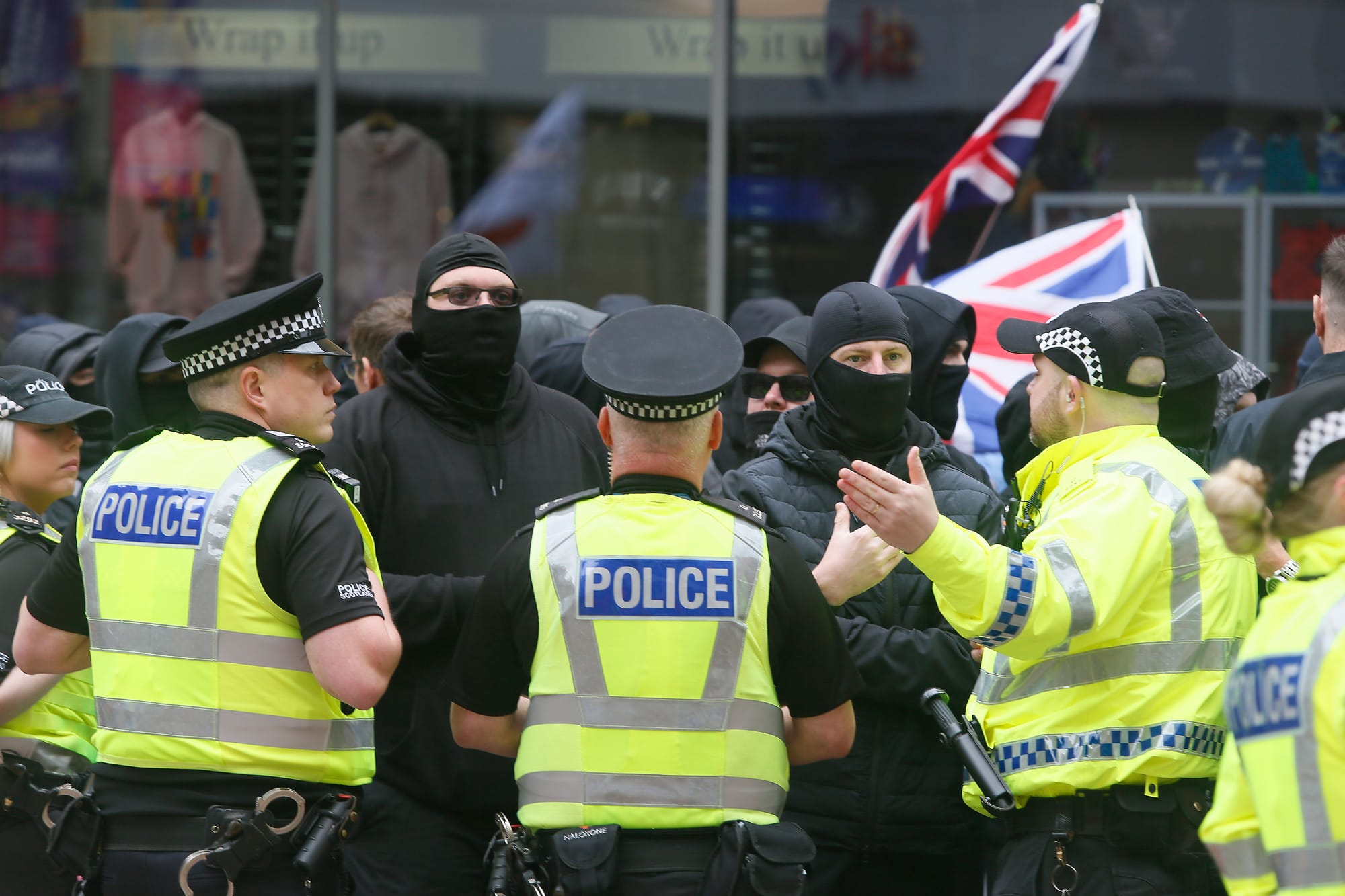
Anti-immigration protestors in Glasgow on 13 June 2026. Image by Angela Catlin.
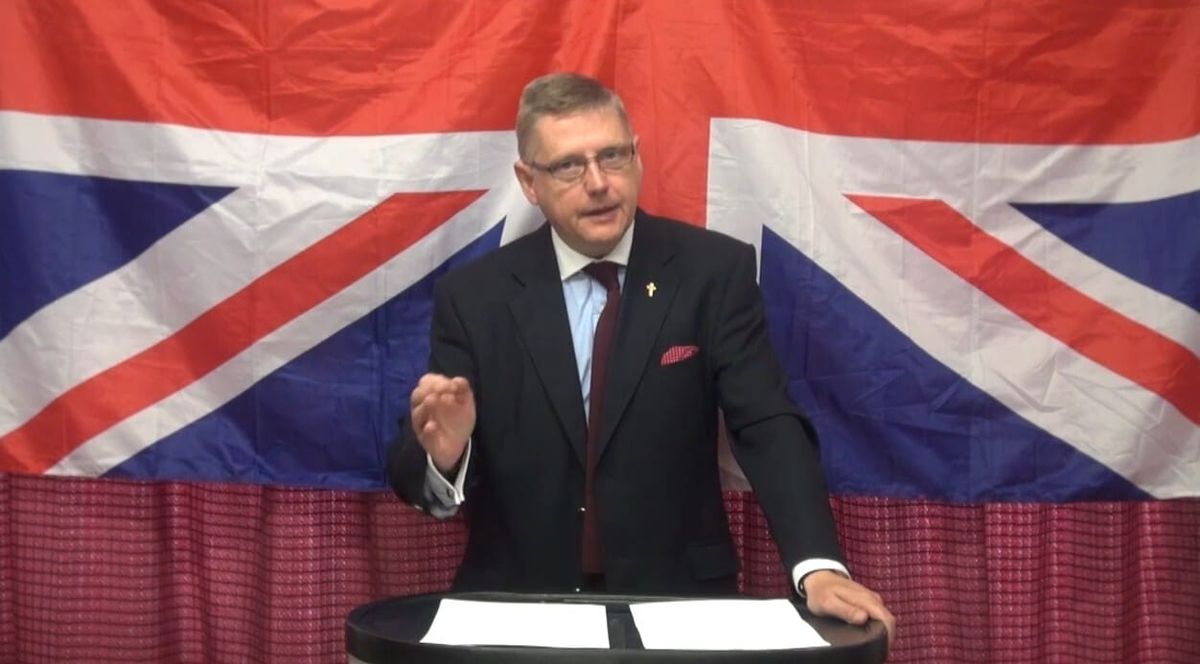
Meanwhile, as Belfast burned, tensions started rising in Glasgow and in July The Ferret revealed that loyalists from Northern Ireland visited Scotland following the riots. They included Jim Dowson, the Scottish frontman of a right wing Christian group called Knights Templar. Based in Northern Ireland, Dowson visited Glasgow to distribute equipment for Scottish "night patrols" bought with funds raised by his far right organisation. He told The Ferret there was no paramilitary involvement in the anti-immigration movement and accused “lefties” of causing violence in Glasgow. “Those mad lefties, the Green Brigade [an ultras group following Celtic football club] had weapons and attacked people in Glasgow Green. The real violence comes from illegal undocumented migrants who rape and kill. They are entering the country illegally and no-one is doing anything about it,” he added.
East Belfast is of particular interest to The Ferret because street patrols started here around two years ago – a controversial phenomenon that spread to Scotland this year, apparently modelled on Northern Ireland. It was back in July 2025 that footage emerged of men patrolling east Belfast’s streets, confronting people from ethnic minority backgrounds and demanding documents. Police said the patrols were racist. Those patrolling denied the charge.
A group of "vigilantes" call themselves East Belfast First Division (EBFD). One man involved with the group is Mark Sinclair, formerly of the banned terror group the Ulster Volunteer Force, who was jailed for armed robberies in Scotland. He now claims to be a citizen journalist and calls himself ‘Freedom Dad’ on YouTube, where he rails against immigration and multiculturalism and argues that Northern Ireland must remain a “white christian country”. He’s a regular visitor to Scotland. In one video about Glasgow he falsely claims that migrants now out-number Scots, telling followers: "It was spot the white man unfortunately."
Another person closely linked to the East Belfast First Division is Glen Kane, a loyalist killer from the Shankhill area of Belfast who was jailed for nine years for being part of a mob that killed a Catholic man during a sectarian riot in 1992. Kane, aka ‘Mr X’, is a former member of the British National Party, a racist political organisation. Kane was accused of possessing a religious pamphlet for stirring up racial hatred but won a legal battle last week to have the prosecution halted. The proceedings were formally ended after a judge ruled she had no jurisdiction to hear the case because a required certificate of consent from the Director of Public Prosecutions had not been obtained. The ruling did not determine whether or the alleged material amounted to racial hatred.
Both Kane and Sinclair deny being racists. Sinclair has has links to an infamous exiled former loyalist paramilitary leader Johnny “Mad Dog” Adair, who has lived on Scotland’s Ayrshire coast for more than two decades. The former Shankill Road commander of the Ulster Defence Association said recently he would get involved in anti-immigration politics and warned of “serious civil unrest” in the near future. “The threat that is coming is not republicanism, the threat is illegal immigration. These people will rape, they will kill, they will steal and they have no common value of life,” said Adair in an interview on YouTube, adding he would draw on his experiences during The Troubles.
Sinclair has travelled to Manchester and Dublin for anti-immigration protests and both he and Kane were pictured with the English far right activist Danny Thomas (Tommo) in east Belfast on 9 June following the riots. Thomas, a convicted attempted kidnapper and associate of the anti-Islam figure Tommy Robinson, whose real name is Stephen Yaxley-Lennon, is behind a new group called Patriot Platform. This month Thomas rallied hundreds of masked men to protest against migrants in Dover and Portsmouth, reflecting a growing trend within the far right to quickly mobilise groups who often dress in black and wear balaclavas. Critics claim this modus operandi is paramilitary cosplaying designed to intimidate. Thomas said he “came away inspired” after his time in Belfast during the riots.
Both Sinclair and Kane also visited Glasgow in July for an anti-immigration protest organised by the far right group, Unite the Clans, as revealed by The Ferret. The demo took place during the Commonwealth Games when the city was busy with tourists. The pair were among a group kettled by police and questioned but they were not arrested. Sinclair also has links to a Glasgow street patrol called Scots Active, which denies being racist but shares far right propaganda on its channels.
Patrick Corrigan, head of nations and regions at Amnesty International UK, described our findings as “deeply disturbing” and said increased cooperation between individuals with links to paramilitary groups is a “deeply sinister escalation” that should serve as a “wake-up call” to authorities. Both police and politicians across the UK must treat this “escalating far right threat as the urgent priority it is”, added Corrigan, who called for a coordinated response that offers “proper protection to vulnerable communities, holds perpetrators accountable and sends a clear message that racist vigilantism will not be tolerated”.
Anti-Islam mural in a loyalist area of Belfast called Cloughfern. Image by Billy Briggs.
Anti-Muslim hatred
There is widespread opposition to Islam within this growing anti-immigration network, a rallying call for the far right in both Northern Ireland and Scotland. “Unite the Clans” is a phrase used by Jim Dowson and Scottish activists: Muslims are the enemy now, not Catholics, not each other.
In Newtownabbey, on the outskirts of the city, there’s a mural on the Rathfern Estate just as startling as any of those at Freedom Corner. As Sara drives through non-descript housing it suddenly comes into view on the side of a house facing a busy road. It depicts a church in flames, apparently set ablaze by Muslims, with lettering underneath proclaiming: “Islam is Satanic” and a “new evil has risen”.
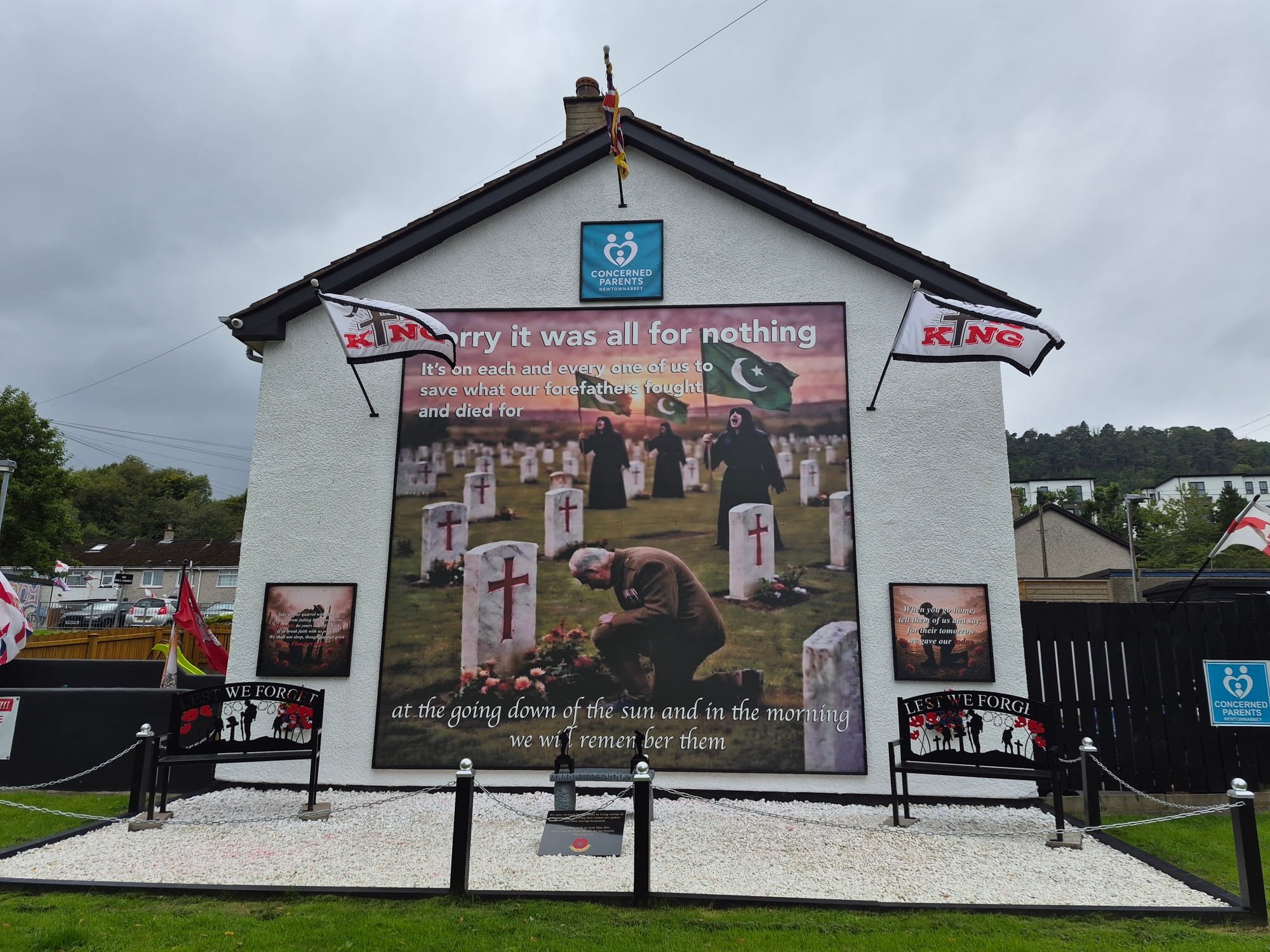
But it’s not unique here now. In Cloughfern, another loyalist area, there’s a mural depicting cloaked figures holding the flag of Pakistan in a Christian graveyard, an apparent reference to the UK being “invaded” by foreigners. The mural offers an apology and says “sorry it was all for nothing”. “It’s on each and every one of us to save what our forefathers fought and died for,” it adds – an apparent reference to those who died in the first and second world wars.
The “apology” rhetoric has been replicated in Scotland this summer by groups clad in black who held several so-called “silent protests” in towns and cities. The first was on 18 June, when around 60 people organised into four columns outside Glasgow Cathedral – in paramilitary fashion – and laid a “wreath to our fallen” with the words “we apologise”. Six days later a similar protest was held outside the Scottish Parliament. The protests were filmed in black and white for slick propaganda videos promoted on social media by anti-Islam activists like Tommy Robinson. The “apologies” are understood to refer to the way the UK has allowed mass immigration to happen – and while there are no murals in Scotland demonising Islam, there have been an increasing number of attacks on mosques and Muslims in recent years, mirroring the situation in Northern Ireland and the rest of the UK.
According to Daniel Holder, director of Belfast-based human rights group the Committee on the Administration of Justice, Northern Ireland now appears to be a “model for far right activity to be emulated elsewhere” and Scotland could be “particularly vulnerable to this” given there are “already networks in play”.
Pointing to recent reports by the United Nations expressing concern over links between paramilitarism and racist violence, he claimed there has been a “long pattern of elements or factions within loyalist paramilitary groups” being involved in acts of racist violence and intimidation. For three summers in a row, he continued, this has “escalated into orchestrated racist pogroms” and that during the rest of the year there is “racist intimidation” surrounding housing.
“Part of this pattern is the display of materials in public spaces that either incite racial hatred – such as Islamophobic murals – or posters that directly threaten landlords who rent to migrants or Muslims,” Holder said. “Flags are also used, including paramilitary and union flags when new housing is built, along with slogans such as ‘locals only’ to deter people from taking up housing.”
While the policing response has improved, he added, other public authorities remain hesitant to remove these materials because they are often placed in areas under suspected paramilitary control. “Consequently, those responsible for racist intimidation face a minimal state response to their activities in a way that would not be tolerated elsewhere on these islands,” he continued.
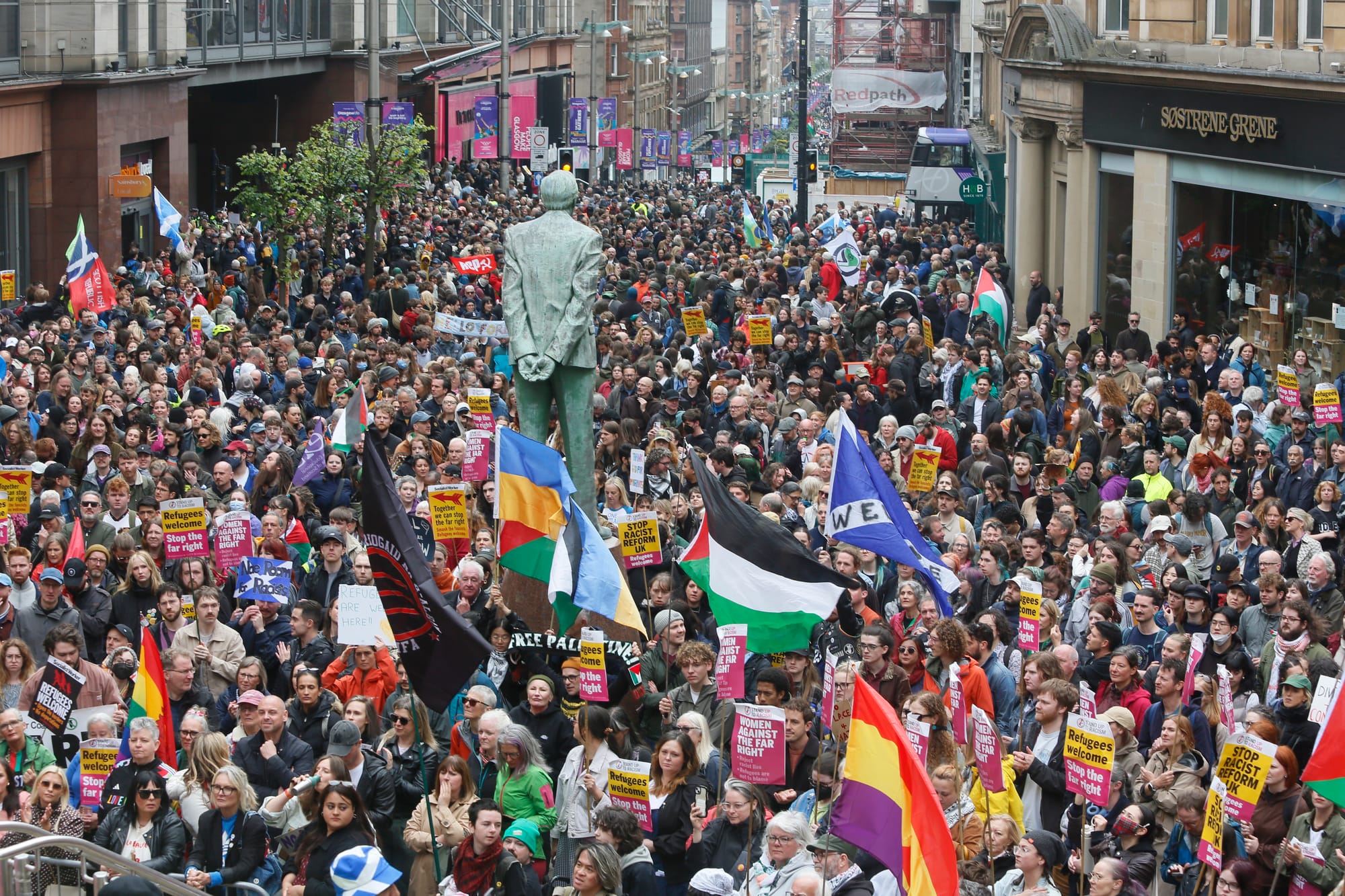
Anti-racists gathered in Glasgow on 13 June 2026 to oppose an anti-immgration protest. Image by Angela Catlin.
For Sara and Ruth of the Accountability Project, a major concern is the infrastructure rapidly developing around anti-immigration sentiment in both Northern Ireland and Scotland, which, they stress, increasingly has strategy, financial capabilities, and wide ranging social media platforms for audience reach and amplification. “Our concern is therefore not about policing people's political opinions or opposition to immigration policy,” Sara says. “It is about recognising patterns early enough that institutions and communities are not left trying to reconstruct them only after harm has occurred. Serious disorder does not begin at the moment the first object is thrown. There can be an observable period beforehand in which networks develop, grievances converge, audiences are built, tactics evolve and mobilisation becomes increasingly normalised.”
Our reporting makes a difference
Good journalism should reveal something new, stand up to scrutiny, and leave the public better informed. That takes time – and your support.
Billy is a founder and co-editor of The Ferret. He's reported internationally and from Scotland, and focuses on far right extremism, human rights, animal welfare, and the arms trade. Likes longform storytelling and photography.
Authorities tightened the rules around this Scottish business scheme after years of exploitation for financial crime. Moscow entities – and a man accused of facilitating child sex abuse – are still selling it to clients seeking “financial privacy”.
This US-style right-wing political pressure group keeps its funders a secret. Its members have helped man Scotland’s anti-migrant and asylum demonstrations.
Loyalist paramilitary groups in Northern Ireland murdered hundreds of people during The Troubles. But far right activists flew their flag at an anti-immigration rally despite terror laws banning public support for terrorists.
Those bereaved by suicide have a 65 per cent increased risk of taking their own lives. So why is there not more funding for support after tragedy strikes?