The Scottish Government is selling surveillance planes to save money and says drones are used to prevent illegal fishing. But critics argue that losing experienced pilots could mean criminality goes unchecked.
Ithaca Energy announced a major dividend on the eve of UK sanctions against companies operating in illegal Israeli settlements. A few weeks later it paid out £100m to a shareholder the UN says has ‘direct links’ to the occupied territories.
Prospective MSPs are legally required to evidence their election spending and confirm the records are correct. Following an investigation by The Ferret, Police Scotland is examining whether nine Reform UK candidates failed to do so.
These women were abused by far right groups who claimed to want to protect them. But they fought back
Women have been leading the fight against the far right in Scotland but anti-racism activism has come at a high personal cost with at least 14 having been publicly abused and threatened. But they are resolute in the face of intimidation and say they will continue defending human rights.
“I think they liked goading us,” says Siobhan Tolland. “I think they enjoyed the process. And this is where the misogyny comes in. This was sport for them.” She is talking about anti-asylum protestors in Dundee as we sit on a bench outside the city’s McManus Gallery, near a statue of Robert Burns and a plaque commemorating Dundonians who died in the Spanish Civil War. The memorial lists their names and proclaims “No pasarán”, an anti-fascist slogan which means “they shall not pass”. Some 90 years on from the international fight against the fascist forces of General Franco, and with the far right in Scotland rising, Tolland believes we are now experiencing what she calls “misogynist-fascism”.
The first anti-asylum demo in Dundee was in Stobsmuirpark, known locally as Swannie Ponds, in autumn 2025, heralding dozens more in coming months organised by a group called the Dundee Patriots. It was on 13 September, at that very first protest, when Tolland witnessed women being abused by men who claimed they wanted to protect women.
These were men protesting against asylum seekers being housed in Dundee, but it was the female anti-racist campaigners who quickly became their targets, Tolland says. Throat slashing and shooting gestures were common at protests along with obscene language and threats of violence. Men would throw Nazi salutes and single out women in the crowd, taunting them and shouting through megaphones.
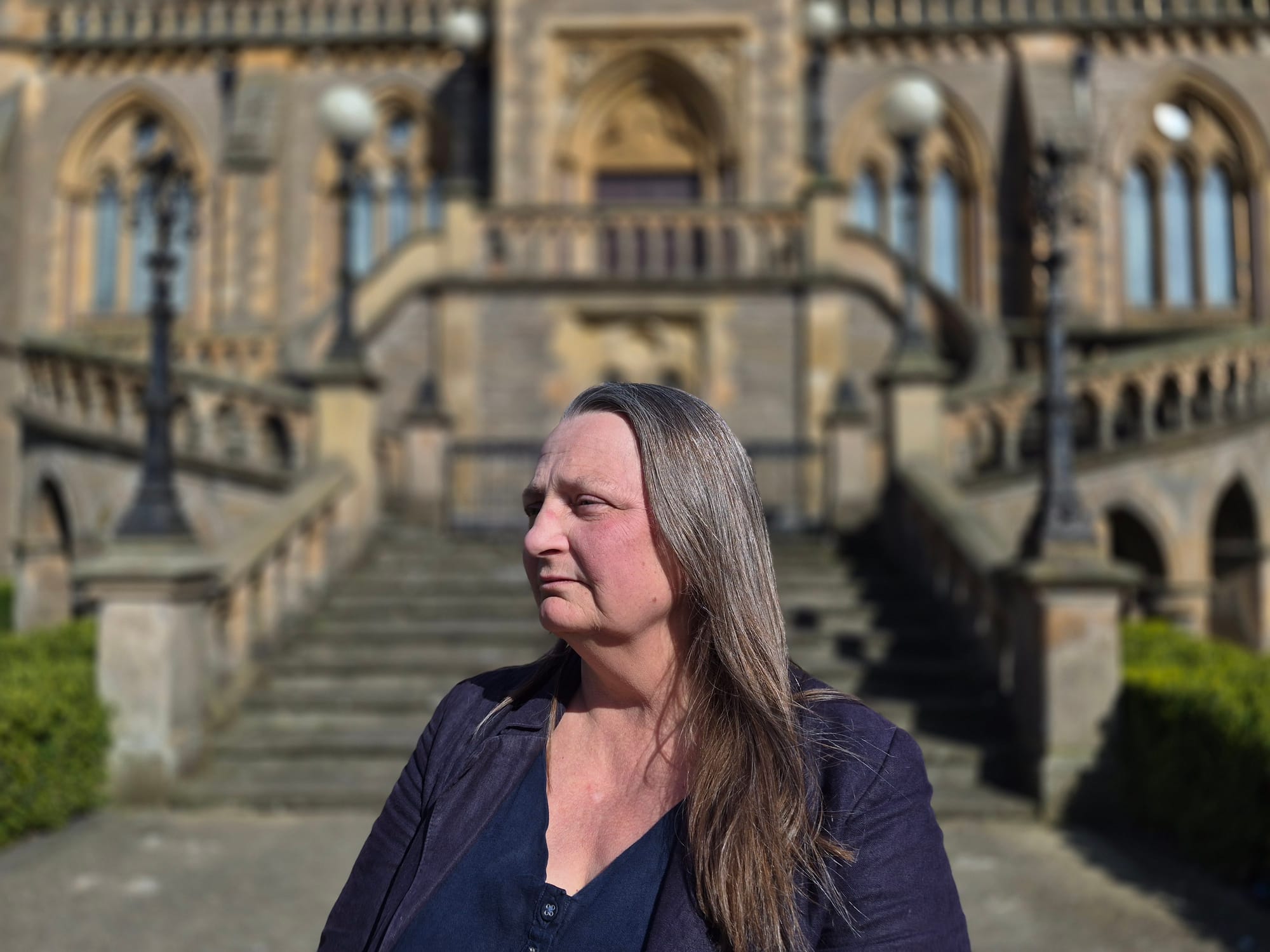
Human rights defender Siobhan Tolland outside the McManus Gallery in Dundee. Image: Billy Briggs.
After the protests were over and the streets had cleared there was cyber bullying. Men trolled female activists online. Back in real life, women were followed. “The aggression and abuse became normalised,” Tolland says. “For quite a few weeks we had police escorts because of some incidents.”
Tolland – a Dundee councillor and student support worker – is one of 14 women in Scotland who’ve spoken to The Ferret about the intimidation they’ve faced for supporting asylum seekers, and the effect on their lives. Our investigation follows a Ferret story last December revealing that neo-Nazis and white supremacists were exploiting anti-asylum protests in Scotland, amid a rising tide of violence and far right activity. After that story ran, several women contacted us and we’ve spent the last four months speaking with them, attending meetings and rallies, and examining evidence which supports their claims. Six women agreed to go on the record while the rest shared experiences but requested anonymity because they fear for their safety.
Owned by readers. Built for accountability.
The Ferret is member-owned journalism. That means we can follow leads that matter even when they’re uncomfortable for the powerful.
Tolland believes the intimidation in Dundee was misogynistic. Although she points out men were targeted too, some “very badly”, she stresses there was something “deeply gendered” about the abuse. It came, she says, from a “group of aggressive men following, taunting, threatening, trolling and cyber bullying – deliberately seeking us out, as women.” At least 20 people were tormented: two men and 18 women. Some had sickening AI generated videos made about them. Others were doxed, their personal details revealed in public leaving them fearful for the safety of both themselves and their families. There were false accusations online and harmful character assassinations. For weeks, Tolland witnessed what she describes as the “sustained and relentless” harassment of women.
“It felt like they were trying to pick us off one by one,” Tolland says. As the weeks rolled into months she feared they would come for her. "So many of us were being targeted that I couldn’t understand why I hadn’t been. I knew it would happen; it was just when and what it would be.” When she was finally doxed, her work-place was exposed online which meant extra security measures had to be put in place because she works with vulnerable people. The doxing “almost came as a relief”, she says, “as weird as that seems”. But that feeling quickly turned to “horror”. It triggered past experiences. She was left feeling isolated. She became “hyper vigilant” and obsessive about locking doors and windows. She worried she’d be spotted in public and attacked.
The stress was immense and around Tolland says she became “extremely ill” around Christmas and had to take three months off work. “I am not ashamed to reveal I cried a lot at that time,” she says. “Big heaving sobs! Not just for me, for my friends and colleagues who had all experienced targeting. And for my family who I worried might be at risk. I panicked over my son being exposed. But also, for those kids [young asylum seekers in Dundee] who had to endure that targeting daily.”
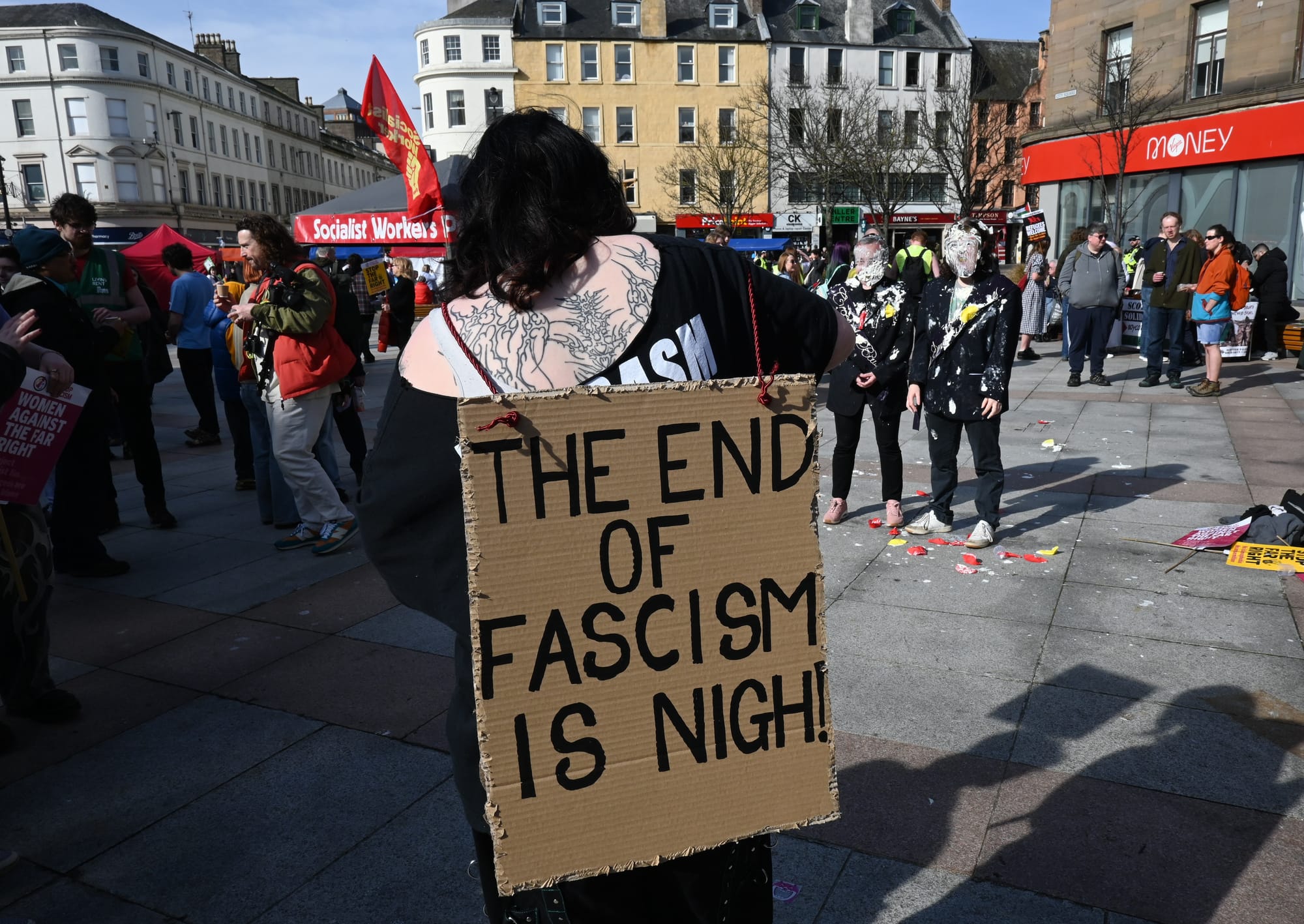
An anti-fascist activist at a rally in Dundee on 21 March 2026. Image: Billy Briggs.
Joy Melville was also taunted in Dundee. An anti-racist for 40 years, she was secretly filmed and photographed by men who shared videos and images online and asked for her to be identified. Once Melville was named, a campaign of abuse ensued. “These men systematically went through my social media profiles looking for information to then abuse me online,” she says. “I was called amongst other things a ‘tert’ [tart] and a ‘whore’ - generally all the abuse is misogynistic and of a sexual nature.” Melville says this caused her “anxiety” and she stayed away from protests for a while. On returning, she wore a wig and a facemask to conceal her identity.
Her friend and fellow activist, Jayne Kelly, says she’s “never experienced anything like this” in many years of anti-racism campaigning. She now feels “vulnerable” and has upped security. She had a ring [video] doorbell installed and worries she’ll “bump into them” when out walking her dog. “It’s massively impacted my life as it has on other women, and we’ve all gone through a similar pattern of distress, upset and anger, “ says Kelly, adding her family has been affected too. “I saw one of them [in public] and panicked. I was absolutely scared and I don’t feel threatened easily. The long term impact is I’m always looking over my shoulder, and I’m rarely on social media now.”
All 14 women we spoke with shared similar stories. One woman in Perth had a "With Sympathy" card sent to her office, containing a chilling message: “Your time will come”. Women from Aberdeen sent videos of men shouting Islamophobic, racist and misogynistic abuse at them in public. Those on the receiving end included Fiona Roberston, an equalities consultant and disability campaigner, who’s part of an antifascist collective. She’s been called a “fat fucking bitch” among other slurs and has “hours of footage” of men insulting her appearance. “They have followed me to my car, filmed it and put it online,” she explains. “We're having to get cameras for the home and car, and other security measures.”
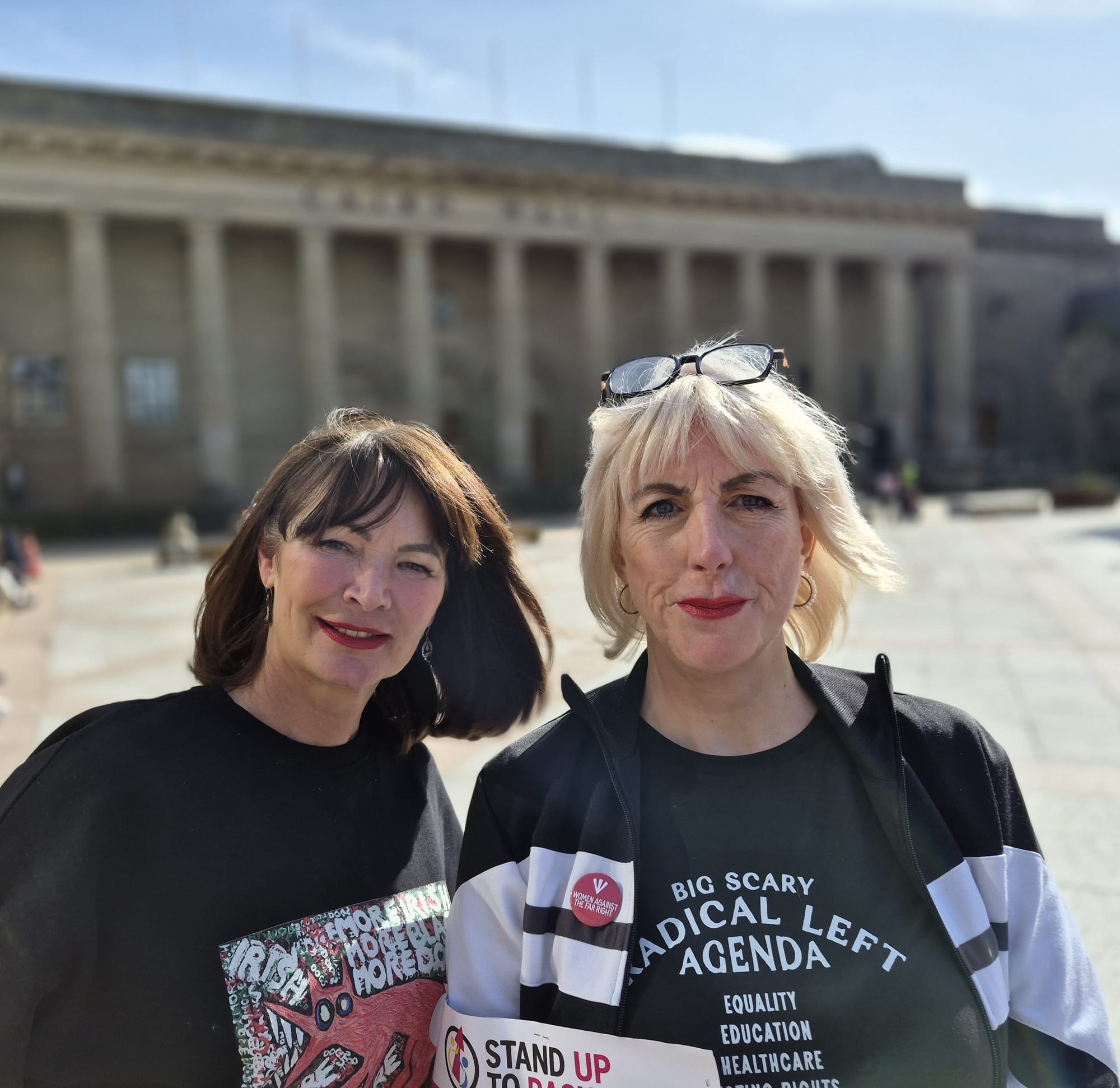
Jayne Kelly and Joy Melville at an anti-racism rally in Dundee in March 2026. Image: Billy Briggs.
Policing the protests
Our sources who requested anonymity raised concerns over policing. They say they support the police and realise officers have a difficult job to do at protests, acknowledging resources are stretched due to staffing issues. But they also had criticisms. Many feel policing could be tougher, given the scale of the intimidation and the negative impact on women's safety and well-being. One woman said: “When I complained I felt like I was fighting them as well. The attitude was ‘if you weren’t there you wouldn’t experience this’.”
Others claimed lawbreaking often happens in front of police at demos, but nothing is done, and it was argued that the “need for the police to be seen to be impartial” appears, at times, to take precedence over upholding the law. There were also concerns that officers drafted in from other areas to police protests in Dundee were not fully briefed on the local context and may not have understood the criminal background of some men involved in anti-immigration protests.
In response a spokesperson for Police Scotland said the force is a rights-based organisation whose role is to “ensure public safety while balancing the rights of protesters” who wish to peacefully demonstrate. They added that anyone participating in a protest is asked to do so lawfully, and those involved in an offence, may face arrest and potentially a jail sentence. “Even if you are not caught on the day, we have significant evidence-gathering resources at our disposal, and you will be identified,” the spokesperson warned.
Since last summer, when anti-asylum protests started to spread across Scotland, there have been a number of arrests and convictions. Last month Gavin Turpie was fined for shouting a neo-Nazi slogan at a protest in Aberdeen, and a member of the Dundee Patriots was convicted in March for acting aggressively during at a demo in the city’s Reid Square. In court Robbie Robertson admitted shouting, swearing, and threatening violence. He was the camera man and social media manager for the Dundee Patriots, which organised protests.
The outfit claimed to be a “group of Dundonians who share common concerns regarding the scale and management of illegal and undocumented migration into the country”, adding it did so “lawfully and peacefully” through organised protests. At time of writing the Dundee Patriots is no longer active. In January the group said it would not attend future protests “due to ongoing police harassment, mounting charges, and restrictive bail conditions placed on members of the group”, adding that the “the majority feel it is best to allow matters to settle before considering any future steps.” That move followed The Ferret’s story in December revealing that at least eight people involved with the protests in Dundee have criminal convictions.
Another anti-asylum protest group, based in Falkirk, said in January it was disbanding too. The Facebook group "Save Our Future and Our Kids Futures" held protests for months in the town but announced it was permanently shutting down after admitting that neo-Nazi groups had infiltrated demonstrations. Save Our Futures’ leader, Connor Graham, was fined in March for abusing a police officer outside the Cladhan Hotel, which houses asylum seekers. Sheriff William Gilchrist fined Graham £540, telling him: "It's you who seem to be a risk to the local community, rather than individuals residing in this hotel."
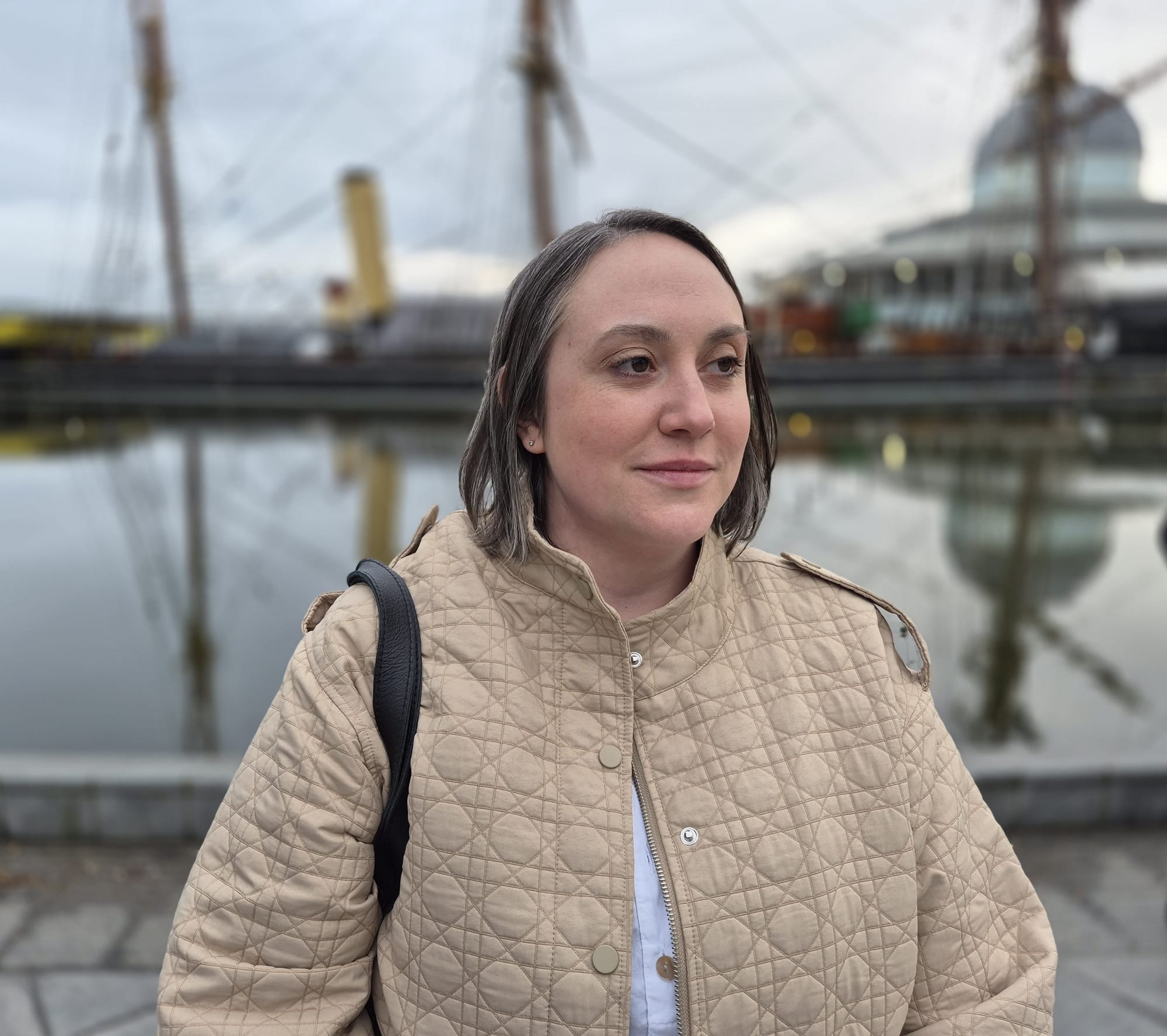
Sarah McCabe in front of the RSS Discovery ship in Dundee. She's a member of anti-racism group called Falkirk For All. Image by Billy Briggs.
Fighting the far right
All the women we spoke to still campaign. Defiant in the face of intimidation, they are part of a growing network of grassroots groups in Scotland challenging bigotry and racism, which includes Women against the Far Right Scotland, a protest group founded in response to claims by far right actors that they aim to protect women.Last year the group signed an open letter saying: “We reject the far right’s racist lies about ‘protecting’ women and girls. They are not defenders of women – they exploit violence against women to fuel hate and division.” More than 200 organisations and individuals signed the letter including Rape Crisis Scotland, Scottish Women’s Aid, and the former first minister of Scotland, Nicola Sturgeon.
The campaign group Falkirk for All also signed. It supports asylum seekers housed in Falkirk where its activists have endured threats.They include Karen Paton who spoke at an anti-racism event in Dundee in February.The event was organised by Stand Up To Racism, and around 30 people listened intently as she outlined her situation. “I have been threatened with being beheaded. I have been threatened with getting black eyes and euthanised,” Paton said, explaining she had CCTV installed at home after men drove up and down the street where she lived, trying to intimidate her. That evening she apologised to the crowd about the language she had to use as she explained: “I have been threatened multiple times with multiple gang rapes, in multiple orifices. They stand there and they shout, ‘we’re protecting women and children’, and yet, they have abused us.”
Paton was in Dundee that day with two other women from Falkirk for All. Ahead of the meeting, they told me about their experiences over coffee. They included Sarah McCabe, who’d contacted The Ferret about her experiences after our December story, initially on condition of anonymity. But she is no longer afraid to speak out. “I had them outside my house just after 1 o'clock in the morning,” she told me. “And then the next day my dog was poisoned. She must have eaten something that was chucked over the wall, and luckily we were in the house otherwise she would’ve been a goner.”
McCabe shared videos and screenshots to reveal the abuse she’s been subjected to. One shows an anti-asylum activist shouting through a megaphone at her, telling her she doesn’t have to worry about being raped because no sexual predator would want her. Despite the abuse both McCabe and Paton believe they are winning the fight against the far right, citing the disbandment of the Falkirk protest group, Save Our Future and Our Kids Futures. They concede, though, that’s just one battle won in an on-going culture war with no end in sight.
Likewise, Siobhan Tolland is uncowed. While she believes the “intense period” in Dundee is over she’s “under no illusion this is the end” for groups like the Dundee Patriots. “This feels like stage one only,” she says. “But here is the thing that the Dundee Patriots never got, and they never will. The women that were targeted fought back. The women’s determination to fight against that harassment was, for me, one of the most remarkable moments of political resistance I have ever seen.” The Spanish, she says, harking back to the plaque near where we are sitting, have a term that seems fitting here. “Macho fascismo – I think that sums it up.”
She adds: “The Dundee Patriot’s need for creating crisis, intimidation, aggression and violence was extremely powerful. But you know what? It was not ever as powerful as us. Not ever. We stood our ground and we tried to protect those spaces with everything that we had. It exhausted me, made me ill.” But when local community workers told her how much the asylum seekers appreciated their actions it made her cry. “Because for me, it was the only thing that mattered,” she says. “And I would do it all over again if I had to.”
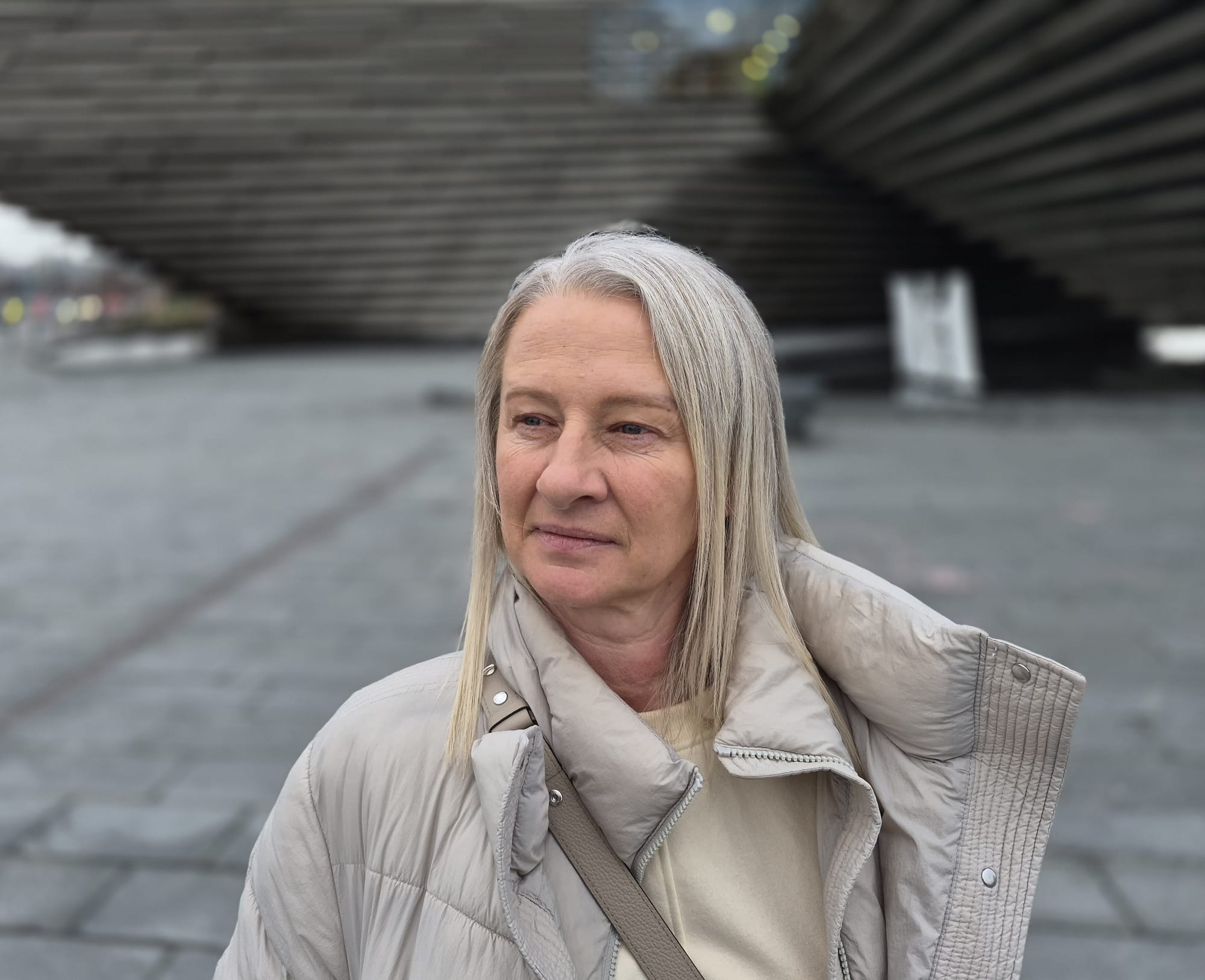
Anti-racism activist Karen Paton outside the V&A in Dundee. She's a member of the campaign group Falkirk For All. Image: Billy Briggs.
Help us keep digging.
If this reporting mattered to you, you can help fund the next one. The Ferret is independent, member-owned investigative journalism, backed by readers who want accountability in Scotland.
Billy is a founder and co-editor of The Ferret. He's reported internationally and from Scotland, and focuses on far right extremism, human rights, animal welfare, and the arms trade. Likes longform storytelling and photography.
The Scottish Government is selling surveillance planes to save money and says drones are used to prevent illegal fishing. But critics argue that losing experienced pilots could mean criminality goes unchecked.
Ithaca Energy announced a major dividend on the eve of UK sanctions against companies operating in illegal Israeli settlements. A few weeks later it paid out £100m to a shareholder the UN says has ‘direct links’ to the occupied territories.