

Thousands of concerns have been raised over suspected harm in elderly care settings
The Care Inspectorate has logged almost 10,000 concerns about harm and abuse of older people over an 18-month period, The Ferret has learned.
The Care Inspectorate has logged almost 10,000 concerns about harm and abuse of older people over an 18-month period, The Ferret has learned.

It’s not the first time the BBC has come under fire for a perceived lack of impartiality


Emails show the Scottish Government’s international arm asked for data centre talks to be kept private before the signing of an NDA, prompting calls for greater transparency.

The Care Inspectorate has logged almost 10,000 concerns about harm and abuse of older people over an 18-month period, The Ferret has learned.

Nearly 10,000 concerns about the physical harm of older people, and hundreds more about sexual and emotional harm have been received by Scotland’s social care watchdog in the past 18 months, The Ferret can reveal.
The concerns, which are recorded by the Care Inspectorate, also include neglect, modern slavery as well as harms like financial, physical, sexual and psychological.
Our investigation follows a number of high-profile abuse cases involving some of the most-vulnerable members of society. In June, a care worker was jailed after repeatedly sexually assaulting Yvonne Carnie at the Abbey Residential Home in North Berwick. One woman told The Ferret that her mother allegedly faced a litany of neglect and abuse in both NHS and residential settings.
The Care Inspectorate logged 16,335 so-called concern notifications between April 2025 and September this year, according to a response we obtained via freedom of information. Of these, more than 9,700 related to fears over physical harm, 800 to emotional harm, and 436 to sexual harm. While the previous data cannot be compared due to changes in how it is collected it appears to be an increasing concern in recent years. A leading older people’s charity described the figures as “alarming”, and called for “robust safeguarding” for the “most vulnerable members of our society”.
The Scottish Government’s community care minister promised to engage with the Care Inspectorate to make sense of the “concerning” data and understand the “action being taken".
The data does not say who was suspected of being responsible for each alleged harm risk meaning family members, fellow residents, paid carers, or conditions in the care home may have been responsible for the harm caused.

Speaking to The Ferret, Lorna Anderson alleged that her mother Elizabeth, who she described as her “best friend, and a “go-getter” before her time in care, faced neglect and abuse in both NHS and residential settings.
Elizabeth ‘Betty’ Hand was around 75 when she contracted a UTI infection that led to a dramatic decline in her mental health in June 2021.
The condition, which is painful but rarely dangerous in younger people, can cause complex behavioural changes in the elderly, including delirium and confusion, and can significantly worsen pre-existing dementia.
Lorna soon realised she was unable to provide the specialist, round-the-clock support at home, as her condition worsened to the point she was sectioned under the Mental Health Act and taken to NHS Tayside’s Kingsway Care Centre.
After leaving the unit in 2022 she was transferred to Pitkerro Care Centre, a private care home in Dundee and then spent the years preceding her death in 2024 at Stracathro Hospital near Brechin in Angus, which is run by NHS Tayside.
In images seen by The Ferret, Betty’s face can be seen covered in deep purple bruising rising from her upper cheek to her forehead. Lorna told us this happened while her mother was at the Stracathro facility and while she does not know the cause, says she was told it was due to unsupervised falls.
Lorna – who says she has been diagnosed with complex post-traumatic stress disorder as a result of the ordeal – told us: “My mum cried regularly when I went to visit, and wanted me to take her out [of Kingsway], and I couldn't. It was under a court order.”
“But she couldn't understand. There's nothing more horrific than hearing her begging you to take [her] home. Even if you wanted to, even if you wanted to give up work and do it, you couldn't anyway because they're under a court order.”
She also claims to have seen her mother attacked by another patient in her room during a scheduled video call at Pitkerro. At Lorna’s request, police were called to attend.
“It was just nasty. It was being abusive to a vulnerable person just because they could”
Pitkerro Care Centre, which looks after patients in advanced states of dementia, confirmed an incident in August 2022 between two residents. A spokesperson said that both police and a local authority social worker had decided to take no further action, and that concerns were reported to the Care Inspectorate.
Lorna also claimed she heard audio recordings – from an Amazon Echo device she provided for her mother’s room – of what she considers verbal abuse of her elderly mum while at Kingsway. On the recordings, she allegedly heard Betty being told “stop nipping my fucking head” and to “stop crying, you’ll be fine” by a carer while she was in a state of distress, and crying for her daughter.
On another occasion, a member of staff allegedly told the smart speaker device in her room to “play 60s music for Betty Hand ‘cause she’s an old woman”. Speaking of this last recording, Lorna said: “It was just nasty. It was being abusive to a vulnerable person just because they could.”
Concerned about the standard of Betty’s care, Lorna made a Subject Access Request – which gives people the right to obtain a copy of their personal information held by an organisation – to NHS Tayside, but was confronted with more concerning reports when she was handed the information around a year later. She claims the paperwork released had details of Betty being restrained by staff. Reading it she thought “how terrified must mum have been”.
Another image seen by The Ferret shows a pattern of bruising on Betty’s arm, which Lorna believes happened while she was being restrained.
This sort of story takes patience and time.
Interviews with real people affected by failures in the care sector, and forensic analysis of data we asked for through freedom of information law.
We believe these investigations are important, and are exactly why our members choose to give us their money.
We have more stories coming about the care system in Scotland, and you can help us to fund them for as little as £1 per month.
Asked about the allegations, an NHS Tayside spokesperson said: “Due to patient confidentiality we are unable to comment on matters relating to individual cases. We would invite the family to contact our patient experience team to discuss any further concerns they may have.”
Pitkerro Care Centre told The Ferret: “Following an incident between two residents in August 2022, staff intervened immediately to provide care and support, and followed all proper reporting protocols.” They claimed the Care Inspectorate response to the incident details the action taken.
A spokesperson added: “Immediate safeguarding measures were implemented following the incident, including regular staff checks and the installation of a door alarm.”
“Due to resident confidentiality and data protection regulations, we cannot comment further on individual medical or care records.”
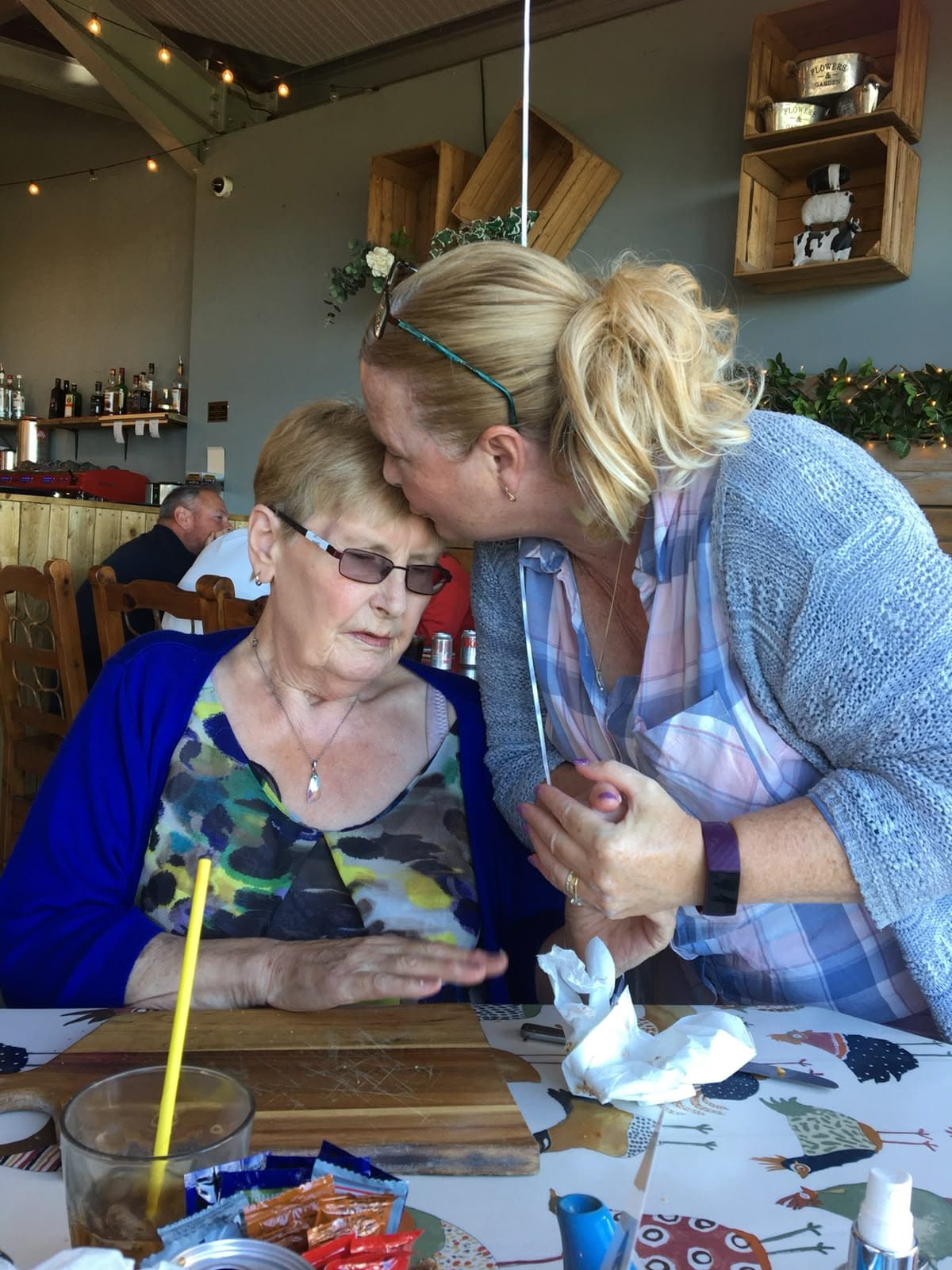
This year there have been several high-profile abuse cases involving elderly people in Scotland.
In September the Care Inspectorate placed Castlehill Care Home in Inverness on special measures after worker Amina Sani was recorded mocking and threatening an 81-year-old dementia patient, the BBC reported at the time. She allegedly told him she would “call the police” after he lashed out over being showered against his will.
In June, a care worker was jailed at the Edinburgh High Court after repeatedly sexually assaulting vulnerable Yvonne Carnie at the Abbey Residential Home in North Berwick.Her family said justice was served without the elderly woman “ever feeling truly safe again,” according to the BBC.
In April 2025, the Care Inspectorate changed its reporting system to begin recording “protection concerns” regarding care users, rather than allegations of abuse, meaning it is now able to capture more specific types of alleged wrongdoing.
These include neglect, modern slavery, and various harm types, including financial, physical, sexual and psychological. The watchdog noted the notifications were multiple choice and could overlap, meaning they “do not represent total submissions made for this notification”.
Before April 2025, the Care Inspectorate captured harm notifications under two separate categories, which it said can not be compared to the most recent data. It recorded 7,651 notifications as “allegation of abuse” in 2024, compared with 5,231 in 2022. Notifications relating to injury also rose, from 2,260 in 2022 to 3,010 in 2024.
“Everyone has the right to safe, compassionate care, which meets their needs and respects their rights”
Age Scotland’s chief executive, Katherine Crawford, described the number of concerns relating to the “most vulnerable members of our society” as “alarming” and called for “robust safeguarding” across services.
Hourglass deputy chief executive Veronica Gray, whose charity supports and campaigns for elderly abuse victims across the UK, said abuse was often not carried out by paid carers. She claimed that out of the 14 victims in care settings the charity had supported in the last financial year, only three were perpetrated by care workers, with the rest involving close family members.
Scotland’s community care minister, Alison Thewliss, said: "These figures are concerning. Everyone has the right to safe, compassionate care, which meets their needs and respects their rights. We have clear standards for the quality of care. Where issues are identified by the Care Inspectorate, we expect remedial action to be taken urgently by the service.
“While it is not within our remit to intervene in individual cases, we are engaging with responsible bodies, including the Care Inspectorate, to understand the information reported and the action being taken.
“Where social care workers fall below the required standards, the Scottish Social Services Council will investigate and, where appropriate, may restrict or remove a registration. This system of individual workforce regulation is more robust than across the rest of the UK.”
A spokesperson for the Care Inspectorate said: “The Care Inspectorate collaborates closely with provider services and relevant authorities where there are protection concerns to ensure people experiencing care are protected.”

The far right stands accused of weaponising Christianity for its culture war. But churches are starting to call out those "cynically using the Christian label” for political ends.


Observations by campaigners suggest that three of the UK’s nuclear-armed submarines are currently at sea. This is the first time this has happened since 2022, and it’s caused concerns.


As staff at Scotland’s largest university continue strikes over sweeping cuts, their boss still won’t say what his second job pays on top of his £425,000 salary.

A new scheme to penalise salmon farmers when fish escape has been launched. But we found it is controlled by the industry prompting criticism.