

Scotland’s night patrol groups say they are protecting women and children. Critics claim they are ‘vigilantes’
Our investigation indentified more than a dozen groups across Scotland claiming to provide 'street patrols'.
Our investigation indentified more than a dozen groups across Scotland claiming to provide 'street patrols'.


Three years ago we revealed a "litany" of security incidents within the police force which guards nuclear plants. They haven't reduced much since.

Several of Holyrood’s newest politicians have property portfolios. Campaigners claim they are “profiting” from Scotland’s housing emergency.


Deer overpopulation in many parts of Scotland is harming the environment. Attempts to tackle the longstanding issue are costing taxpayers tens of millions of pounds.

Scotland’s publicly-funded forestry bodies have spent more than £134m controlling deer over the last decade, The Ferret can reveal.
The country’s’ deer population is estimated to have reached more than one million, having doubled since the 1990s. In high concentrations, deer can cause numerous issues.
They include the deaths or injuries of an estimated 700 people in vehicle collisions in the UK every year, the environmental harm caused by trampling and overgrazing, poor animal welfare due to insufficient food and shelter for deer in winter, and steep economic costs.
Now, data we obtained via freedom of information details the deer management bills footed by Forestry and Land Scotland (FLS) and Scottish Forestry, which are ultimately funded by the taxpayer.
It also specifies the huge stretches of deer fencing put up by FLS to contain the animals over seven years – equivalent to nearly triple the length of mainland Britain by road.
A deer expert urged the Scottish Government to record the economics of deer management and make them public, as it was urged to do in 2020 by an independent working group that ministers appointed.
Owned by readers. Built for accountability.
The Ferret is member-owned journalism. That means we can follow leads that matter even when they’re uncomfortable for the powerful.
Forestry bodies said deer management was essential to helping new woodlands to survive, and meet environment targets.
Conservationists acknowledged the “expensive operation”, but claimed the sums are small compared to “the cost of biodiversity loss and climate change impacts” caused by deer damage to woodland and peatland.
FLS estimates that 150 million young trees are at risk from deer, with tens of millions of mature trees vulnerable to bark-stripping from their antlers – a behaviour called fraying. This can cause trees to die, and negate their ability to offset carbon emissions and improve biodiversity.
In large numbers, deer harm land by trampling over or eating too much vegetation, including on peatlands, which risks the release of vast amounts of climate-warming carbon these habitats have removed from the atmosphere.
In November, The Ferret revealed that nearly 300 protected areas were being damaged or put under pressure by deer, including Ben Nevis, Glen Coe, both national parks, and the critically rare Caledonian forest.
Deer are involved in an estimated 1,850 traffic collisions in Scotland, according to NatureScot and Transport Scotland. An estimated 700 people die or are injured each year in the UK due to colliding with the animals, and spend £17m on vehicle repairs.
 Jamie Mann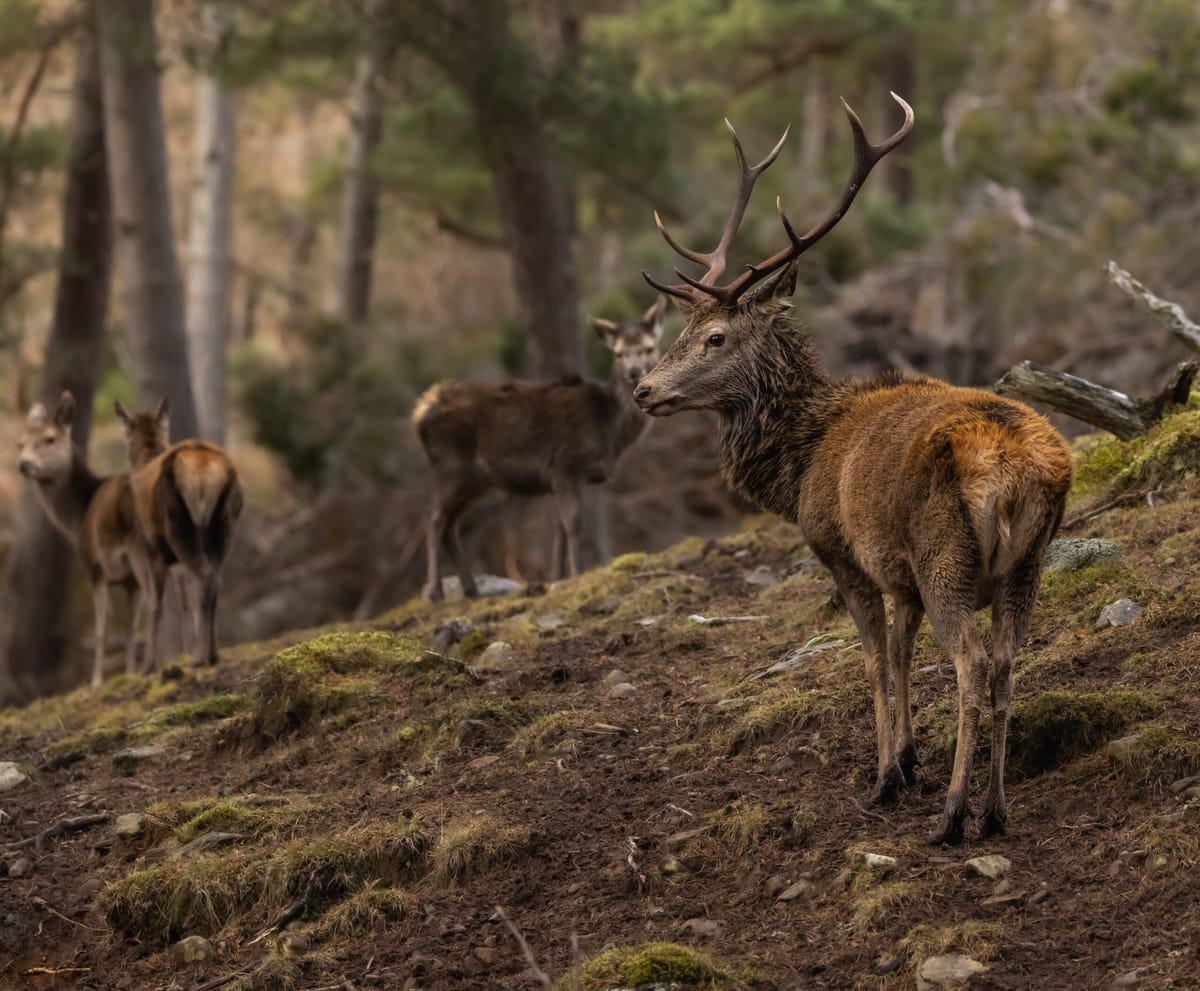
In 2021, FLS said deer population levels can be as high as 64 deer per sq km in some areas. The John Muir Trust says that five deer per sq km tends to prevent natural woodland regeneration, while exceeding eight per sq km risks damage to peatlands.
The Scottish Government accepted the deer working group’s recommended limits of 10 red deer per sq km in large open areas in the Highlands, but added that appropriate densities can vary by location.
To control the population and mitigate their impact, some 100,000 deer are recorded as being culled each year, but the true number could be as high as 200,000, according to NatureScot. But it estimates that 50,000 more must be killed annually to meet nature and biodiversity targets.
Deer control is voluntary, rather than compulsory, but the wildlife agency has the power to cull deer on behalf of non-compliant landowners “when necessary to protect our natural heritage”.
In January, we revealed that a Highland estate which Scotland’s wildlife agency says failed to stop rampant deer from harming protected areas received nearly £1.5m in public subsidies, including £139,000 for deer fencing.
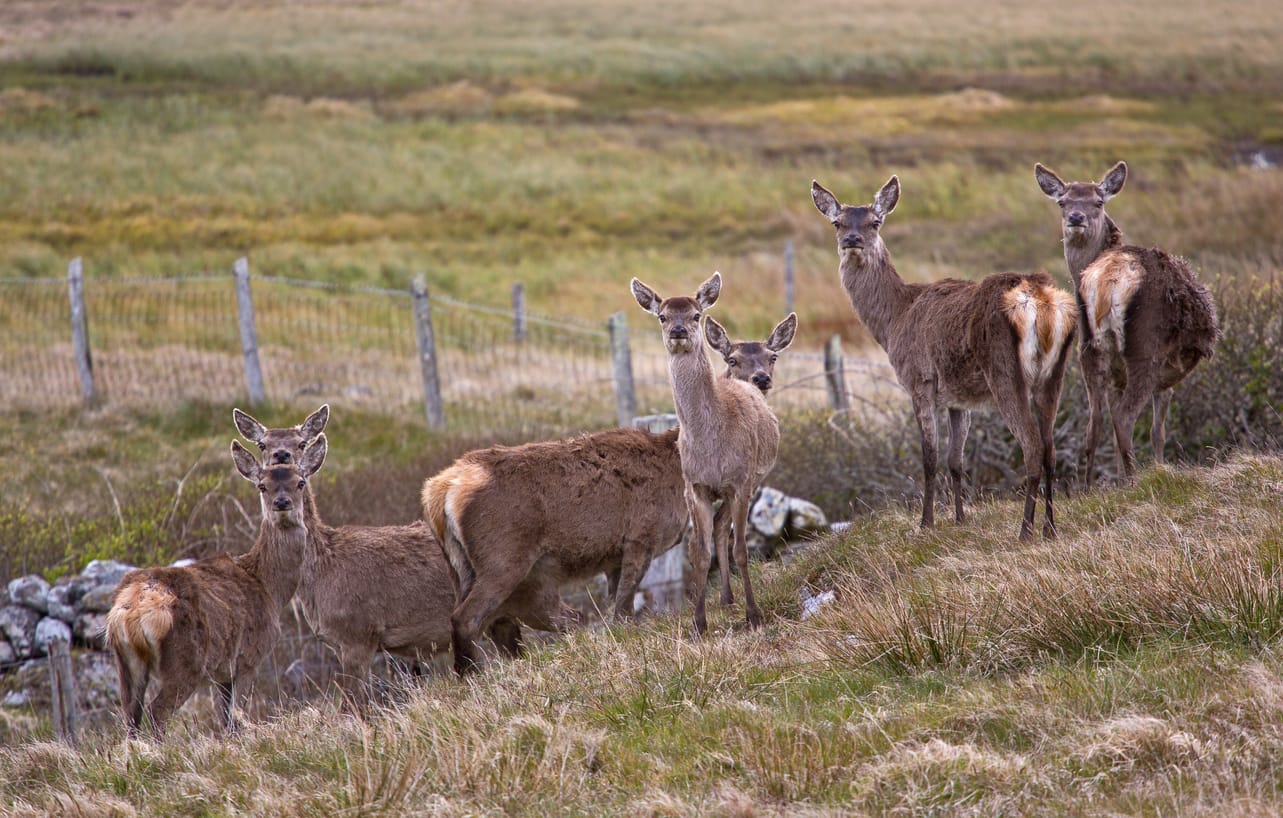
Between April 2014 and April 2025, FLS, which manages around a third of the nation’s public forests, spent £77.6m on deer management.
The costs included culling deer, protecting trees by putting up fencing, and funding vehicles, machinery, equipment and staff salaries to control the animals.
Apart from a spending dip during the Covid-19 pandemic, the annual cost of its deer management efforts has increased, and nearly doubled from £5.3m in 2014/15 to £10.4m in 2024/25.
The figures do not include the several millions of pounds in damage that FLS claims deer cause to trees annually.
Between 2016 and 2025, Scottish Forestry, which is responsible for woodland policy, support and regulation, awarded at least £56.4m via its forestry grant scheme to companies, organisations and individuals to protect their woodlands from deer.
The vast majority (£48.8m) went towards deer fencing, £6.6m funded tree shelters to protect saplings from the browsing animals, and a further £1m was spent on “reducing deer impact”.
Without any protections, new woodlands would find it hard to establish due to the damaging effects of deer browsing. — Scottish Forestry
A separate freedom of information request shows that Scottish Forestry subsidised 2,284 miles of deer fencing between 2018/19 and 2024/25 – nearly triple the distance of John o' Groats to Lands End by car – costing about £8 per metre, on average.
In 2020, the Scottish Government’s independent deer working group urged ministers to record the cost of damage by deer to trees and agriculture, and make annual government spending on tackling the issue “clear and transparent”.
The Ferret asked NatureScot what progress had been made in collating the data, but it said it was restricted in what information it could provide due to pre-election communications rules ahead of the Holyrood vote in May.
High deer density also costs the private sector. A 2016 report from NatureScot put the annual cost of privately-funded deer management at £42.6m, but added that some costs were offset by sporting income at estates, jobs linked to sporting, and the sale of venison.
Tens of thousands of landowners long benefitted from tax breaks, however. In 2018, Scottish Parliament research found that nine out of ten of Scotland’s shooting properties, including some owned by billionaires, were exempt from paying £10.5m in annual business rates.
The Scottish Government's budget, passed in March this year, scrapped the exemption from 01 April, with some exceptions, including for crofts and those shooting solely for deer management.
 Jamie Mann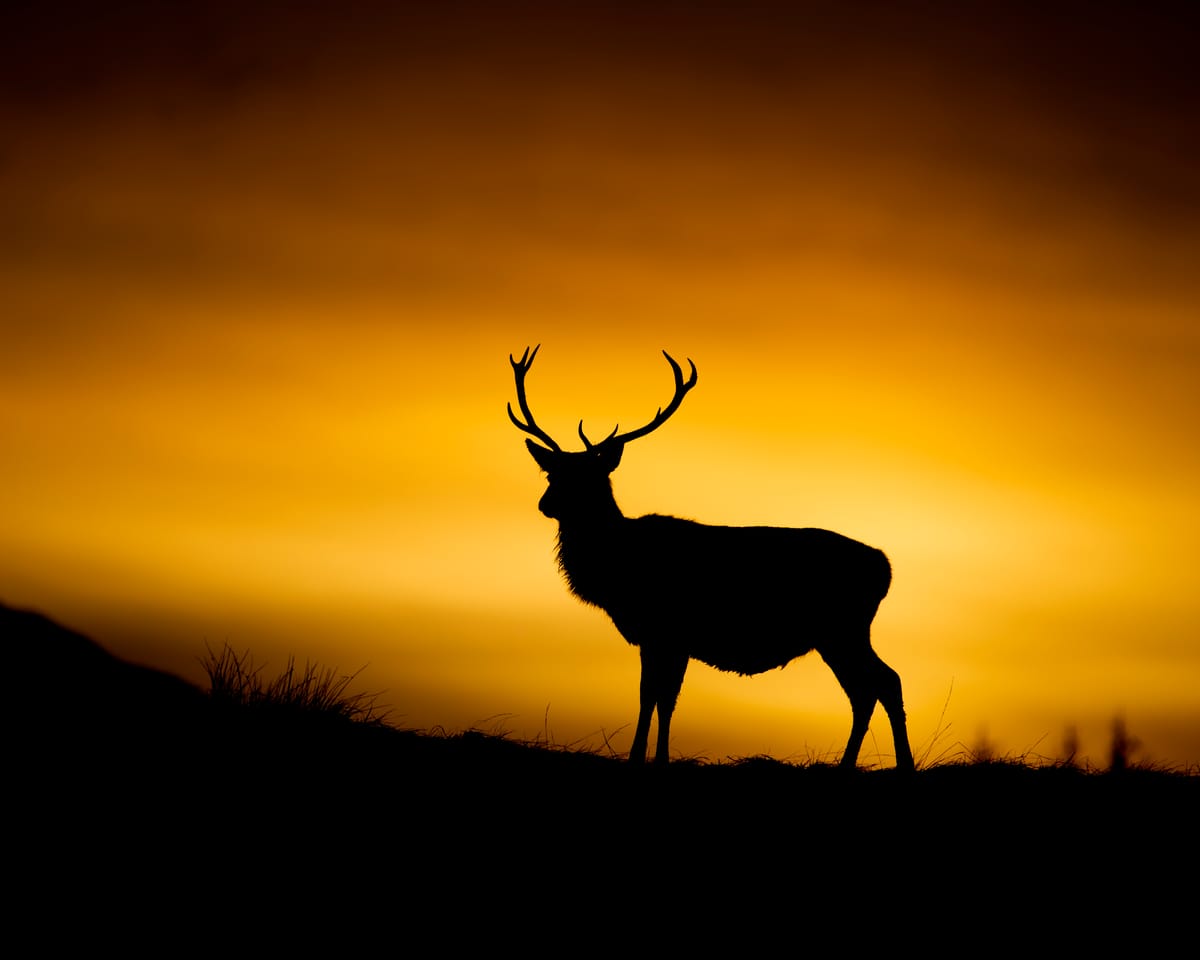
Scottish Environment LINK is a coalition of over 50 green organisations. Duncan Orr-Ewing, convener of its deer group, said deer numbers had reached “the highest-known levels, preventing the delivery of key nature restoration programmes,” and called for more culling.
He added: “A clear plan of action to reduce deer populations in key areas including the use of NatureScot’s recently enhanced intervention powers is urgent and essential.”
According to the Woodland Trust, 18 per cent of Scotland has tree cover, compared to a European average of 37 per cent. Just 4 per cent of Scotland is native woodland – more than half of which is in poor condition – and just 1 per cent of land has ancient woodland.
NatureScot says that while peatlands hold most of Scotland’s stored carbon, an estimated 80 per cent are damaged. The John Muir Trust argued that deer management is “one of the major obstacles” to growing Scotland’s woodland, and protecting and regenerating peatlands.
The practice is “a critical part” of conservation charity’s “responsibility to steward the land we manage to the highest environmental standards”, claimed chief executive David Balharry.
In some areas, the animals “trample peatlands and destroy the surface vegetation leaving the soils exposed and vulnerable to further deterioration”, while large herds are “devouring burgeoning new habitats”.
Deer management is “an expensive operation”, but the sums are “small compared to other land management practices, and the cost of biodiversity loss and climate change”, he added.
In many parts of Scotland deer are at low densities, or at least at densities where impacts are acceptable in the light of local land use objectives. — Rory Putman, Glasgow University
The SNP’s Emma Harper agreed, claiming “the benefits it will bring in terms of regenerating woodland and peatland, in turn stimulating the wider natural environment, are much, much greater than the cost of that management”.
“There’s also the economic potential of local venison harvesting and processing, keeping food as local as it gets, increasing spend in the local economy and supporting employment,” Harper added.
Rory Putman, a visiting professor at Glasgow University, has published 12 books and over 100 technical articles on deer, including an assessment of the economic costs and benefits for NatureScot, published in 2012.
He challenged public bodies to outline the costs and benefits of different strategies including culling, fencing, planting fewer tree species susceptible to deer and actively promoting stalking as a source of additional income.
In some cases, it could be cheaper to leave vulnerable trees unprotected from deer, he suggested.
Claims of overpopulation “oversimplifies the reality; that in many parts of Scotland deer are at low densities, or at least at densities where impacts are acceptable in the light of local land use objectives,” added Putman.
A Scottish Forestry spokesperson said “effective deer management is an important aspect of woodland protection and it is now a prominent condition of the UK Forestry Standard”, which is government-mandated.
“Without any protections, new woodlands would find it hard to establish due to the damaging effects of deer browsing,” they stressed.
A Forestry and Land Scotland spokesperson said: “High deer population levels have a negative impact on the environment, affecting a wide range of habitats”.
Tackling the issue “is a fundamentally important element of our work that requires dedicated, focused and targeted resources,” they added.
“This work not only contributes towards the Scottish Government’s climate change, biodiversity and environment targets but also helps to secure Scotland’s future timber reserve, protect habitats, and sustain jobs in deer management and in Scotland’s food and drink sector.”
We updated this article at 9:02 0n 12 April to specify that deer are 700 people die or are injured each year in the UK due to deer collisions, according to NatureScot and Transport Scotland. We originally stated that deer were involved in 700 road deaths.
Keep this reporting independent.
No billionaire backers. No corporate agenda. Just public-interest journalism funded by readers.

Our investigation indentified more than a dozen groups across Scotland claiming to provide 'street patrols'.

Three years ago we revealed a "litany" of security incidents within the police force which guards nuclear plants. They haven't reduced much since.

Our latest investigation has found the financial rewards of Scotland’s energy transition are being unevenly distributed. The money earned by landowners often dwarfs the payments that wind farm developers make to local communities.


UK Government plans which could “weaken” oversight of nuclear safety in Scotland have been rejected by the Scottish Government.
