

Scotland’s abandoned buildings leave communities to bear the burden
Derelict buildings across Scotland are creating a plethora of problems. Local communities are bearing the brunt.
Derelict buildings across Scotland are creating a plethora of problems. Local communities are bearing the brunt.


A total of 36 boats have been fined £140,000 in the last 10 months for entering Scotland's marine protected areas. But campaigners claim the fines are too small and may not be a sufficient deterrent.

The university has continued to argue staff cuts are needed to make ends meet. But a growing cash balance has raised questions about the need for more redundancies, and whether it qualifies for millions in public support.

Three years ago we revealed a "litany" of security incidents within the police force which guards nuclear plants. They haven't reduced much since.

The police force tasked with stopping terrorist attacks at UK nuclear sites dealt with dozens of internal security breaches last year – including a classified laptop going missing, contractors working without proper background checks, and armed officers losing ID cards.
Three breaches involved classified material being lost or stolen outside the Civil Nuclear Constabulary’s (CNC) premises – including two police warrant cards, used to identify officers, which were supposed to arrive via courier.
A further nine cases involved the loss of identity passes, including those belonging to armed officers, and two contractors were found to be working without “appropriate” vetting.
Other breaches included confidential material being left inside body armour sent for destruction, a staff member accessing information they were no longer authorised to see, and compromised personal data. There were 35 breaches in total, the CNC reported.
The CNC is the armed police force that protects civilian nuclear facilities across the UK, including Torness and Dounreay in Scotland. The force also escorts nuclear material when it is being transported and guards other “critical national infrastructure” such as gas terminals.
Our findings come after we submitted a freedom of information request to the force. You can read full details of the breaches here.
Opponents of nuclear energy said the UK “cannot afford to be sloppy when it comes to nuclear security” and claimed “very little appears to have been done” to tackle breaches in recent years.
The CNC described the security incidents last year as “minor” and a spokesperson told The Ferret the force “takes action on all incidents and seeks to learn lessons” from them.
Fund journalism that serves the public.
The Ferret investigates what’s going on in Scotland, and who benefits. Reader support keeps our journalism independent.
We reported on similar issues at the CNC back in 2023, after figures then showed breaches had reached an eight-year high of 37 in 2021-22.
Incidents that year included the theft of a uniform, confidential documents, an officer’s diary and three classified devices.
The number of breaches has hovered around this level since, peaking at 40 in 2022-23.
Defence experts have previously warned that in a worst case scenario a terrorist attack on a nuclear plant could cause “radioactive fallout” and “mass fatalities”. However, the industry has downplayed the risk, arguing the evidence shows that nuclear reactors would be “more resistant to such attacks than virtually any other civil installations”.
The UK’s terrorism threat level was upgraded to severe at the end of April – following the stabbing of two Jewish men in Golders Green in London – meaning authorities believe an attack somewhere on British soil is “highly likely”.
The CNC describes counter-terrorism as a “major part” of its policing and says the “rapid development of artificial intelligence, the increasing use of drones and sophisticated cyber attacks present new challenges in defending nuclear material”.
Critics of nuclear power claim it can never be completely secure or safe. The UK Green Party peer, Natalie Bennett, argued that nuclear was a “hazardous distraction from developing truly clean and safe renewable energy”.
Bennett added: “We cannot afford to be sloppy when it comes to nuclear security. The billions being squandered on expensive new nuclear power stations [such as Hinckley Point C and Sizewell C in England] would be much better spent expanding the capacity for energy storage.
“This would both lessen the chances of a breach of security at a UK nuclear site while helping strengthen the security of electricity supply.”
 Paul Dobson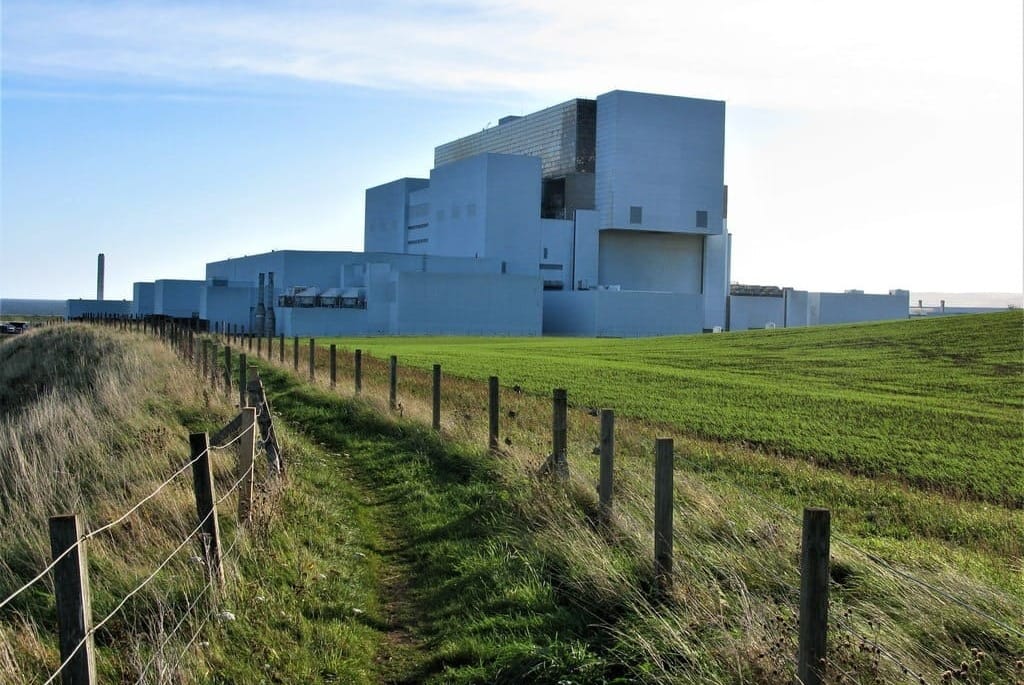
The general secretary of the UK Campaign for Nuclear Disarmament, Sophie Bolt, argued the government would be “better off pursuing an energy strategy that focuses on genuine renewables like wind, solar and tidal”.
"It's very concerning to see that in the three years since an eight-year high in security breaches was revealed within Britain's Civil Nuclear Constabulary, very little appears to have been done to tackle the issue,” Bolt claimed. “Nuclear power is a costly, dirty and unsafe form of power generation that is tied to Britain's nuclear weapons programme.”
Advocates of nuclear energy say it is essential for the UK to reach climate targets because it does not produce carbon emissions and provides back up power generation when renewable generation is not possible – such as when the sun does not shine or the wind does not blow.
A spokesperson for the CNC said it “treats any data breach or loss of information extremely seriously.”
They continued: “As a national armed police force of nearly 2,000 officers and staff we operate across multiple locations from the north of Scotland to the south of England, we handle significant volumes of information in support of our operational duties.
“We are proactive in encouraging reporting of all incidents, however minor. Where they do occur, they are recorded, investigated and managed under robust information security procedures, and reported to the Information Commissioner's Office where required.
"We take action on all incidents and seek to learn lessons and strengthen processes and practice. This has included training interventions where patterns have been identified.”

Derelict buildings across Scotland are creating a plethora of problems. Local communities are bearing the brunt.

A total of 36 boats have been fined £140,000 in the last 10 months for entering Scotland's marine protected areas. But campaigners claim the fines are too small and may not be a sufficient deterrent.

The university has continued to argue staff cuts are needed to make ends meet. But a growing cash balance has raised questions about the need for more redundancies, and whether it qualifies for millions in public support.

Gypsy Travellers have been persecuted for centuries. But despite a Scottish Government apology last June for the Tinker Experiment – which tried to assimilate them into settled culture – some claim their cultural rights are still being denied.
