

Claim 'abortion to birth' is now legal in the UK is Mostly False
Changes to abortion law in England and Wales have been misrepresented on social media.
Changes to abortion law in England and Wales have been misrepresented on social media.
Climate change is causing rising sea levels and coastal erosion and 109 Scottish golf courses are at risk. We examined the issue as part of Green drive: Golf and the environmental crisis – a special Ferret series on golf and the environment.
The Ferret exposed the extreme views of Reform UK’s Scotland’s candidates before Nigel Farage promised to improve his party’s “poor” vetting processes, but many of them have been re-selected to fight the Holyrood election.
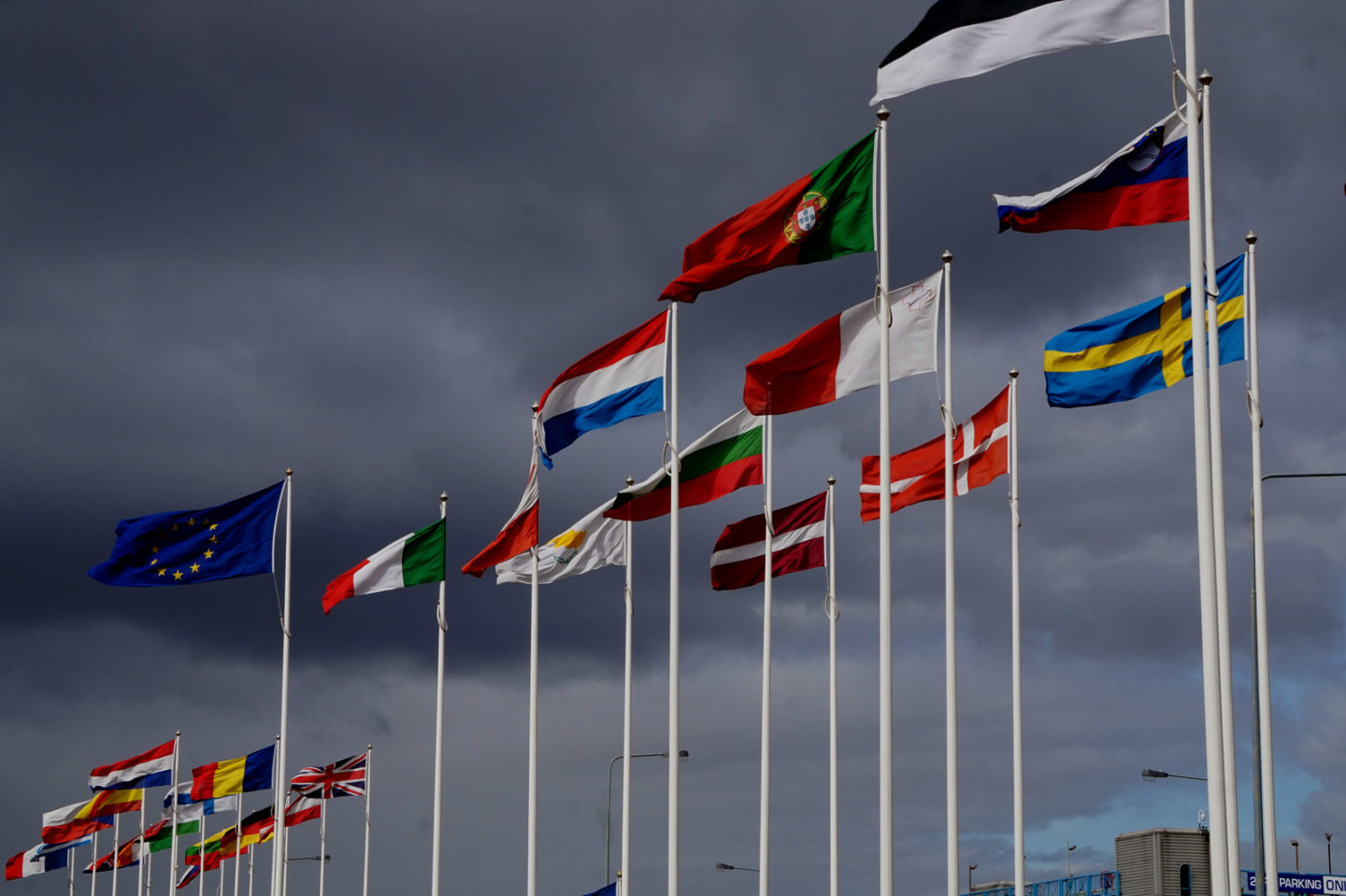
The economic impact of Brexit has been widely discussed since the referendum campaign began, but one Conservative MP recently questioned whether EU membership had been positive for the UK economy.
Prominent Eurosceptic MP John Redwood took to social media to cast doubt on the economic benefit to Britain of European Union membership.
[sc name=”FFS”]
In a tweet, the veteran Tory politician suggested that given a supposed lack of economic growth when the UK joined the European Economic Community, there would likely be no contraction when Brexit is completed.
[aesop_quote type=”block” background=”#282828″ text=”#ffffff” align=”center” size=”1.5″ quote=”There is no evidence that joining the EEC or the single market boosted UK growth so it’s difficult to see how leaving will do the opposite.” cite=”John Redwood MP” parallax=”off” direction=”left” revealfx=”inplace”]
Ferret Fact Service looked at this claim and found it to be Mostly False.
Britain joined the European Economic Community (EEC), a common market which predated the European Union, in 1973.
It was created in 1957 in order to promote economic integration between its members, and continued until it was effectively absorbed into the European Union with the 1992 Maastricht Treaty.
It removed trading tariffs within its membership, and established a common external trade policy.
The single market is the name given to the European Union’s attempt to remove costs and restraints on trade between member states.
FFS explains: how does EU trade work?
John Redwood’s claim is that Britain joining the EEC and the single market had no effect on UK growth.
Growth is usually measured by looking at gross domestic product (GDP), which is the value of all of the goods made, and services provided, during a specific period of time. Simply put, if the GDP is higher than the previous period then the economy is expanding.
It is difficult to say for certain whether the long-term economic growth of the UK was better or worse than it would have been outside the common market.
Overall growth has slowed across Europe since the post-war period, and the establishment of the European Union and EEC did not arrest that slide, but a number of studies have suggested that Britain’s entrance into the common market had a positive effect on its economy.
if(“undefined”==typeof window.datawrapper)window.datawrapper={};window.datawrapper[“i2nKl”]={},window.datawrapper[“i2nKl”].embedDeltas={“100″:457,”200″:374,”300″:374,”400″:348,”500″:348,”600″:348,”700″:348,”800″:348,”900″:348,”1000”:348},window.datawrapper[“i2nKl”].iframe=document.getElementById(“datawrapper-chart-i2nKl”),window.datawrapper[“i2nKl”].iframe.style.height=window.datawrapper[“i2nKl”].embedDeltas[Math.min(1e3,Math.max(100*Math.floor(window.datawrapper[“i2nKl”].iframe.offsetWidth/100),100))]+”px”,window.addEventListener(“message”,function(a){if(“undefined”!=typeof a.data[“datawrapper-height”])for(var b in a.data[“datawrapper-height”])if(“i2nKl”==b)window.datawrapper[“i2nKl”].iframe.style.height=a.data[“datawrapper-height”][b]+”px”});
A review of academic research into the economic impact of EU membership by the Centre for Competitive Advantage in the Global Economy at the University of Warwick found that “EU accession typically has had a substantial and statistically significant impact on growth relative to the counterfactual of staying out”.
The timing of the UK’s entrance in 1973 was an important factor. If the UK had stayed outside the EU “it seems very likely that growth of real GDP per person would have continued to lag behind French and German rates,” it says.
The Financial Times analysed the growth effect of joining by contrasting the economy of the UK relative to the three founder members of the EEC – France, West Germany and Italy.
Comparing GDP growth rates of the UK and the combined average of the original members suggests that joining allowed the UK to catch up and eventually surpass their economies.
However there is debate about whether this was the chief reason behind the UK’s increased growth, with some experts arguing that the rapid growth of France, West Germany and Italy “was initially due to post-war reconstruction and then to post-war economic reforms”, rather than causally linked to the EEC.
if(“undefined”==typeof window.datawrapper)window.datawrapper={};window.datawrapper[“xoalq”]={},window.datawrapper[“xoalq”].embedDeltas={“100″:526,”200″:442,”300″:416,”400″:400,”500″:400,”600″:400,”700″:400,”800″:400,”900″:400,”1000”:400},window.datawrapper[“xoalq”].iframe=document.getElementById(“datawrapper-chart-xoalq”),window.datawrapper[“xoalq”].iframe.style.height=window.datawrapper[“xoalq”].embedDeltas[Math.min(1e3,Math.max(100*Math.floor(window.datawrapper[“xoalq”].iframe.offsetWidth/100),100))]+”px”,window.addEventListener(“message”,function(a){if(“undefined”!=typeof a.data[“datawrapper-height”])for(var b in a.data[“datawrapper-height”])if(“xoalq”==b)window.datawrapper[“xoalq”].iframe.style.height=a.data[“datawrapper-height”][b]+”px”});
Highlighted in the above graph are the creation of the EEC in 1958, the UK’s entry in 1973, the Maastricht treaty in 1992, and Britain’s Brexit vote in 2016.
Research by economist Nauro Campos looked at a hypothetical situation where Britain did not join the common market in 1973, and found that the UK had benefited from 23.7 per cent per capita increase in GDP since accession. In Campos’s analysis, only Greece had not benefited from a GDP increase after joining the EU.
John Redwood’s claim that there is no evidence that joining the European Economic Community had a positive effect on UK growth is misleading. A number of academic studies have found that the UK’s GDP growth improved after joining the EEC, and while overall growth has slowed across Europe, the UK’s growth has accelerated compared to European neighbours. However, it is not possible to say for certain whether the EEC was the main driving force behind such improvements in the economy.

[aesop_content color=”#ffffff” background=”#333333″ width=”content” columns=”1″ position=”none” imgrepeat=”no-repeat” floaterposition=”left” floaterdirection=”up” revealfx=”off”]Ferret Fact Service (FFS) is a non-partisan fact checker, working to the International Fact-Checking Network fact-checkers’ code of principles. All the sources used in our checks are publicly available and the FFS fact-checking methodology can be viewed here. Want to suggest a fact check? Email us at factcheck@theferret.scot or join our community forum.
[/aesop_content]
John Redwood MP did not respond to a Ferret Fact Service request for evidence.
Photo thanks to Ian S, CC BY-SA 2.0
[aesop_content color=”#ffffff” background=”#ffffff” component_width=”750px” columns=”1″ position=”none” imgrepeat=”no-repeat” floaterposition=”left” floaterdirection=”up” revealfx=”off”]https://www.sharethefacts.co/share/a58cb7e3-2853-4333-8122-739046b88b5d
[/aesop_content]

Changes to abortion law in England and Wales have been misrepresented on social media.

The Ferret exposed the extreme views of Reform UK’s Scotland’s candidates before Nigel Farage promised to improve his party’s “poor” vetting processes, but many of them have been re-selected to fight the Holyrood election.

Online claims questioned Scottish Labour's house building in government between 1999 and 2007.

A quote attributed to Reform UK's Richard Tice has gone viral in recent weeks.


