

Sepa branded ‘toothless’ after salmon farm accused of 15 environmental breaches
The Scottish Government’s green watchdog sent seven letters over three years alleging multiple breaches at a fish farm – and then issued a final warning letter.
The Scottish Government’s green watchdog sent seven letters over three years alleging multiple breaches at a fish farm – and then issued a final warning letter.

This US-style right-wing political pressure group keeps its funders a secret. Its members have helped man Scotland’s anti-migrant and asylum demonstrations.

Adult adoptees are calling for access to genetic testing to address the ‘health gap’ caused by their lack of information about genetically inherited conditions.
Offshore companies which own Scottish land are breaking the law by failing to reveal who they really represent. Authorities aren't bothering to check.


Russian oligarchs, billionaires, foreign governments, international royalty, and banking giants are among those behind nearly 1,000 offshore entities who are illegally flouting the land control registry, The Ferret can reveal.
We found that around two-thirds (956) of the 1,447 overseas firms which own Scottish land and should appear on the publicly-available log are absent.
Their assets, typically owned via tax and secrecy havens, include castles, sporting estates and prime city centre real estate worth tens of millions of pounds.
Offending landowners have been linked to fraud and money laundering, while some firms who oversee landowning entities previously failed to prevent serious financial crime risks.
The register was introduced by the Scottish Government in 2022 with the stated intention of uncovering who controls swathes of the country’s land. But the widespread non-compliance we have uncovered means that who controls swathes of Scotland remains a mystery. Meanwhile, some who benefit from public subsidies for land management are avoiding scrutiny.
 Jamie Mann
Reporting you can check, not just share.
We publish rigorous, sourced journalism and we correct it when it’s wrong. If you value facts over noise, help keep this work independent.
Land and anti-corruption campaigners claimed the register had “failed” and required an overhaul with proper checks and enforcement.
The Liberal Democrats called for an “immediate and thorough investigation”, while the Greens said our findings show that parliament must ensure “legislation is properly enforced”.
The controllers of 60 per cent (1,766) of the 2,959 offshore-owned properties we analysed were not disclosed on the Register of Persons Holding a Controlled Interest in Land (RCI). But The Ferret was able to identify hundreds of the beneficial owners behind them.
As well as some of the world’s wealthiest people, they include real estate bosses, wealth managers and veteran lawyers who proclaim legal prudence.
The 956 offshore companies should each risk up to a £5,000 fine for failing to register – as much as £4.8m in total – which a land expert derided as a “weak" deterrent. Regardless, no authority was tasked with monitoring the RCI after the rules came into force in 2024.
After regulations were passed unanimously by the Scottish Parliament, the RCI was launched with the aim of boosting transparency about who makes decisions about the management or use of land.
Then-land reform minister Màiri McAllan said it would make Scotland “a frontrunner in Europe and deliver greater transparency than any other part of the UK”. She wanted to ensure that control of land could not be obscured, including “via overseas trusts or entities”.
Registers of Scotland was tasked with establishing and maintaining – but not enforcing – the RCI, which said it would “deliver valuable insight to citizens and communities”.
RCI rules state that ‘recorded persons’ – which explicitly include overseas entities – must log details about themselves, their land, and their ‘associates’. Recorded persons are landowners or tenants on a longer 20-year lease, while associates control the land.
We assessed non-compliance by checking whether the 1,447 entities listed on Registers of Scotland’s latest report into offshore property owners as of 31 December 2025, featured on the RCI on 20 March this year.
Of the 956 companies that didn't, we identified hundreds who disclosed their beneficial owners in the UK Register of Overseas Entities (ROE), which has considerably stronger monitoring, enforcement and penalties than the RCI.
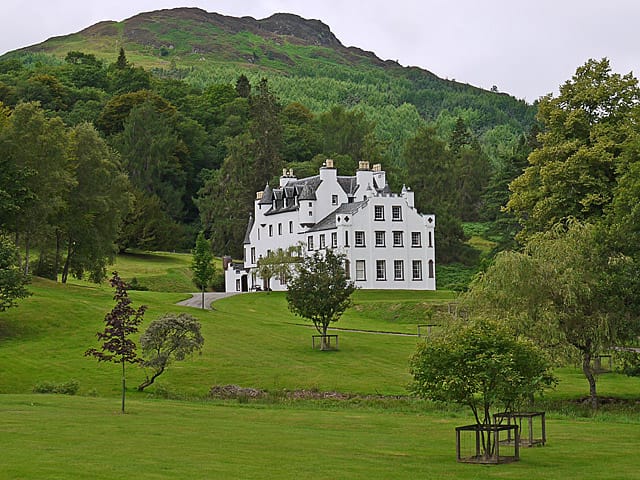
Large estates are among unregistered properties, making it unclear who makes decisions about a range of issues including conservation, sporting activities, forestry, energy projects and public access.
Parts, or all of Kinpurnie Castle in Angus, Calgary Castle in Mull, Farleyer Estate near Aberfeldy, Murdostoun Castle in North Lanarkshire, Auchinfroe House estate near Cardross and Edinburgh’s Dundas Estate are absent from the RCI. So are the Gualin, Struy, Pitlundie, Shurrery, Pitmain and Glenbanchor Highland estates.
Land expert Andy Wightman notified Police Scotland of non-compliance by the owners of North Glenbuchat in Aberdeenshire, among others. The estate – reportedly owned by a wealthy aristocrat with strong ties to the Royal Family – has since registered.
Wightman claimed officers referred two cases to the Crown Office, but it declined to take action. Police allegedly did not act on other breaches that he reported, although some were still outstanding, he added.
The Ferret found that Aberuchill Castle, an unregistered Perthshire estate, is owned by Liudmila Lisina via a British Virgin Islands firm. In 2022, it was reportedly held by her husband, Russian oligarch Vladimir Lisin.
The billionaire is sanctioned in Ukraine, Canada and Australia for allegedly providing steel to Kremlin weapons firms and bankrolling Vladimir Putin’s party.
Overseas governments and banking giants are behind some offending firms. They include the Crown Prince of Dubai – a member of the UAE’s ruling royal family and owner of a firm behind Rynagoup Wood near Forres.
The State of Qatar enjoys unrecorded salmon fishing rights in rivers at Cluny Estate near Kingussie via a Jersey firm, while the governments of Singapore and Alberta, Canada are behind nearly £35m of unregistered Glasgow property via Luxembourg and Jersey entities.
When contacted by The Ferret, Singapore said responsibility lay with its Jersey firm, which had now pursued registration.
A subsidiary of JPMorgan Chase, one the world’s largest banks, has a £28m unregistered city property portfolio, while a Jersey firm controlled by an HSBC subsidiary failed to log property in Ayr, Elgin and Peterhead. HSBC declined to comment.
Parts of Buchanan Castle Estate and Balmaha Bay, held by a Royal Bank Of Canada-owned Jersey firm, are absent from the RCI, although properties it did log name the Duke of Montrose as a controller.
Many firms which failed to comply with Scottish land laws are controlled by legal professionals.
The chair of Scottish law firm Turcan Connell, Alexander Garden, offers governance advice to clients including “landed estate owners”. But a Jersey firm he administers failed to register parts of Dundas Estate. Turcan Connell declined to comment due to “client confidentiality”.
The boss of Edinburgh’s QMile, Paul Curran, owns a non-compliant Isle of Man company behind the city’s luxury Craighouse development, while Line Trust Corporation, which is linked to Gibraltar’s top law firm, administers an entity with unrecorded Aberdeen land.
 Jamie Mann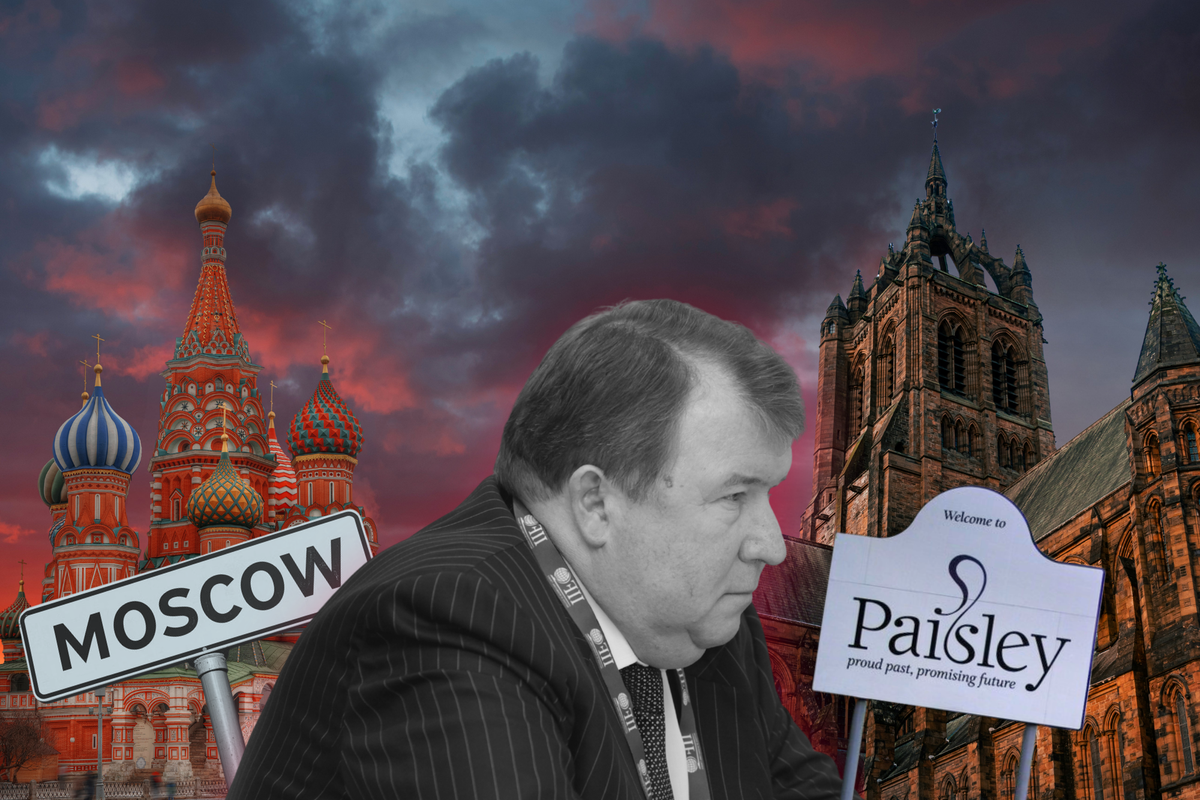
Last year, The Ferret revealed that a British Virgin Islands firm was secretly owned by Nikolay Kosov, a KGB-linked Russian oligarch praised by Putin. It has still not logged its dozens of car parking spaces near Glasgow airport.
Neither have offshore firms including care home giant HC-One, steel magnate Sanjeev Gupta, and US real estate boss, Keith Breslauer, whose Luxembourg firm bought the Livingston Designer Outlet for £101m in 2017.
Other sky-high value unregistered properties are Standard Life House in Edinburgh, acquired for £94m in 2015 by a Guernsey company co-owned by an Indian billionaire, and a £68.5m chunk of Edinburgh’s luxury Quartermile development, owned by a firm controlled by German investment managers.
Representatives of the Quartermile firm vowed to register after being questioned by The Ferret.
Some of those behind unregistered offshore firms have been mired in dirty money allegations or safeguarding failures.
Bermuda’s Butterfield Bank oversees a BVI firm which bought property in Port Glasgow, and the Sweet Chestnut pub in Dunfermline in 2021. Months later, it paid $5.6m to the US government to settle a tax evasion case.
Michael Burke Jr, part of one of Ireland’s richest families, owns £25.5m of land in Edinburgh, and the former Gretna Golf Course in Dumfriesshire via Guernsey firms. He was linked to a £5bn crypto money laundering scam in 2024, but denied any involvement. Burke could not be reached.
Vistra Trust, a trustee of a firm which owns East Calder property, was fined £640,000 in 2022 for breaching Singapore's anti-money laundering and terrorist financing rules, while Belasko, the trustee of an entity with nine Highland properties, was fined for flouting these safeguards in Jersey in 2024.
In the same year, Guernsey’s financial regulator fined Zedra Trust Company and blacklisted a former officer for helping to hide the beneficial ownership of an entity by a businessman arrested for suspected fraud, bribery, and corruption. A branch of Zedra administers a firm with unrecorded property in Paisley.
Umena Management failed to register its Cairngorm land. In 2024, we highlighted that Alexander Jeeves – the head of a group which ultimately owns the trust behind Umena – was entangled in an alleged £800m money laundering and fraud scam. Jeeves said his clients had managed the US scheme, but he paid a settlement and the judgement was lifted.
Land expert Wightman said The Ferret’s investigation shows that “the RCI has failed in a big way and at the heart of the problem is a failure to monitor compliance and prosecute those persons who have committed offences”.
James Bolton-Jones, senior policy researcher at Spotlight on Corruption, agreed.
“A failure to introduce a compliance monitoring mechanism completely undermines the credibility and effectiveness of the register,” he said. “The role of lawyers and wealth advisors – who we know can be both witting and unwitting enablers of money laundering – in flouting the rules is particularly troubling.”
Dr Josh Doble of Community Land Scotland called for a comprehensive system to collect data on land ownership and use. “If we don’t know who ultimately owns land we cannot address corruption, poor land management or start to build the policies that will fully tackle the big challenges facing society,” he argued.
Juliet Swann of Transparency International UK highlighted that the SNP’s 2026 manifesto promised “robust anti-avoidance measures" to “make land ownership transparent”. She offered to help ministers develop an effective enforcement plan. Otherwise, “loopholes will continue to be exploited”, warned Swann.
 Jamie Mann
Green MSP Ariane Burgess said a functioning RCI was necessary to reveal who benefits from public money for tree planting, peatland restoration and other support payments. But The Ferret’s findings “underlines how much work we still need to do to hold the vested interests accountable and to ensure that our legislation is properly enforced.”
She added: “It shouldn’t be down to hardworking journalists to uncover information like this which should be widely available.”
Lib Dem MSP Willie Rennie added: “This requires an immediate and thorough investigation as there is little point in passing new laws if they are not enforced.”
Registers of Scotland stressed that it has no role or powers relating to compliance or enforcement. The Scottish Government said: “Enforcement of the law is an independent matter for Police Scotland.”
Police Scotland said it was working to “increase awareness and understanding of the legislation” while “any report received will be thoroughly investigated to establish if there has been any criminality.”
Every beneficial owner named in this article was approached for comment.
Help us keep digging.
If this investigation mattered to you, you can help fund the next one. The Ferret is Scotland's independent, member-owned investigative journalism, backed by readers who want accountability.

A string of central Glasgow properties are owned by a company belonging to the head of an investment firm behind a Russian shipping hub. Researchers say the port sustains Moscow’s illegal invasion of Ukraine.

The Ferret did a deep dive into the Electoral Commission’s donation records to find out who was funding Scotland's political parties.

A Russian oligarch praised by Vladimir Putin has amassed a UK property portfolio under the veil of secretive offshore trusts, The Ferret can reveal. Anti-corruption campaigners say our investigation is a “shocking indictment” of the UK’s “dirty money” defences.

The Ukrainian tech tycoon building Scotland’s first orbital rocket — and the offshore links raising transparency questions.
