Authorities tightened the rules around this Scottish business scheme after years of exploitation for financial crime. Moscow entities – and a man accused of facilitating child sex abuse – are still selling it to clients seeking “financial privacy”.
The Scottish Government’s green watchdog sent seven letters over three years alleging multiple breaches at a fish farm – and then issued a final warning letter.
This US-style right-wing political pressure group keeps its funders a secret. Its members have helped man Scotland’s anti-migrant and asylum demonstrations.
Big tech should be held accountable in court for threats of violence against women, say campaigners
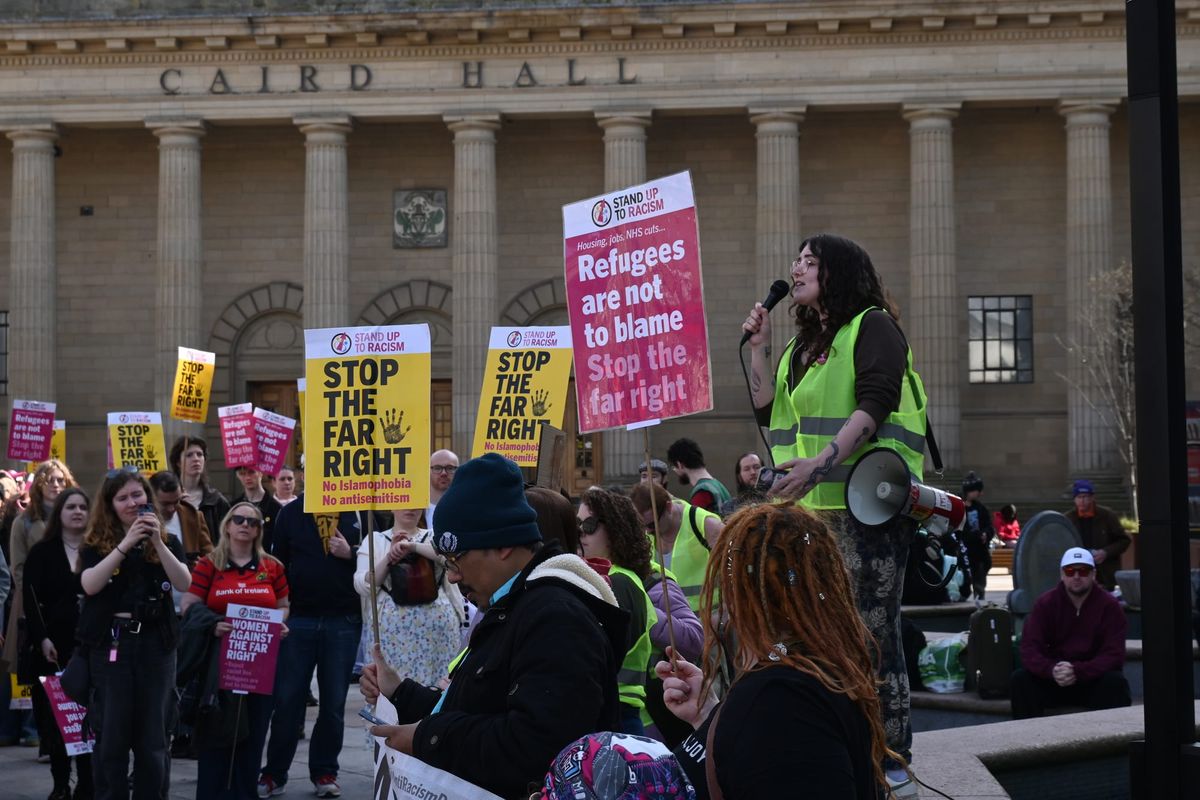
Women supporting refugees have been abused, followed and threatened by men in anti-immigration groups who claim they want to protect women. Now there are calls for big tech to do more.
Social media companies should be held legally accountable for threats of violence made against women on their platforms, say Scottish campaigners.
Organisations supporting women have also called for “more effective” policing at anti-asylum protests in Scotland while claiming there is a “clear lack of understanding of just how much of a threat the far right” is to women's safety.
They commented following a Ferret investigation which revealed that women supporting refugees have been attacked, followed and threatened by men involved with anti-immigration groups who claim they want to protect women.
At least 14 women have been abused including one anti-racist campaigner who was “threatened multiple times with multiple gang rapes, in multiple orifices”.
Our investigation followed a Ferret story last December revealing that neo-Nazis and white supremacists were exploiting anti-asylum protests in Scotland, amid a rising tide of violence and far right activity.
Owned by readers. Built for accountability.
The Ferret is member-owned journalism. That means we can follow leads that matter even when they’re uncomfortable for the powerful.
Commenting on our findings, Talat Yaqoob, co-convenor of Women Against the Far-Right Scotland, accused social media companies of making money by “encouraging hate” and of failing to protect women despite people repeatedly reporting online threats.
“The billionaire owners of these platforms need to be held to account and those who are threatening violence or harassing the women involved in our campaigning should be banned and dealt with properly by policing,” said Yaqoob. “We also need to take this more seriously across Scotland as a whole – this is not something on the fringes to dismiss, this a real threat causing division and harm across our communities.”
Tara Lillis, chair of the STUC women’s committee, said trade unionists and anti-racism activists have faced “significant personal impacts” for campaigning against “racists and fascists” both online and in person. She argued there is a need for both “individual and corporate responsibility” for the “sustained psychological abuse” of women online.
“We must reform our corporate criminal liability laws, including corporate manslaughter regulations, to ensure those platforms who routinely turn a blind eye to the online abuse suffered by women are taken to task,” Lillis added.
Rape Crisis Scotland echoed calls for better online protection for women and said many have joined protests because they feel that some politicians and groups are “exploiting fears” about violence against women and girls and “spreading lies about who is responsible for it to divide communities and further their own popularity”.
A spokesperson for the charity told The Ferret: “The irony is not lost on us that these women [who spoke to The Ferret] have been threatened, harassed and harmed in the process of standing up for themselves and others.”
They added: “We need more progress from justice agencies there, but we also need to think about social media platforms which continue to facilitate this type of abuse and engage algorithms which appear to actively encourage it.”
According to Dr Judith Sijstermans, a lecturer in politics at the University of Aberdeen, Scots far right groups have adopted an ideological world view that includes a “traditional, binary understanding of gender” and they consider migrants as threatening to women, whom they portray as victims requiring protection.
“Far right groups in Scotland portray themselves as 'patriots' and defenders of the 'homeland',” she added. “We regularly see AI-generated images that portray their members as warriors, almost exclusively male. Some groups have sought to turn this into action by trying to organise street patrols aimed at protecting women and girls.”
Police Scotland said its role is to “ensure public safety while balancing the rights of protesters” who wish to peacefully demonstrate. Anyone involved in an offence may face arrest and potentially a jail sentence, a spokesperson said, adding that “even if you are not caught on the day, we have significant evidence-gathering resources at our disposal, and you will be identified.”
Rachel Adamson, co-director of Zero Tolerance, urged the Scottish Government to invest in "evidence based prevention" of men's violence against women and girls, including community prevention programmes for men and boys. There should also be better relationship and sex education in all Scottish schools, the charity argued, adding that "promised" legislation on misogyny and human rights" should be progressed.
Keep this reporting independent.
No billionaire backers. No corporate agenda. Just public-interest journalism funded by readers.
Billy is a founder and co-editor of The Ferret. He's reported internationally and from Scotland, and focuses on far right extremism, human rights, animal welfare, and the arms trade. Likes longform storytelling and photography.
Authorities tightened the rules around this Scottish business scheme after years of exploitation for financial crime. Moscow entities – and a man accused of facilitating child sex abuse – are still selling it to clients seeking “financial privacy”.
The Scottish Government’s green watchdog sent seven letters over three years alleging multiple breaches at a fish farm – and then issued a final warning letter.
This US-style right-wing political pressure group keeps its funders a secret. Its members have helped man Scotland’s anti-migrant and asylum demonstrations.
Adult adoptees are calling for access to genetic testing to address the ‘health gap’ caused by their lack of information about genetically inherited conditions.