

Adult adoptees are taking desperate measures to obtain their family ‘health histories’
Adult adoptees are calling for access to genetic testing to address the ‘health gap’ caused by their lack of information about genetically inherited conditions.
Adult adoptees are calling for access to genetic testing to address the ‘health gap’ caused by their lack of information about genetically inherited conditions.
Wildlife is under threat from water pollution caused by pesticides which are hazardous, widespread and persist for years.

We looked at inspection reports from the body which certifies “highest standard” farms with a public-facing ‘green tick’ — and found there have been breaches of its rules at dozens of fish farms.

Four Scottish council pension funds are invested in an oil facility targeted by Iranian drones.


Council workers in Scotland have their pensions invested in a Middle Eastern oil terminal that was battered by Iranian drone strikes last month, an investigation has revealed.
The Bureau of Investigative Journalism (TBIJ) – which shared its findings with The Ferret – found council pension schemes in north east Scotland, the Borders, Shetland and Orkney have ploughed hundreds of millions of pounds into an investment vehicle that co-owns an oil facility in the United Arab Emirates.
The oil terminal – VTTI Fujairah – was struck by drones on 4 May during Iranian attacks on energy infrastructure in the region. Three people were injured and a fire broke out, with videos showing black smoke billowing into the sky.
The wider oil infrastructure in the UAE port city of Fujairah has become increasingly important during the current US/Israeli war with Iran because it allows exports to bypass the Strait of Hormuz. Fujairah has come under multiple attacks since the conflict began.
Experts questioned whether pension savings were being put at risk through investments in “politically unstable regions”. One claimed pension funds should reconsider whether “financially risky” fossil fuel assets could still deliver long-term returns.
However, the pension funds that responded to The Ferret said their exposure to the Fujairah oil terminal was very small relative to their overall portfolios and stressed that they always held a “diverse range of investments”.
Fund journalism that serves the public.
The Ferret investigates what’s going on in Scotland, and who benefits. Reader support keeps our journalism independent.
The North East Scotland Pension Fund, which manages savings for council workers in Aberdeen, Aberdeenshire and Moray, has the largest exposure. Its stake in the vehicle – the Global Infrastructure Fund (GIF), managed by Australian company IFM – was worth £342.5m at the end of March, it confirmed.
Shetland Islands Pension Fund has added a further £98m to GIF since the start of this year, taking its total investment to £177m – almost 20 per cent of its total portfolio.
The pension schemes covering Orkney and Scottish Borders councils have also invested tens of millions of pounds in the fund.
GIF owns 45 per cent of VTTI, the energy company that in turn owns the oil storage and refinery facility in Fujairah.
These Scottish investments form part of a wider UK picture uncovered by TBIJ, with help from investigative outlet Data Desk and the non-profit Private Equity Stakeholder Project.
Their investigation found that local government pension schemes across Britain have invested almost £3bn in infrastructure funds that own assets either under fire or under threat because of the war in the Middle East.
 Paul Dobson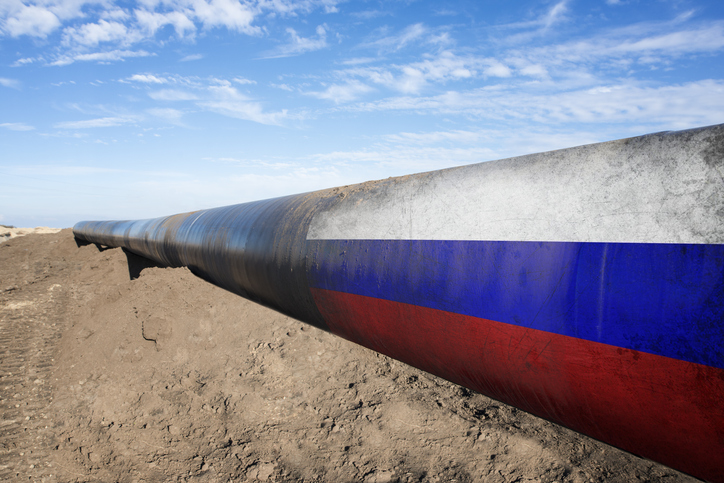
These infrastructure funds pool money from other investors such as pension schemes and use it to buy stakes in assets including oil terminals, pipelines, and ports, with the aim of generating long-term returns.
It is not the first time a Scottish pension scheme has had hidden exposure to a war through its investment in one of these funds. In July 2023, The Ferret revealed that the Lothian Pension Fund had £17m invested in another infrastructure fund that owned a major pipeline transporting Russian gas to Europe during the war in Ukraine.
Guy Prince, head of energy supply research at the think tank Carbon Tracker, said the findings raised the question of “whether long term pension savings should depend on politically unstable regions and an uncertain future energy demand”.
Prince added: “Fossil fuels are financially risky now and their resilience is hugely in question. Pension funds really have to consider whether these assets remain appropriate for long-term, stable returns.”
He argued that major fossil fuel shocks from the Iran and Ukraine wars have “really strengthened concerns around global energy security”. “It has strengthened the case for renewables, or electrification and energy efficiency as more secure alternatives [for investors],” Prince claimed.
“Public money must be used for public good.” — Maggie Chapman MSP, Scottish Greens
Maggie Chapman, the Scottish Greens MSP for north east Scotland, called for the pension funds to “ditch these damaging investments and focus on building a fairer, greener future”.
“Public money must be used for public good,” Chapman said. “There are numerous opportunities to invest in our renewable energy sector, and it is crucial that governments and public bodies look to these spaces for investment.”
Orkney Islands Council said that the pension fund’s “indirect” investment in VTTI equated to only around 0.17 per cent of its total holdings.
“The pension fund has an approved investment strategy that ensures a diverse range of investments that provide growth, income and protection [for savers]”, a spokesperson noted.
Shetland Islands Council said its pension portfolio is “under constant review”. “If we felt that certain types of investment represented an unacceptable financial risk we would consider a change but at this time this is not the case and we remain confident with IFM’s performance,” they added.
North East Scotland Pension Fund declined to comment while the Scottish Borders Pension Fund has not responded to questions from The Ferret.
IFM, which runs the GIF fund said: “Geopolitical risk reinforces the need for the diversification and long-term perspective IFM provides.”
“Our exposure to investments in the Middle East represents less than one per cent of IFM’s main portfolio,” they added.
Keep this reporting independent.
No billionaire backers. No corporate agenda. Just public-interest journalism funded by readers.

Adult adoptees are calling for access to genetic testing to address the ‘health gap’ caused by their lack of information about genetically inherited conditions.

We looked at inspection reports from the body which certifies “highest standard” farms with a public-facing ‘green tick’ — and found there have been breaches of its rules at dozens of fish farms.

Threats facing our mountains, forests and national parks are increasing, but the level of monitoring of our “protected sites” has almost halved in five years, Scottish Environment LINK has found.


The Scottish Government has been supportive of controversial green data centres and is liaising with the industry. But critics argue there are environmental considerations and companies must not be allowed to “write the rules”.