

New salmon farmers scheme condemned as “greenwashing opportunity”
A new scheme to penalise salmon farmers when fish escape has been launched. But we found it is controlled by the industry prompting criticism.
A new scheme to penalise salmon farmers when fish escape has been launched. But we found it is controlled by the industry prompting criticism.
Scotland may be set to host one of the world’s most powerful data centres. The Conservative Party’s money man stands to benefit.


The Scottish Funding Council has determined that the university has too much cash to receive a taxpayer bailout. Unions say it shows the level of cuts at Dundee is unnecessary.
The tiny Danish island of Bornholm was the site of one of the world’s first offshore wind turbines back in the 1940s. Now its citizens are fighting to build one of the largest community wind farms ever, and raise the benchmark of what’s possible for locally owned energy.


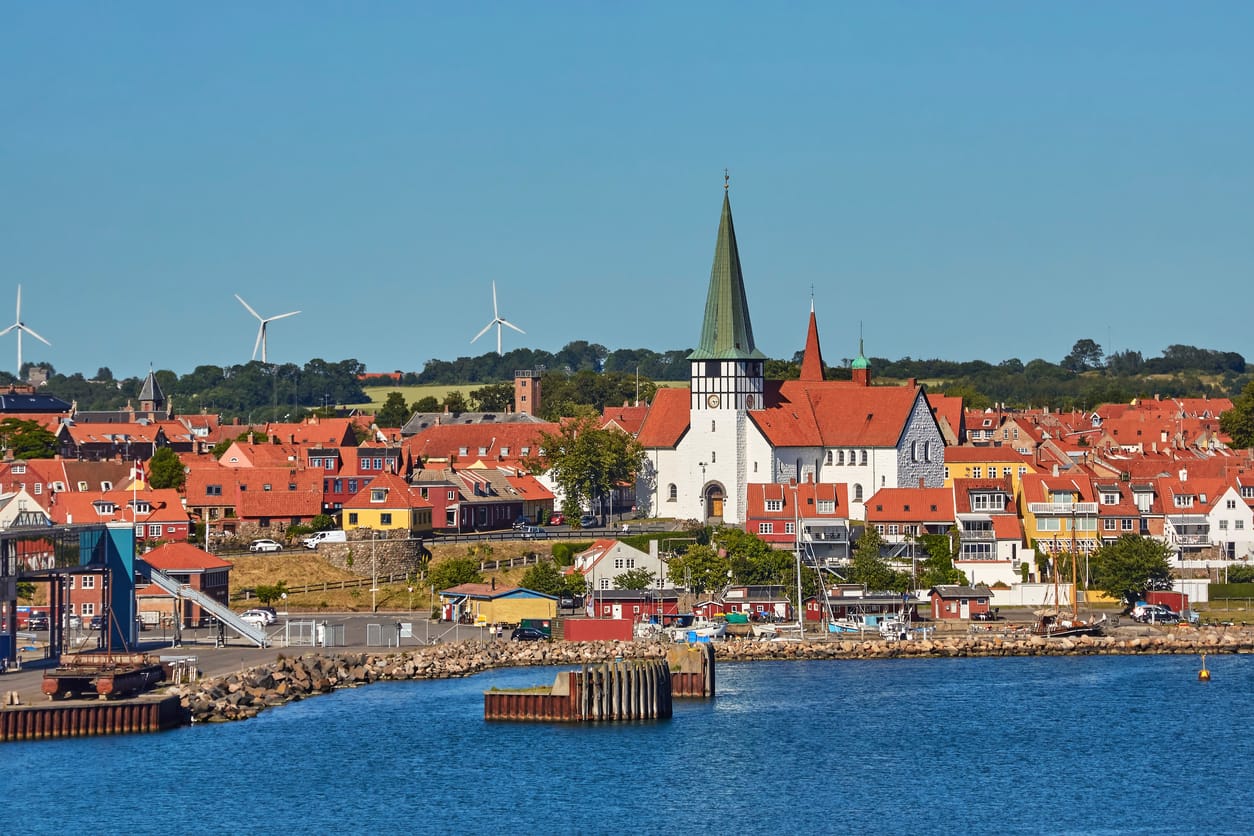
Spring has arrived on the Danish island of Bornholm, as the warm evening light begins to linger later into the day, stretching across the rocky coastline. Once, this tiny island of 40,000 inhabitants – about the same as the population of the Hebrides – was an independent kingdom.
Later it became an important stop-off and trading post for Vikings making their way between the Baltics and Western Europe. Colourful merchant residences and the chimneys of old herring smokehouses are lined up along the shore, a reminder of the island’s long standing dependence on the sea.
In many ways this place couldn’t be more different from Scotland’s islands, with its famous bright seasons having earned Bornholm the name of ‘sunshine island’. But just like them, it is rich in one particular source of clean energy – the wind. And that is now attracting the interest of many well beyond its coastal boundaries.
In Scotland a battle is raging over how citizens can reap the benefits of wind power to benefit their communities and energy bills alike. While there is a consensus that wind farms are an essential part of the energy transition required to tackle climate change, new projects by big corporations are often seen as unwelcome by local people, many of whom face fuel poverty and receive a fraction of the profits generated by turbines on their doorsteps.
The Ferret has covered the battle between communities and developers many times before, recently highlighting the millions made from wind farms by wealthy landlords. Denmark, by contrast, is decades ahead of Scotland and much of the rest of the world – according to some experts – when it comes to maximising what wind farms can bring to communities. And Bornholm has been at the very epicentre of the Scandinavian country’s push for a fairer energy system.
Fund journalism that serves the public.
The Ferret investigates what’s going on in Scotland, and who benefits. Reader support keeps our journalism independent.
This is an island with a long history of wind power. Post mills – probably the first kind of windmill in Europe – are believed to have existed here since the 1500s. Water mills have long utilised the streams cutting across the island - the Øle river helped grind ancient grains, including the emmer wheat, which still turns the island golden each summer.
The earliest wind turbines arrived in Bornholm in the 1940s, when Denmark was faced with the reality of oil and coal scarcity during World War II. It was then that the world’s first offshore wind turbine was placed in the shallow waters off Nexø, the island's second largest town.
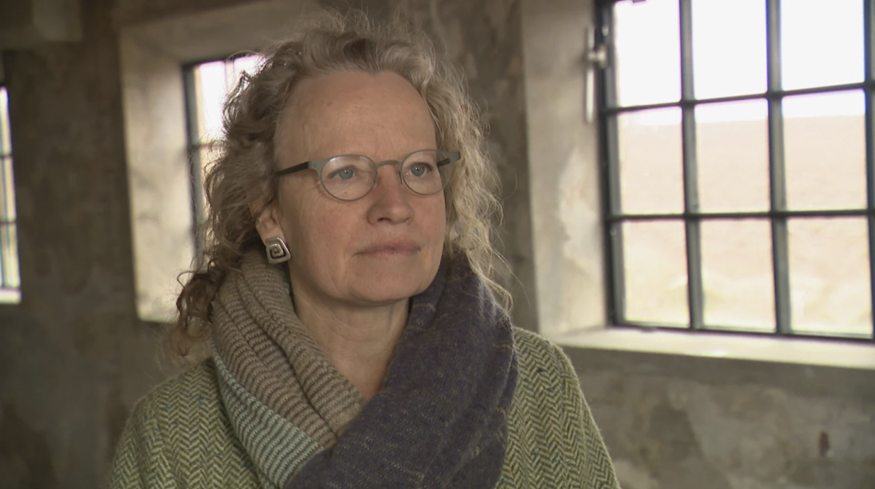
In Bornholm’s south-east, where the pine forests and farmlands give way to sandy beaches, Helle Munk Ravnborg, an environmental planner and researcher on the island, tells us more about its energy past. “Many of the small wind turbines on Bornholm’s land started out as cooperatively owned during the nineties, when groups of neighbours came together and decided to put up a few turbines,” she explains.
By Scottish standards, the 36 megawatts of wind capacity on Bornholm is relatively modest – the equivalent of a single small-to-medium sized wind farm. But unlike in Scotland, many of Bornholm’s turbines are owned directly by local people, farmers and businesses, meaning the economic benefits have stayed on the island rather than flowing to distant investors.
Now, almost 80 years after the first offshore turbine was installed, the local community is proposing to build something new – a 100 megawatt offshore project just off the Bornholm coast, 100 percent owned by local residents, companies and organisations which could make the island self-sufficient in renewable energy. If it goes ahead, it could be one of the biggest windfarms entirely owned by a local community in the world.
“As an island, we are very interested in producing our own energy and benefitting from this, both from an economic and environmental point of view,” explains Mads Meisner, who moved here with his wife Camilla and started farming sea buckthorn, the bright orange berries that grow wild across the island. “This could also become an important tourist attraction, which is also a great opportunity for our community.”
There is a catch though. So far proposals have been refused. But this community, say Ravnborg and Meisner, is not giving up.
According to the Climate Change Performance Index - a tool used to measure countries’ climate efforts globally - Denmark is already second only to Sweden when it comes to renewable energy growth. What’s exceptional here is that much of this effort has been led by Danish communities themselves. Since the late 1970s locals have been investing in collectively owned wind farms thanks to policies that facilitated them taking part in these developments.
Since 2008, for example, the country has required developers to offer 20 per cent ownership of new wind farms to locals and offered low cost loans to help communities take up the opportunity. This has meant that most projects developed since then have fostered partnerships with communities as co-owners.
“The idea of centralisation didn’t take root in Denmark’s planning processes as much as it did in other places, such as Sweden,” explains Henner Busch, a professor at Lund University who has spent years researching community energy in many Nordic islands. “There are many more examples of local energy companies on a small scale still operating here.”
In fact, by 2016, more than half of all wind turbines in Denmark were owned by citizens, and today the country alone hosts around 633 “energy communities” - citizen-led initiatives where local people, small businesses, and municipalities team up to produce, manage, share, and consume their own renewable energy.
Residents in Denmark can also come together in wind turbine guilds (vindmøllelaug) or cooperatives – a model deeply rooted in Danish society since the 1980s, when communities started investing collectively in wind turbines. Though policy changes since 1999 have made this more challenging, this culture is part of Danish DNA.
The most prominent example is Middelgrunden, just off the coast of Copenhagen, where twenty wind turbines stand tall off the capital’s shore. When built in 2000, this was the largest offshore windfarm in the world, owned by a cooperative of residents in partnership with the City of Copenhagen utility company. To this day, 8,800 citizens are still reaping the benefits of the shares they own in this project.
For over two decades, Morten Westergaard has worked as head of climate at his local municipality in Middelfart, in the heart of Denmark, before becoming the chair at the National Association of Energy Communities (Energifællesskaber Danmark). “Working together in communities is pretty Danish in many ways,” he says – speaking from experience.
Westergaard has witnessed the benefits of both renewables and community ownership first hand and has recently been appointed by the EU to help roll out the Danish model more widely across Europe.
He says building more locally owned wind projects can play an important role in increasing energy security, which has been a key concern of governments across the EU since the start of the war in Ukraine. “Local production is also about not being dependent on big gas pipes from Russia or cables being cut over by trawlers,” he explains. “If we build a windfarm together, we know what electricity prices will be for the rest of the wind turbines’ lifespan.”
In Scotland wind farm proposals often pit locals against giant corporations and there is a growing backlash against the renewables industry in some rural areas. In Denmark, Westergaard says, projects are often seen by locals as a symbol of their country’s environmental efforts and progressive thinking, as well as a tangible opportunity to enrich and care for their community.
This is why Scottish campaigners are increasingly looking to Denmark for solutions. Last month a collection of environmental campaigners including Platform and Uplift launched the Our Power campaign, which is calling for increased public and community ownership of energy, as well as better financial incentives from developers and more transparency about the profits they are making.
Research commissioned by the campaign, and published last week by the Centre for Local Economies, insists wind power is fundamental to Scotland’s ambitions for a fair transition. But reform is needed, the report says, calling out the current “wealth extraction” from Scotland.
 Louis Boyd-Madsen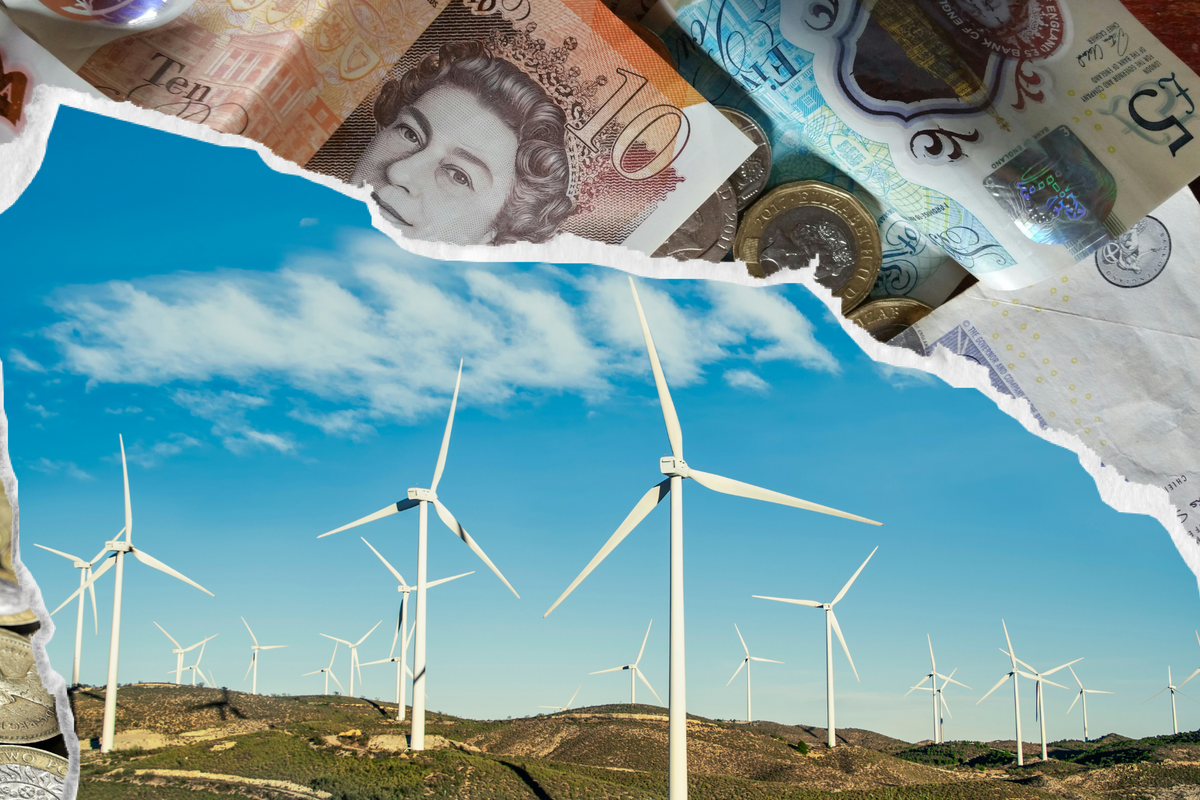
Report authors found that 105 Scottish onshore wind farms made £2.83bn in post-tax profits in the last five years, but 90 per cent of this went to corporate shareholders including private equity firms and companies linked to tax havens. By contrast – according to one study – community ownership of wind farms results in benefits to locals that are 34 times higher than private or corporate ownership.
“Across Scotland, communities have seen renewables infrastructure go up around them but they haven’t felt the benefits,” explains Liam Hainey, spokesperson for Our Power. “While renewables are generating billions of pounds in profits, vanishingly little is actually staying in Scotland; most of that money disappears into the pockets of big corporations and super-rich investors.
“There are lots of examples of successful community owned energy projects in Scotland generating revenue which is invested right back into the area that hosts them. However, there could be many more projects across the country – we’re languishing so far behind our European neighbours in terms of community ownership. As it stands, the energy system doesn't deliver for most of us and failure to change it threatens to undermine the transition on a fundamental level.”
The Scottish Government, he argues, should be providing more support and developing a proper roadmap towards expanding community and council ownership across the country but that’s not the limit of its power in this area, insisting ministers have “significant powers” to change things. But while there are lessons to learn from Denmark, in Scandinavia campaigners and experts claim that even here there is need for further reform.
Morten Westergaard says corporations still ultimately dominate the Danish landscape. “In Denmark some developers are telling people they are shareholders, but they might go bankrupt or sell the whole project,” he says. In contrast, he says, full community ownership changes the power dynamic. “If you own the local production, you access this electricity in your house until the wind turbines stop working and if you move away, the next people will be able to access this.”
This is why his association is dedicated to a more radical vision of community ownership, where communities are not only owners but directly access the energy they produce in their own homes. “This adds value to the whole community,” he explains.
Back in Bornholm, Helle Munk Ravnborg, who is also a local councillor, says that like in Scotland there is a backlash to plans for more turbines imposed from on high, whether through corporate or government-led projects. So she decided to try something different.
In 2019 she brought together a group of islanders with an ambitious idea of proposing a wind farm developed by locals, for locals. That idea soon morphed into a plan for the development of seven offshore wind turbines, known as Bornholm Havvind. It would be the world’s largest offshore community-run wind farm, aiming to make the small island completely self-sufficient in 30 years’ time.
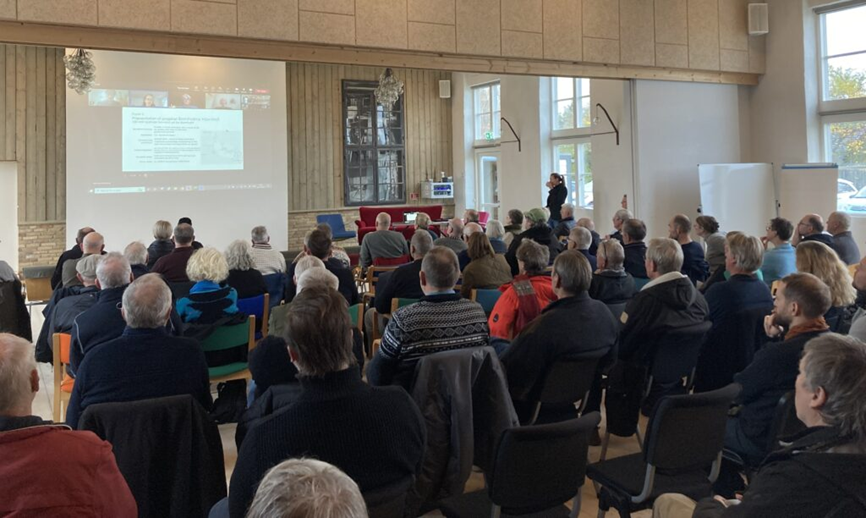
They connected with others looking to do similar, such as residents of Samsø, another small island just off the Jutland peninsula, which aimed at becoming Denmark’s first ‘renewable energy island’. Other experts started to step forward to support Bornholm’s ambition and in April 2022, they organised the first public meeting. Just over 100 people attended and the waters outside Nexø were chosen collectively as a suitable site. This process “gave legitimacy to the choice that we made,” Ravnborg adds.
By buying a share at around DKK 4000 (equal to £460), locals, small businesses and council would hope to benefit from lower electricity costs by purchasing energy directly from the turbines or get a financial return once the turbines are built. The aim was to “take back a very important part of the economy,” she adds.
But in October 2023, months after the first proposal for Bornholm Havvind was lodged, it was rejected by authorities. Locals have appealed the decision twice so far. The latest appeal is still being considered. They say they keep pushing because what it would offer is radically different from other projects that have taken place on Bornholm.
The newest of these is Bornholm Energy Island (Energiø Bornholm), a project backed by the Danish government which is planning to build massive offshore windfarms to transmit power to the mainland and Germany, following an agreement signed between the countries to capitalise on the area’s rich resources.
“This has been introduced to Bornholm in a piecemeal fashion, which has impeded insight into the full picture,” Ravnborg explains. In her view there is “very limited democratic control or transparency in these decisions”. Instead she says community led projects are created in a holistic way, offering islands the chance to become more resilient in the face of challenges – not only in Denmark, but also in Scotland and beyond.
But as residents wait for a final verdict on their most recent appeal, there are mixed emotions, of hope but also frustration. Ravnborg sets out the problem she feels locals here have had to confront: “Our government is talking about the importance of local participation in the green transition and how we need all people on deck to make this happen,” she says. “And yet it is still rejecting a project like ours.”
As she waits for news - trading “lots of words, lots of [appeal] papers back and forth” – she imagines residents here walking in the footsteps of Denmark’s pioneering energy innovators, strengthening her resolve. Many others across the world are watching this small island battle too. The next steps will dictate the future of community energy and raise the bar of what is possible.
Additional reporting by Karin Goodwin.
Independent journalism isn’t free, but it is essential.
We investigate power, money, and decisions made in public view. Reader support protects our independence and gives us time to do work that others won’t.

This summer we revealed that convicted loyalists from Belfast travelled to Glasgow for a far right protest. Further digging has unearthed a rapidly expanding anti-immigration network between Scotland and Northern Ireland.


Women have been leading the fight against the far right in Scotland but anti-racism activism has come at a high personal cost with at least 14 having been publicly abused and threatened. But they are resolute in the face of intimidation and say they will continue defending human rights.

We visited the Polish city of Krakow ahead of Holocaust Memorial Day which is held to remember the millions murdered by the Nazis – including six million Jews. Krakow's Jewish population was decimated then but the city is now home to one of the fastest-growing Jewish communities in the world.


Following a sharp rise in far right activity, we’ve spent the last three months attending protests, speaking to activists under threat, and tracking anti-asylum seeker demonstrations across Scotland.