The UK Government will soon force many company owners to prove their identities. We don’t know when the people behind much-abused Scottish business schemes will face the same measures.
The founder of a Canadian "extremist, militia-like organisation” visited far right allies in Scotland. Critics question why a “dangerous individual" was allowed to enter the country.
Observations by campaigners suggest that three of the UK’s nuclear-armed submarines are currently at sea. This is the first time this has happened since 2022, and it’s caused concerns.
A 'loophole' for money launderers: reforms to much-abused Scots business schemes face delays
The UK Government will soon force many company owners to prove their identities. We don’t know when the people behind much-abused Scottish business schemes will face the same measures.
Our financial investigations expose the gaps that can allow dirty cash to flow through Scotland. But forensic analysis of documents and data takes time, and sometimes we need to pay lawyers to stave off legal threats.
The owners of a type of Scottish company linked to a deluge of financial crime will remain exempt from mandatory identity checks for the foreseeable future, even after other UK businesses are forced to comply.
Scottish Limited Partnerships, or SLPs, are used legitimately but they have also been widely abused by money launderers, tax evaders and fraudsters.
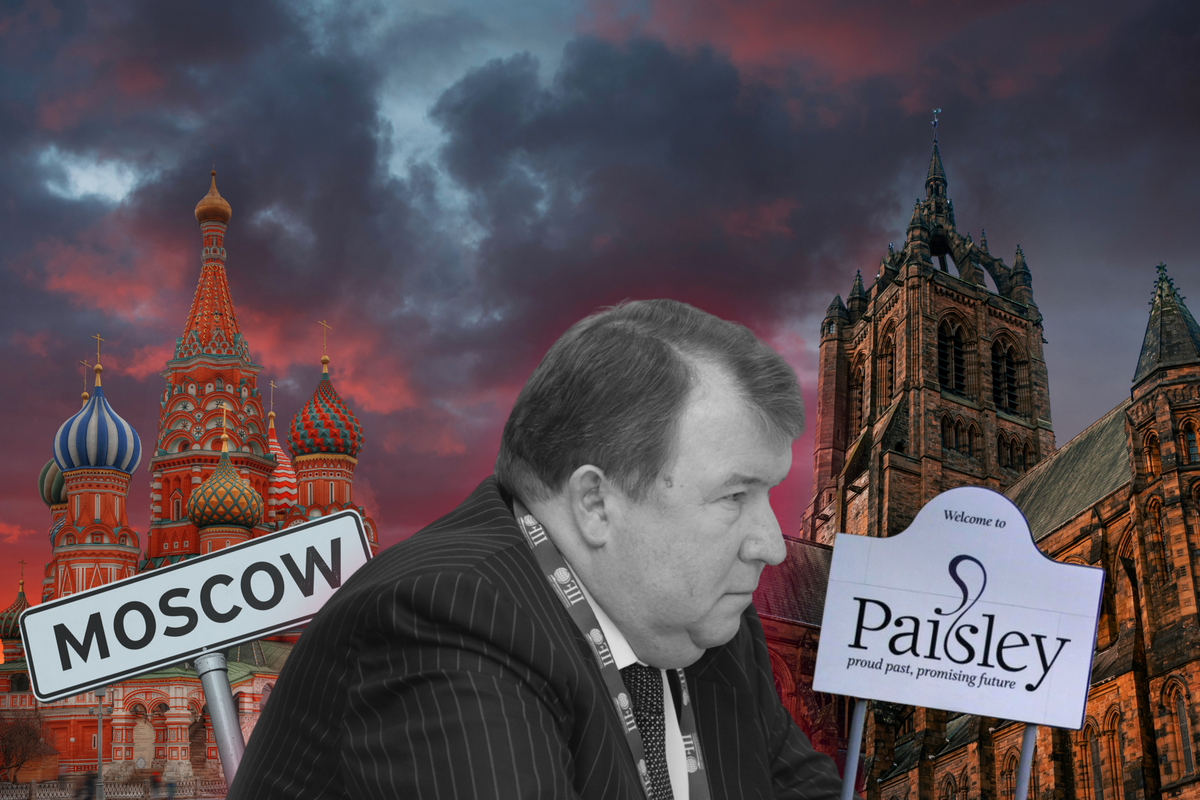
The Ferret revealed in September that Moscow entities are among those still selling them to clients seeking “financial privacy” and describe Scotland as a five star “offshore zone”.
As part of long-awaited UK Government reforms designed to tackle dirty money, the controllers and directors of many UK companies will be required to verify their identities with accredited bodies by 18 November.
But SLPs, despite well-documented records of their use for illicit ends, are among other types of companies that will not be subject to the same checks until a yet-to-be-determined later date.
Financial crime specialists and anti-corruption campaigners warned that delaying checks for SLPs, “the entity type most associated with historic [money] laundering abuse”, would allow criminals more time to go undetected and create a “weak link” in government reforms.
Companies House, the UK’s business registry, said a tightening of the rules around SLPs would be “the most significant” since their inception in 1907, but added that plans for these measures were “ongoing”.
In August last year, Companies House announced that directors and owners would face checks to ensure that “the people setting up, running and controlling companies are who they say they are”.
Now, new directors must pass vetting to incorporate a company or be appointed to an existing one, while existing owners have just a few weeks left to undergo an identity check in order to comply with the rules.
The UK Government’s Insolvency Service last month showcased the first prosecutions for directors who failed to prove their identities.
The Ferret’s analysis of Companies House data found that at least 553 SLPs were created between October 2025 and August this year. We found that although just five per cent of all UK entities are registered at a Scottish address, nearly two-thirds of all UK limited partnerships are Scottish, demonstrating their unique appeal.
SLPs have proved more popular than their UK counterparts due to once-higher levels of secrecy, light-touch reporting requirements, and other advantages. They are considered legal persons that can enter into contracts, take on debts or own assets, and they do not usually need to file accounts.
Before the rules were tightened, they helped, for example, to move £60bn out of Russia, and allowed the Kremlin to bypass sanctions by importing battlefield components to aid its illegal invasion of Ukraine.
As well as being established directly by individuals, SLPs are formed by corporate service providers (CSPs), who set up and sell companies to international clients, and sometimes provide named persons to front these entities.
Such CSP services have led to, in some cases, thousands of SLPs being registered at the same Scottish location – including residential addresses and a boarded up back alley entrance in Edinburgh – and have faced scrutiny for allowing the use of their services for illegal purposes.
ID verification process leaves ‘huge confidence vacuum’
Last March, Companies House launched registration of authorised corporate service providers (ACSPs), such as accountants or solicitors, which will perform identity checks. ACSPs must be UK-based, and be registered with both Companies House and a UK anti-money laundering supervisory body.
Analysis by The Ferret has found that the identities of thousands of directors and shareholders were approved by ACSPs that later gave up or lost government accreditation. We also identified hundreds of unverified individuals listed as authorised to vet others, and hundreds more whose identities were greenlit by organisations they co-own or run.
The UK Government published a list of 2,000 ACSPs, although it features only those that requested to be named. This measure is “nowhere near adequate”, according to Dylan Kennedy, a former financial crime investigator. He said a voluntary list created “material transparency gaps” and would shield unlisted ACSPs from scrutiny.
The Ferret understands that creating a new list including all ACSPs is under consideration by Companies House.
In August, the registrar listed 556 CSPs whose status has been suspended or ceased, either due to their own request, or because they did not comply with legal requirements – although it does not specify which. Our analysis found that these suspended providers – dozens of which are registered at the same addresses – had collectively verified 13,000 officers or shareholders.
“Against that backdrop, exempting the entity type most associated with historic [money] laundering abuse from the current ID-verification rollout recreates the same loophole.” – Dylan Kennedy, former financial crime investigator
Kennedy said there was a “huge confidence vacuum” regarding the validity of checks performed by CSPs that are no longer accredited. Michael Levi, a professor of criminology at Cardiff University and financial crime expert, said there is a strong case for requiring directors and controllers verified by suspended ACSPs to face fresh checks.
The Ferret found that the owners of 200 CSPs were unverified, yet remained listed as authorised to check the identities of others. We also discovered that many of the people behind these approved ACSPs were authorised by their own companies.
Of 1,765 ACSPs on the published consent list that could be matched to a registered company, a quarter – 440 – had at least one owner or director whose identity had been verified by the same ACSP.
Companies House rules do not prohibit ACSPs from authorising their own people. But Kennedy is concerned about a conflict of interest. “The entire rationale for ACSP-mediated verification,” he said, “is that a regulated third party checks an individual’s identity against documentary evidence”.
However, Ray Blake, an anti-financial crime specialist and co‑host of The Dark Money Files podcast, was confident in the oversight of ACSPs as they “are by definition already regulated and supervised by a professional body for anti-money laundering oversight”.
Juliet Swann, nations and regions manager at Transparency International UK said: “SLPs have a well-documented history of abuse by money launderers and the corrupt. While their use has fallen since beneficial ownership rules were extended to them, hundreds are still being created each year.
“Leaving them out of identity verification with no timetable risks making them the weak link in an otherwise strengthened system.”
Kennedy echoed Swann’s view. The decision to exclude SLPs from the current identity-verification rollout risked recreating a “loophole” that earlier reforms aimed to close, he said.
Laws introduced in 2017 that required SLPs to reveal their owners “was itself a response to their repeated misuse," added Kennedy. "Against that backdrop, exempting the entity type most associated with historic [money] laundering abuse from the current ID-verification rollout recreates the same loophole."
Levi was cautious about predicting the precise consequences of the delay to checks on SLP owners. "Given the high level of invisible harms in economic crime and money laundering, we may never know," he said. But, given the historical abuse of SLPs "it is likely that some abuses will escape that otherwise would have been detected," warned Levi.
Blake, however, was more relaxed about the delay. He said that given the length of time SLP owners have not been subject to such checks, a delay to the verification rules for “another few months isn’t going to matter too much in that context”.
A Companies House spokesperson said: "The reforms to Scottish Limited Partnerships (SLPs) will be the most significant since the legislation governing them was introduced in 1907.
“As part of these reforms, SLPs will be subject to enhanced transparency requirements, information will be made more accessible and our ability to identify and tackle SLP misuse will be strengthened.
"Implementation planning is ongoing and further information will be provided once details have been finalised."
Keep The Ferret independent
The Ferret does things differently: sharp fact checking, and public-interest investigative journalism backed by our readers.
Jamie is an investigative journalist who writes on issues such as illicit finance, dark money, political influence, land ownership, nature, the environment and far right extremism. He loves puns but has yet to use them in his reporting.
The founder of a Canadian "extremist, militia-like organisation” visited far right allies in Scotland. Critics question why a “dangerous individual" was allowed to enter the country.
Observations by campaigners suggest that three of the UK’s nuclear-armed submarines are currently at sea. This is the first time this has happened since 2022, and it’s caused concerns.
Scientists argue that research using animals is vital for the treatment and cure of human diseases like cancers. But experimenting on dogs and monkeys is controversial and critics say alternative methods should be used.
The Scottish Government is selling surveillance planes to save money and says drones are used to prevent illegal fishing. But critics argue that losing experienced pilots could mean criminality goes unchecked.