

Claim 'abortion to birth' is now legal in the UK is Mostly False
Changes to abortion law in England and Wales have been misrepresented on social media.
Changes to abortion law in England and Wales have been misrepresented on social media.
Climate change is causing rising sea levels and coastal erosion and 109 Scottish golf courses are at risk. We examined the issue as part of Green drive: Golf and the environmental crisis – a special Ferret series on golf and the environment.
The Ferret exposed the extreme views of Reform UK’s Scotland’s candidates before Nigel Farage promised to improve his party’s “poor” vetting processes, but many of them have been re-selected to fight the Holyrood election.

2023 has been another record year for the climate. New highs for temperatures, ocean heat, and melting sea ice have been recorded and scientists say Earth is now “in uncharted territory”.
I realise that is not exactly a jolly start to this Christmas broadcast, but at The Ferret we are not despairing. That’s because we believe in the power of investigative journalism to help solve these global problems.
And this year we have again delivered stories that put the environment at the forefront of Scotland’s national conversation.
None of this would be possible without the support of you – the members who own and shape The Ferret. So hopefully the continually outsized impact of our small-but-mighty cooperative brings you cheer as you read this update on environmental issues in 2023.
This year The Ferret’s environment coverage has been setting the agenda.
In July we revealed that the main sponsor of Edinburgh’s famed book festival, investment company Baillie Gifford, is a fossil fuel investor.
That story sparked a backlash from campaigners including Greta Thunberg, who cancelled a planned appearance at the festival.

Thunberg’s withdrawal garnered worldwide headlines and sparked a debate about ethics in the sponsorship of cultural events.
In September, our revelation about the extent of sewage pollution at Scottish bathing spots was splashed on the front of a national newspaper and debated at First Minister’s Questions.
That month also saw the publication of a week-long series delving into failings at Scotland’s environmental regulator, Sepa. That work has already been impactful and we are planning follow ups in the new year.
Our first ever fact-checking series, ‘Scotland and the Climate Crisis’, was published in July and provided an insight into our future in a hotter world. We hope that this will be a resource for readers for years to come.
And environmental stories we have produced this year have featured in some of the UK’s biggest outlets including The Guardian, The Financial Times, The Times and Private Eye.
Not bad for an eight-year-old reader-owned cooperative, eh?
On the home front, 2023 has been a year of setbacks for the Scottish Government’s green agenda as it has endured fractious relationships with key industries.
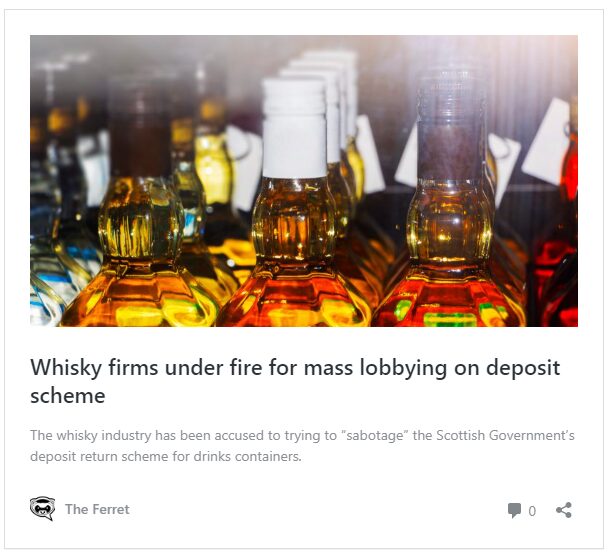
In June it was forced to delay plans for its deposit return scheme after a controversial intervention from Westminster and outcry and lobbying from business groups.
Its plan to make 10 per cent of Scotland’s seas ‘highly protected’ by 2026 was scrapped altogether in November after it angered some coastal and island communities and the fishing industry. The Scottish Government says it is still committed to protecting the marine environment and it has legal obligations to do so.
Some business leaders in the north east were left furious in January after a draft of the Scottish Government’s new energy strategy signalled an end to its support for North Sea oil and gas.
November saw another sign that the future of Scotland’s energy lies away from fossil fuels with news of the imminent closure of the country’s only oil refinery at Grangemouth.
Campaigners have complained that Westminster seems to have deprioritised the environment altogether.
This has been described as a ploy to win over voters disaffected with climate legislation, and was encouraged by a byelection victory in London supposedly spurred by opposition to the extension of the city’s Ultra Low Emissions Zone.
That strategy does not appear to have improved Rishi Sunak’s fortunes in the polls ahead of next year’s general election. But critics claim it could still have an important legacy, making it harder for future governments to meet climate goals.
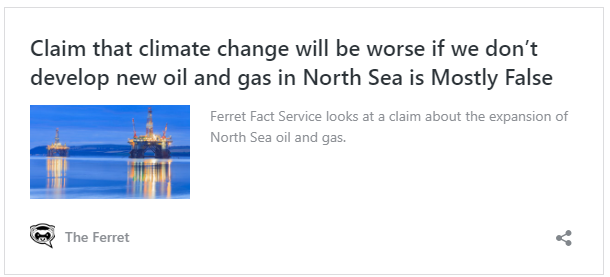
The Rosebank oil and gas field, for example, was approved in the wake of Sunak’s green u-turn, and Labour is unlikely to revoke the licence to drill for fossil fuels there. Critics have described the field as a “carbon bomb” which could cause the UK to miss its climate targets.
Similarly the pushing back of a ban on petrol and diesel cars could cause uncertainty and delay action on transport decarbonisation. That will mean bigger emissions cuts have to be found in other sectors, or climate targets will be missed.
At a global level, the outcome of the COP28 climate summit has been tentatively welcomed in some quarters as almost every country agreed to “transition away from fossil fuels” for the first time. But concerns about loopholes in the agreement produced by the conference remain and campaigners argue the deal is “business as usual”.
All of this means that 2024 is shaping up to be a seminal year for the environment in Scotland, the UK and globally.
As ever, The Ferret will be reporting on all the biggest developments.
Cover image thanks to iStock/gsmudger

Climate change is causing rising sea levels and coastal erosion and 109 Scottish golf courses are at risk. We examined the issue as part of Green drive: Golf and the environmental crisis – a special Ferret series on golf and the environment.

Britain Remade has appointed two directors from a lobbying firm which represents EDF, the owner of Scotland’s last nuclear power station.

Huge volumes of sewage sludge have been used to fertilise Scottish farmland. Studies show it contains microplastics, forever chemicals and cancer-linked pollutants.

Scottish ministers have been privately urged to back plans for a golf course on a coastal wildlife site. This has been condemned as “backdoor lobbying that tries to bypass the rules”.


