

Claim 'abortion to birth' is now legal in the UK is Mostly False
Changes to abortion law in England and Wales have been misrepresented on social media.
Changes to abortion law in England and Wales have been misrepresented on social media.
Climate change is causing rising sea levels and coastal erosion and 109 Scottish golf courses are at risk. We examined the issue as part of Green drive: Golf and the environmental crisis – a special Ferret series on golf and the environment.
The Ferret exposed the extreme views of Reform UK’s Scotland’s candidates before Nigel Farage promised to improve his party’s “poor” vetting processes, but many of them have been re-selected to fight the Holyrood election.
A Scottish Government watchdog has been caught advising a pesticide company how to avoid disclosure under freedom of information (FoI) law.
The Scottish Environment Protection Agency (Sepa) told a firm wanting to start using a toxic bee-killing chemical at fish farms to mark correspondence “confidential”— so that Sepa wouldn’t have to release it in response to FoI requests.
Sepa was forced to disclose documents about plans for the pesticide by the Scottish Information Commissioner, after an appeal by a campaign group.
Campaigners have condemned Sepa’s behaviour as “disgraceful” and urged the agency to issue an assurance about public rights to access information. Sepa insisted that it took its FoI responsibilities “very seriously”.
The Ferret revealed in March 2020 that the fish farming industry was planning to use a nicotine-based pesticide called imidacloprid in a new ‘CleanTreat’ process to kill the lice that can infest caged salmon.
Imidacloprid is one of a group of neonicotinoid chemicals banned by the European Commission in 2018 for outdoor use on plants because of the risks they posed to bees and other pollinators.
In May 2021 we reported internal emails suggesting that the Scottish Government was paving the way for the use of imidacloprid at salmon farms. Since then the chemical has been given the green light for use at fish farms in Norway, while the European Parliament has voted in favour of a ban.
Now Sepa has released the minutes of a meeting on 11 April 2019 with CleanTreat’s producer, UK firm Benchmark. Also present were officials from the Scottish Government’s Marine Scotland and the UK Government Veterinary Medicines Directorate.
The minutes, marked “confidential”, outlined Benchmark’s plans to “move forwards with clinical trials in Scotland”. One issue discussed was the confidentiality of data provided by Benchmark outwith an official application for a trial.
“Sepa indicated that all correspondence must be marked commercially sensitive and confidential,” the minutes recorded.
“If this is the case, they can refuse any freedom of information (FoI) requests based on commercial sensitivity grounds. Sepa regularly refuse FoI requests on this basis.”
The minutes themselves had a warning at the bottom of every page saying that they were “commercially sensitive and therefore strictly confidential.” Any disclosure, it said, was “strictly prohibited”.
Sepa initially refused to release the minutes on the grounds that they were commercially confidential. But it was ordered to release them in June 2021 by the Scottish Information Commissioner, Daren Fitzhenry, following an appeal.
The appeal was made by Don Staniford, from the campaign group, Scottish Salmon Watch. “Shame on Sepa for deliberately avoiding FoI law,” he said.
“Surely a public body should be upholding the public right to know rather than assisting private companies to circumvent FoI? It’s a scandal that Scotland’s environmental watchdog had to be dragged kicking and screaming by the Scottish Information Commissioner to disclose these documents.”
He added: “Since imidacloprid is a banned neonicotinoid it is not surprising that the industry wants the damning documents buried. But for Sepa to conspire to avoid public scrutiny is disgraceful.”
The effect of such collusion is to delay the timely release of information which is clearly in the public interest.
Carole Ewart, campaign for Freedom of Information in Scotland
The Campaign for Freedom of Information in Scotland also criticised Sepa for helping a private company escape accountability and scrutiny. “The effect of such collusion is to delay the timely release of information which is clearly in the public interest,” said the campaign’s convener, Carole Ewart.
“It raises the question whether this is a business-as-usual approach or an exceptional incident? I would urge Sepa to issue a public assurance of their commitment to a public first approach to information access rights and duties.”
The Scottish Environment Protection Agency stressed that it only kept information secret in line with the rules. “Sepa takes our responsibilities under freedom of information and access to information very seriously,” said a spokesperson.
“While we may sometimes withhold information which may be commercially sensitive, this is done with careful consideration and application of the guidance and regulations.”
According to Benchmark, it was concentrating on introducing Ectosan — which contains imidacloprid — in Norway. “Having recently received marketing authorisation from the Norwegian Medicines Agency, our focus is currently on launching Ectosan® Vet and CleanTreat® In Norway,” said a spokesperson.
The Scottish Government has pointed out that Sepa has not received an application to use imidacloprid, nor has it had any pre-application discussions about it. “There is no planned imminent approval for imidacloprid use in the marine environment,” said one official.
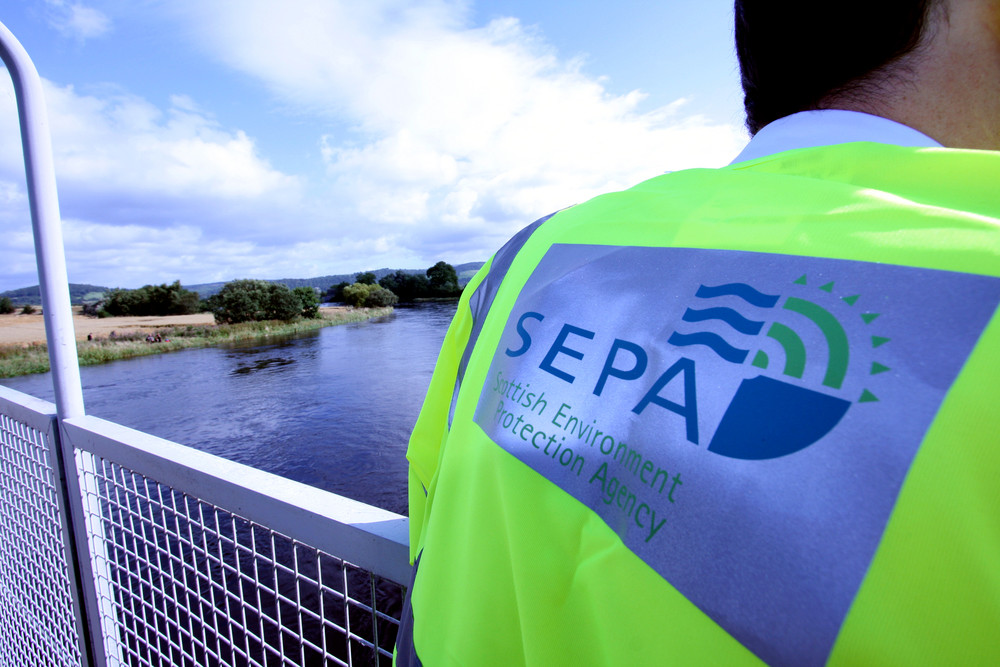
Cover image thanks to the Scottish Environment Protection Agency.


Climate change is causing rising sea levels and coastal erosion and 109 Scottish golf courses are at risk. We examined the issue as part of Green drive: Golf and the environmental crisis – a special Ferret series on golf and the environment.

Britain Remade has appointed two directors from a lobbying firm which represents EDF, the owner of Scotland’s last nuclear power station.

Campaigners complained to a government animal welfare watchdog, with videos of badly injured salmon at a fish farm. This prompted a review, but should more have been done?

Huge volumes of sewage sludge have been used to fertilise Scottish farmland. Studies show it contains microplastics, forever chemicals and cancer-linked pollutants.


