Authorities tightened the rules around this Scottish business scheme after years of exploitation for financial crime. Moscow entities – and a man accused of facilitating child sex abuse – are still selling it to clients seeking “financial privacy”.
The Scottish Government’s green watchdog sent seven letters over three years alleging multiple breaches at a fish farm – and then issued a final warning letter.
This US-style right-wing political pressure group keeps its funders a secret. Its members have helped man Scotland’s anti-migrant and asylum demonstrations.
Families are being left without support after a suicide – and it’s causing more deaths
Those bereaved by suicide have a 65 per cent increased risk of taking their own lives. So why is there not more funding for support after tragedy strikes?
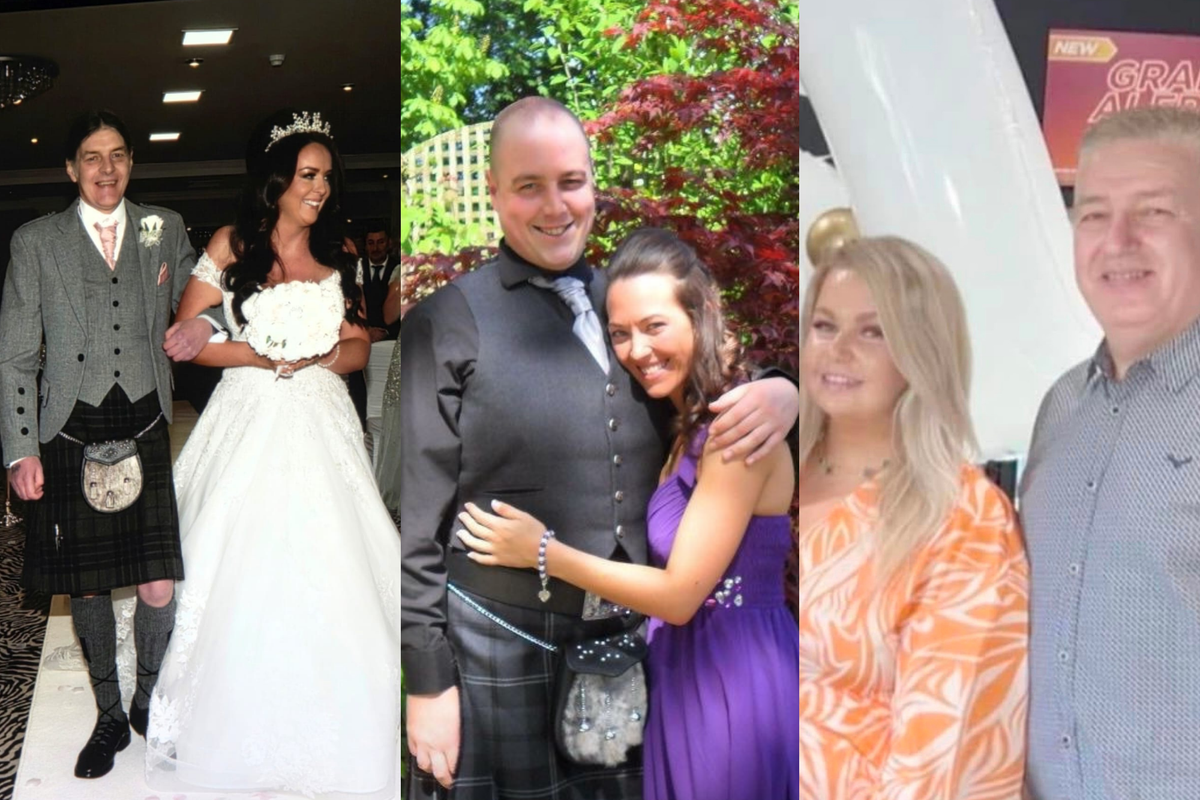
“It was like a domino effect,” says Fiona Ford. We’re speaking on text because, given everything Fiona has been through, she finds it easier that way. In just six years she has lost two of her daughters and her husband to suicide.
Her eldest, the bright and bubbly Rhiannon, who “didn’t take anyone’s nonsense”, was just 19 years old when she died in 2019. At the time her younger sister Taylor - “shy but with the kindest heart” - was just 11 years old. “She kept a lot to herself,” says Fiona. “But I knew she was devastated.”
She took her own life four years after her sister. And then last June, Fiona’s partner Barry - who had struggled for many years with his mental health - also died by suicide. “The impact the girls’ deaths had on us all contributed,” she says. “But when Barry begged for help, he didn’t get it.”
Fiona’s situation is particularly tragic. But with research showing that people who’ve lost someone to suicide have a significantly increased risk of taking their own life, campaigners say it’s crucial families get proper support to help save lives.
In real terms the current budget is less than half the annual national spend 20 years ago. More funding, charities insist, must be found to pay for it. In 2024, the most recent data available, 704 probable suicides were recorded in Scotland, an encouraging decrease of 11 per cent. But despite positive progress, the rate is still higher than in England and statisticians warn there is no room for complacency. Figures for 2025 are due to be released in coming weeks.
You don’t get stories like this elsewhere
The Ferret publishes investigations that go beyond the daily news cycle, dig deeper, and ask difficult questions. Help us stay independent.
The Scottish Government acknowledges the additional risk for those bereaved by suicide. In 2022 it published ‘Creating Hope Together’, a “highly ambitious” 10 year suicide prevention strategy for Scotland, which promised “access to high quality, compassionate, appropriate and timely support” for anyone affected by suicide, including family members.But mental health charities say the level of funding isn’t sufficient to meet the ambitions.
The Ferret heard from multiple families who said the reality fell short. They struggled to get the psychological help they needed for themselves or their children following the suicide of a loved one.
One mother said her daughter waited more than three years for bereavement counselling which was only offered for six weeks. “It was just enough to rip the plaster off,” she told us, claiming that her daughter later ended up self-harming. Others said they had to use savings for private counselling because nothing else was available.
Natalie Dakhil, who in June told The Ferret about the loss of her father, Michael Byrne, in February 2024, waited for more than nine months for psychological support, offered through occupational health because she works for the NHS. Her GP had told her she would wait for two years through general services.
She and her husband Anton were “shocked” at how difficult it was to access anything other than crisis support services and horrified that follow-up with those who had been bereaved as a prevention strategy - known as suicide postvention - often seemed like an afterthought.
Their response was A Place Called Here, a voluntary peer support group that people could access for free whenever they needed it. Now some of its members have agreed to meet me, to explain why Scotland must make its strategy a reality.
Since it was set-up nearly two years ago, the group - where people can share their experiences, learn techniques like grounding and meditation and receive complimentary therapies – has helped over 100 people. Each Wednesday up to 45 people come along to the community hall in Balornock, Glasgow, where it now meets.
“We have been totally honest and transparent from the get go,” says Natalie. “People could just relate to that. You could physically see the relief that they were in a place where they felt welcomed because of the stigma that comes with suicide.”
Grief following suicide is complex, she says, and there’s lots to deal with. “I’m now two years down the line and the investigation into my dad’s death still hasn’t concluded - that’s the case for a lot of people. Sometimes the police don’t release suicide notes for weeks or months and families are sitting waiting.
“Maybe they’ve had to speak to the procurator fiscal as much as two years later, or had a difficult meeting with the NHS. And where do you go with that?”
For Paul, coming to the group gave him an immediate sense of belonging, and “of being in a room with people who understand me”. His dad took his life almost three decades ago, when he was only 17.
Back then there was no support. “I was screaming out for someone to listen,” he says. “I went to psychiatrists and psychologists but I felt like I didn’t find any human empathy there. And then I walked in [to A Place Called Here] and it felt so comfortable. When we sit together on a Wednesday night there’s a power in the room that the pain has created - it’s like electricity.”
"Spending on suicide prevention is simply too low to have the intended impact.” — Alex Cumming, Scottish Action for Mental Health
Counselling, he says, “peeled off the top layer” of his trauma, leaving him feeling raw so the group helped him move past that. “I used to walk past where my dad died and I had to turn away. Now I look and tune into the happy memories that a combination of the counselling and coming to the group unlocked.”
For Annie, who lost her 38-year-old partner to suicide only last year, remembering the good times is still more difficult. “In terms of accessing immediate support I was actually able to do that very quickly,” she remembers. “I think people were really concerned about me.”
She got a referral to Distress Brief Intervention (DBI), a Scottish Government funded service introduced ten years ago providing community-based help as well as wellbeing support and signposting. “I think that saved my life,” she says. “I was never suicidal exactly - I never wanted to die but sometimes I didn’t want to be here either.”
Normally the service is capped at three weeks but they saw Annie for six. After that though she was told she would have to wait six months for bereavement counselling. “But I couldn’t wait that long,” she says. To fill the terrifying gap opening up in front of her, a work friend sent her a flyer for A Place Called Here.
Cruse, the charity which provides bereavement services, says help should always be on offer before the six month point but acknowledges that demand is high and waiting times can vary across the country.
At the first meeting Annie could barely say her name. “I was just crying all the time,” she remembers. “Sometimes people would say how their relative had died and I was so shocked but also so relieved because I couldn’t speak to anyone in my life about the mad, intrusive thoughts I was having. “I was getting flashbacks. I was so scared because I was thinking all the time that it might happen to me too. People were saying to me - “Annie, tell me what you are thinking” and I couldn’t say. I worried I would traumatise them.”
At the group she could be honest and open and started to feel better. Now she’s had lots of other support, including weekly counselling from the Manda Centre.
Everyone has a different reason to be here. There’s Shona, who lost her mum to suicide in September 2020 but only finally came to the group in January this year after suppressing her trauma in oder to look after her children with additional needs.
Then there's Siobhan, who lost her dad last year and believes his life could have been saved if services had provided the help he needed and asked for. It left her feeling full of anger and guilt. “It takes everyone talking together to realise it’s not our fault,” she says. “For a long time I felt guilty for laughing.”
For Frank, who will never forget finding his 23-year-old daughter Chloe after she died, it saved his life. “There’s been suicide in my family - one about 40 years ago, then one 16 years ago and then Chloe. I felt as if I was doomed. My pain was so fierce at times, all I wanted was to be with her. Thank God for these people in my life. It was because of them that I went to get help from the crisis team when I needed it. If I hadn’t, I’m not sure I’d still be here.
“I lost both my parents, quite suddenly, through different illnesses, and I grieve for them. But suicide is a different kind of grief. I still miss my parents dearly. But Chloe,” he trails off. “That almost broke me completely.”
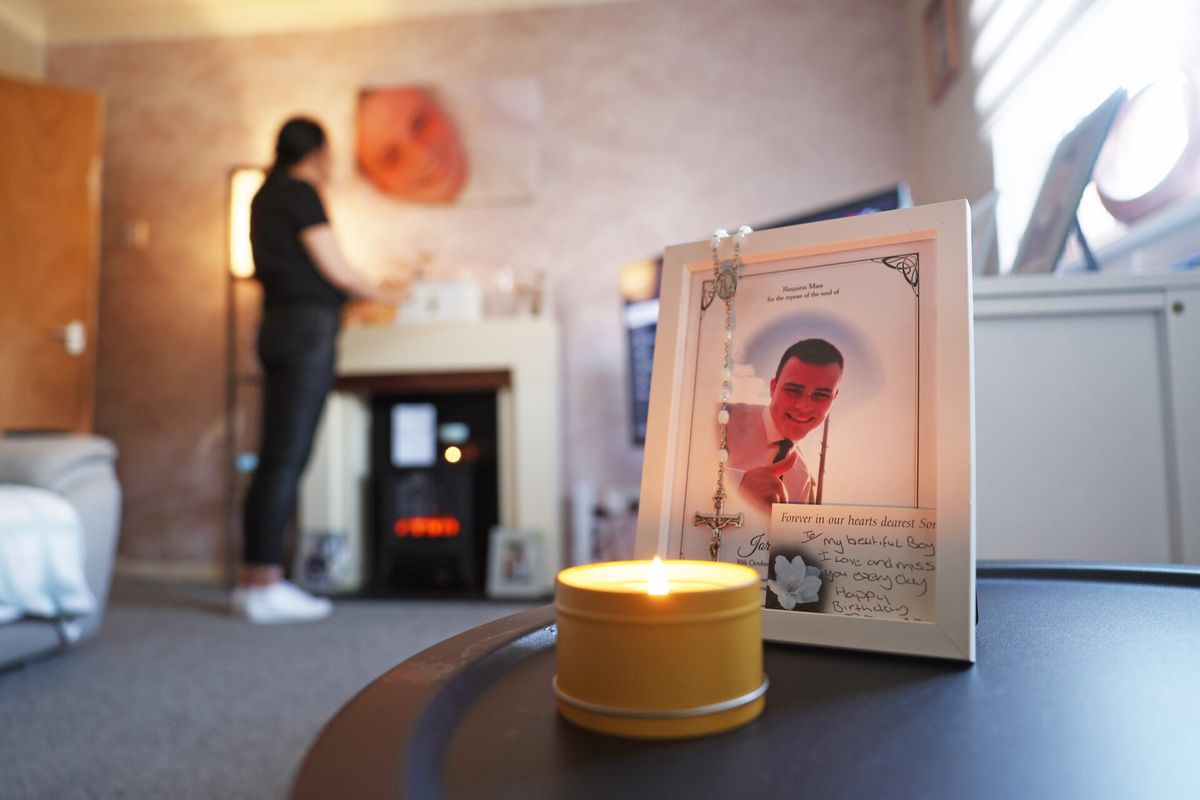
This group offers a place to heal and also to remember their loved ones. On anniversaries they can choose to lead the sessions, inviting family members, bringing photos and playing their favourite songs.
“Peer support doesn’t replace statutory services but it provides something different. Everyone should have the option to access both.” — Natalie Dakhil
Setting up the group, Natalie says, was a way of transforming her pain into something purposeful. “You get so consumed with what happened,” she says. “And that’s where your mental health deteriorates.” Too often, she says, people are left on waiting lists and expected to cope.
Mental health charities such as PETAL Support across Scotland told The Ferret that demand for their services was increasing. Yet funding to provide them is often not.
Scottish Action for Mental Health (SAMH) is campaigning for the suicide prevention budget to be doubled form £3m to £6m. It points out 20 years ago spending by the then Scottish Executive on its Choose Life strategy was £4m per year. In real terms that would be over £7m per year today.
The Scottish Government’s mental wellbeing minister Maree Todd said she was "determined that anyone who needs it has timely access to the right mental health support" and noted that suicide prevention funding had "increased to at least £3m in 2026–27, up from £2.8m". This was supported by "broader mental health funding” which included £30m for community-based support.
Alex Cumming, executive director of delivery and service development at the national charity says: "Spending on suicide prevention is simply too low to have the intended impact.”
Access to suicide bereavement support should be a fundamental part of what’s on offer, he insists. “Funding should be ring-fenced locally so that communities can develop support based on local need and deliver effective interventions to support people affected by suicide.”
Natalie wishes this was already a reality. “To this day every penny we have spent has come through donations and fundraising,” she says. “Nothing comes from statutory services. I think charities like us should be recognised.”
A spokesperson for Suicide Prevention Scotland recently visited the group, describing it as a “powerful experience “. They acknowledged the additional risk for those bereaved by suicide. “This is why bereavement support is a key action in Creating Hope Together, Scotland’s suicide prevention strategy and action plan,” they added.
“We are currently working on an approach to postvention which will make sure that anyone bereaved by suicide in Scotland has access to the support they need. It is important that as we do this, we involve people who have experienced suicide loss.”
Meanwhile for Fiona Ford, the struggle to recover from the loss of her three family members continues. She is no longer looking for NHS help - she’s lost faith in the services that she believes let her loved ones down so badly.
That is far from atypical, says Natalie: “The people here have tried to access services for our loved ones before they died. And then after they die we try to access services for ourselves.”
Too often, she says, they have been let down. “We’ve had to rely on each other. Peer support doesn’t replace statutory services but it provides something different. Everyone should have the option to access both.”
Go beyond the headlines with us
Deeper investigations, clear explainers, and reporting with real impact all depend on your support.
Karin is The Ferret’s co-editor and has reported on people, power and planet for the UK’s leading outlets. She co-founded our Community Newsroom in Glasgow and is interested in participatory approaches to journalism. Audio is her favourite medium.
Far right organisation Knights Templar International, whose frontman Jim Dowson has a long history of involvement with extremist groups, is now supporting Scotland’s new wave of night patrols.
The Scottish Government changed key parts of the official record of Angus Robertson’s controversial Israel meeting after a backlash, raising questions about government secrecy.
Politicians and advocates call for action due to “serious concerns” that children are still being placed in “dangerous environments” when their families are homeless.