Authorities tightened the rules around this Scottish business scheme after years of exploitation for financial crime. Moscow entities – and a man accused of facilitating child sex abuse – are still selling it to clients seeking “financial privacy”.
The Scottish Government’s green watchdog sent seven letters over three years alleging multiple breaches at a fish farm – and then issued a final warning letter.
This US-style right-wing political pressure group keeps its funders a secret. Its members have helped man Scotland’s anti-migrant and asylum demonstrations.
Did Scottish ministers “rewrite history” over Israel meeting?
The Scottish Government changed key parts of the official record of Angus Robertson’s controversial Israel meeting after a backlash, raising questions about government secrecy.
The Scottish Government has been accused of trying to “manipulate the record” of its meeting with an Israeli diplomat after documents released to The Ferret show it changed the official minutes of the talks after a public backlash.
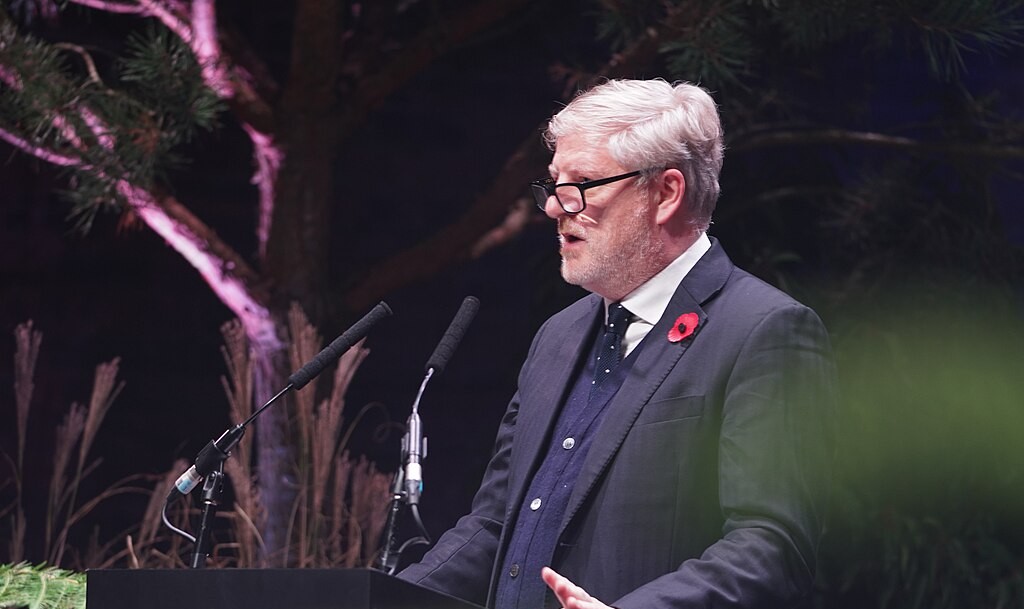
Former cabinet minister Angus Robertson’s meeting with Israel’s deputy ambassador to the UK in August 2024 prompted outrage, including from his SNP colleagues, because it came as Israel was facing international condemnation over its war on Gaza.
First minister John Swinney defended the talks after controversy erupted. He claimed the Scottish Government had only agreed to the meeting to communicate its “clear and unwavering position” on a ceasefire.
However, draft minutes released to us under freedom of information (FoI) law suggest Gaza and a ceasefire were not top of the agenda.
Fund journalism that serves the public.
The Ferret investigates what’s going on in Scotland, and who benefits. Reader support keeps our journalism independent.
The original draft – circulated the day after the meeting took place – shows the first topic of discussion was antisemitism. Protests at a football match between Scotland’s women’s team and Israel were among a range of issues mentioned before Gaza.
But by the time minutes were finalised, after Robertson had intervened in the drafting process, the entire order of the discussion had changed, with Gaza and the Scottish Government’s position on a ceasefire at the top of the document.
Meanwhile, a whole passage, in which Robertson reportedly discussed Scotland as a destination for Israeli businesses and highlighted Scotland’s growing film and screen sector, disappeared from the final draft.
Opposition politicians and transparency experts claimed the changes show the Scottish Government tried to “rewrite history” to suit its narrative about the meeting. That raised wider questions about transparency and how official government records are handled when they are politically controversial, they claimed.
The Scottish Government said minutes “go through a drafting process as standard to ensure the final version represents an accurate account”. A spokesperson added: “The Scottish Government’s consistent and unwavering position on the need for an immediate ceasefire in Gaza was made clear during the meeting. There have been no further ministerial meetings with the government of Israel since.”
Finalised minutes of ministerial meetings are often released under FoI law. But it is rare for draft versions to become public so we usually only see what ministers and officials agree on.
In this case, the draft documents only emerged after The Ferret made a successful appeal to the Scottish Information Commissioner, David Hamilton, after an earlier FoI request showed Robertson had asked for the minutes to be changed.
Carole Ewart, director of the Campaign for Freedom of Information in Scotland, said the drafts opened a “window on the art of minute taking to manage the news” and what the government ultimately releases to the public under FoI law.
James Mitchell, a professor of public policy at the University of Edinburgh, claimed the meeting had either initially been “very poorly minuted” or “this was the minister seeking to make changes in response to public outcry”.
Mitchell added: “I would be very surprised if officials erred to the extent suggested by the revisions. It really is essential that honest and accurate minutes are made in order to hold ministers and government accountable.”
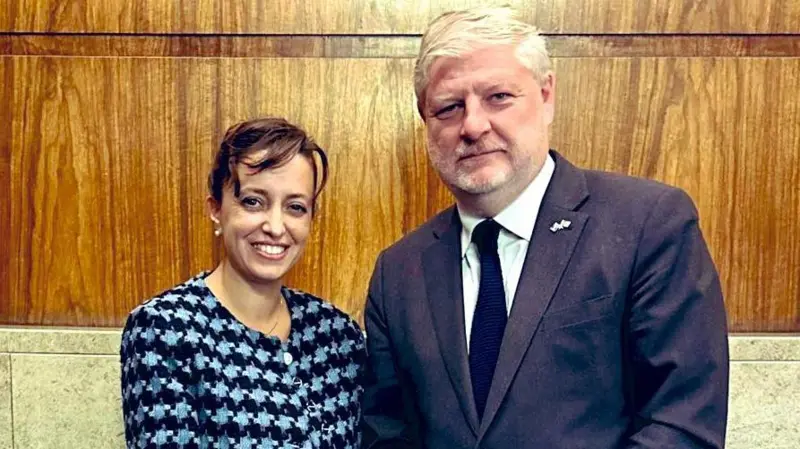
The meeting itself became a political flashpoint after the deputy ambassador, Daniela Grudsky, posted a photograph of herself and Robertson smiling together at St Andrew’s House.
The post said they had discussed “unique commonalities” between Israel and Scotland as well as cooperation in the “fields of technology, culture and renewable energy”.
That prompted anger – Robertson even faced calls to step down – with critics questioning why the Scottish Government was engaging with Israeli officials on these issues amid the war in Gaza.
As we revealed earlier this month, the full minutes of the meeting – which were only released after a two-year FoI battle – show Robertson and Grudsky also discussed bringing Israeli technology to NHS Scotland and more Israeli tourists to the country.
Responding to growing pressure in a statement on 14 August, six days after the meeting, Swinney said ministers had agreed to the talks as an opportunity to call for a ceasefire “directly, and explicitly” to an Israeli government representative.
But Robertson spent the same day fretting that his supposedly “explicit” call for a ceasefire had been “lost in the middle” of the draft minutes.
His private secretary emailed the official responsible for recording the minutes, asking for changes so that his statements on Palestinian rights and a ceasefire came through “as clearly as he communicated them”.
The official responded on 15 August saying they had “revisited” their notes and “amended” the minutes. Robertson signed off the final version on 6 September.
The Scottish Greens’ co-leader Gillian Mackay said the changes looked “like the Scottish Government trying to rewrite history” and accused it of “dodging the key questions” around Israel.
Scottish Liberal Democrat MSP, Willie Rennie, said: “Instead of the Scottish Government seeking to manipulate the record of this important and sensitive meeting, Angus Robertson should not have mishandled it in the first place.
“He and the Scottish Government should have been up front about what happened at the meeting and apologised for their cack-handed approach,” Rennie claimed.
Robertson later apologised that the meeting had not been solely focused on a ceasefire in Gaza and the Scottish Government suspended any further meetings with Israel.
Before and after: how minutes of the meeting changed
Independent journalism isn’t free, but it is essential.
We investigate power, money, and decisions made in public view. Reader support protects our independence and gives us time to do work that others won’t.
Paul is an investigative journalist with a focus on the environment, energy and climate change. His work has been featured by Channel 4 News and the UK’s leading newspapers. When not Ferreting he can be found walking and listening to podcasts.
Those bereaved by suicide have a 65 per cent increased risk of taking their own lives. So why is there not more funding for support after tragedy strikes?
Far right organisation Knights Templar International, whose frontman Jim Dowson has a long history of involvement with extremist groups, is now supporting Scotland’s new wave of night patrols.
Tensions are high in Glasgow following a series of protests over alleged sex crimes by migrants. Police and anti-racism groups fear extremists could inflame the situation.